

Rusty Angelfish
$89.99
Centropyge ferrugata
| Care Level | Moderate to Intermediate |
| Temperament | Semi-aggressive |
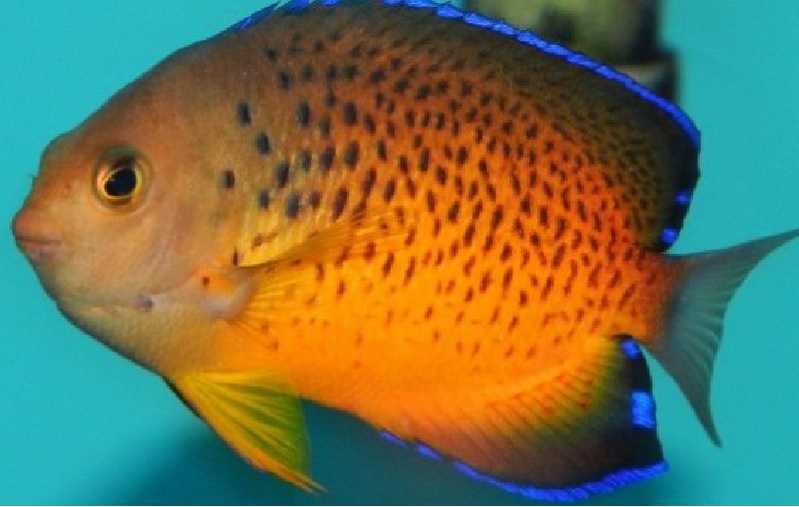
| Color Form | Rusty-orange body with black speckles and bright blue fin edges |
| Diet | Omnivore |
| Reef Compatible | With caution |
| Water Conditions | sg 1.020–1.025, 72–78°F, pH 8.1–8.4, dKH 8–12 |
| Max Size | 4″ |
| Family | Pomacanthidae |
| Minimum Tank Size | 75 gallons |
3-Day Guarantee
Approximate Purchase Size: Small: 1-2″; Medium: 2-3″; Large: 3-4″
Rusty Angelfish
Also known as the Rusty Pygmy Angelfish or Rusty Dwarf Angelfish
The Rusty Angelfish is an aptly named dwarf angelfish species known for its distinctive rusty-orange to amber coloration punctuated with black speckles and brilliant sapphire-blue fin margins. Native to the Western Pacific Ocean from southern Japan to the Philippines, this vibrant species brings warm colors and active personality to marine aquariums. While similar in appearance to the popular Coral Beauty Angelfish, the Rusty Angelfish displays a more amber-toned body without the rich purple-blue coloration. A hardy and relatively peaceful dwarf angelfish, it makes an excellent addition to established marine systems.
Key Features
- Scientific Name: Centropyge ferrugata
- Common Names: Rusty Angelfish, Rusty Pygmy Angelfish, Rusty Dwarf Angelfish
- Adult Size: Up to 4 inches (10 cm)
- Lifespan: 5–10 years with proper care
- Temperament: Semi-aggressive; peaceful but becomes territorial once established
- Reef Compatibility: With caution – may nip at soft corals, stony polyp corals, sessile invertebrates, and clam mantles
- Minimum Tank Size: 70–75 gallons
- Experience Level: Moderate to intermediate
Habitat & Tank Requirements
- Tank Environment: Requires a mature, well-established tank (6+ months old) with large amounts of live rock for hiding, grazing, and establishing territory. Provide plenty of caves, rocky crevices, and suitable territory areas that mimic natural seaward rocky reefs and rubble areas with extensive algal growth.
- Water Parameters:
- Temperature: 72–78°F (22–28°C)
- Salinity: 1.020–1.025
- pH: 8.1–8.4
- dKH: 8–12
- Aquascape: Extensive live rock formations are essential for grazing on natural algae and providing security. Natural algae growth should be strongly encouraged. Provide ample hiding spots and rock formations while maintaining open swimming space. The larger the tank, the better, larger systems reduce the likelihood of the fish continually targeting any one particular invertebrate.
- Compatibility: Keep only one Rusty Angelfish per tank. Should not be housed with other Centropyge species or dwarf angelfish, they will fight aggressively. Initially shy when first introduced, taking time to settle. Once established, it becomes rather territorial, especially when new species (particularly docile or peaceful fish) are introduced afterward. Should not be housed with overly aggressive tank mates. Best added as one of the last fish to reduce territorial disputes with existing inhabitants. Compatible with most peaceful, similar-sized fish.
Diet & Feeding
Rusty Angelfish are omnivores with a diet focused primarily on algae and detritus in the wild:
- Natural Diet: Primarily algae and detritus, supplemented with small invertebrates. In the wild, very active moving around picking at substrate and live rock.
- Plant Matter: Spirulina, Chlorella, marine algae, nori sheets, dried seaweed, filamentous algae. Algae-based foods should form the majority of the diet.
- Meaty Foods: Mysis shrimp, vitamin-enriched brine shrimp, finely chopped seafood, high-quality marine pellets
- Specialty Items: High-quality angelfish preparations, Angel Formula
- Food Enticement: If refusing food, offer Angel Formula, fresh clam, or food soaked in Selcon or garlic extract
- Feeding Schedule: Feed small portions 2–3 times daily. Multiple small feedings help prevent the fish from pestering corals and invertebrates. Portions should be small enough to be consumed within a few minutes to prevent overfeeding and maintain water quality. Remove uneaten food promptly.
Notes & Considerations
- Appearance Details: Brownish-orange to rusty-amber body on the upper flanks transitioning to bright orange on the lower body and ventral area. Irregularly shaped black dots or speckles across the body that decrease in size from dorsal to anal and pelvic fins, creating a vertical pattern. The anal fin is dark, and both the dorsal and anal fins are rimmed in bright, neon sapphire-blue. Some specimens display thin bluish bands or dots along the fin margins. The typical slightly elongated angelfish body shape.
- Similar Species: Looks very similar to the Coral Beauty Angelfish (Centropyge bispinosa), but lacks the rich purple-blue coloration to some extent. The Coral Beauty displays a series of thin vertical bars, while the Rusty features black speckles instead.
- Behavioral Traits: Although initially shy and docile when first introduced, requiring time to settle and become accustomed to surroundings, this species can be quite territorial once established. May show aggression toward similar-looking species. Generally peaceful and gets along with most tankmates as long as it is the only type of dwarf angelfish in the aquarium. Very active throughout the day, constantly picking at substrate and live rock for food.
- Multiple Dwarf Angelfish: While best kept as the only dwarf angelfish, it can sometimes be housed with other dwarf angelfish species if all are added simultaneously and the tank is over 75 gallons. Combine only angelfish with very distinct color variations, never house with similar-looking species.
- Reef Considerations: Not considered fully reef-safe. Prone to nipping at stony corals, soft corals (especially Zoanthus), sessile invertebrates, and clam mantles. Some specimens can become quite vicious coral nippers. Occasional specimens may nip at some invertebrate life, and this behavior usually only occurs if dietary requirements and feeding frequency are not being met. Keeping the fish well-fed at all times reduces coral-nipping behavior, though this is not foolproof. The larger the tank, the less likely damage to any particular invertebrate. Careful observation is recommended. By choosing corals carefully, they can be kept in coral aquariums with a reasonable chance of success, most will not eat coral polyps but may go after coral-produced mucus.
- Social Structure: In the wild, found solitary or in small groups. This species is a protogynous hermaphrodite, all are born female with the ability to change to male. Bi-directional sex change has been confirmed for this species, the dominant angelfish of the harem turns into a male and can turn back into a female if a more dominant angelfish steals the throne. Males and females cannot be easily sexed visually.
- Health Considerations: Generally hardy and well-suited for intermediate aquarists. Can be susceptible to common marine diseases such as ich (cryptocaryon) and velvet, especially when stressed. Regular monitoring of water quality and prompt treatment of any signs of illness are essential. Requires stable water conditions and a balanced diet to thrive. Maintaining optimal water quality and quarantining new additions are recommended practices.
- Breeding: Has been successfully reared in captivity. Egg-scattering species. Observing natural spawning behaviors in captivity is rare, and raising fry requires specialized knowledge and equipment.
- Geographic Range: Found in the Western Pacific Ocean. The range extends from Tanabe Bay in southern Japan to the southwestern tip of Taiwan and the Philippines. Also reported from waters of the Ryukyu Islands, Ogasawara Archipelago, and Palau. Depth range: 6–30 meters (20–98 feet). Inhabits seaward rocky reefs and rubble areas, especially where algal growth is extensive. Non-migratory species.
- Conservation Status: Has not been evaluated for the IUCN Red List. Sometimes it makes its way into the aquarium trade.
- First Description: Formally described in 1972 by John Ernest Randall and Warren E. Burgess, with the type locality given as a reef one-half mile off Ishigaki City, Ishigaki, Ryukyu Islands.
Why Choose a Quarantined Rusty Angelfish?
Our quarantined Rusty Angelfish are acclimated, monitored, and conditioned before being offered for sale. We ensure they are actively eating high-quality prepared foods, including both algae-based and meaty items, before being offered. Quarantine allows us to observe feeding behavior, ensure water parameter stability, and address any potential health concerns before the fish reaches your aquarium. This ensures they arrive healthy, parasite-free, and ready to thrive in your aquarium, giving you peace of mind and a smoother transition into your tank.
| Service Level | Quarantined |
|---|
You must be logged in to post a review.
Related products
Chromis
Price range: $19.99 through $39.99
Coral Beauty Angelfish
$79.99
Flame Hawkfish
$99.99
Foxface
$149.99
Nerite Snail
Price range: $14.99 through $69.99
Purple Dottyback
$29.99
Reviews
There are no reviews yet.