

Ruby Red Dragonet
$79.99
Synchiropus sycorax
| Care Level | Advanced |
| Temperament | Peaceful, shy, and docile |
| Color Form | Intense ruby-red base with orange, white, and yellow wavy patterns; males display larger dorsal fins and more vibrant colors |
| Diet | Carnivore |
| Reef Compatible | Reef-safe |
| Water Conditions | sg 1.023–1.025, 72–78°F, pH 8.1–8.4 |
| Max Size | 3“ |
| Family | Callionymidae |
| Minimum Tank Size | 30 gallons |
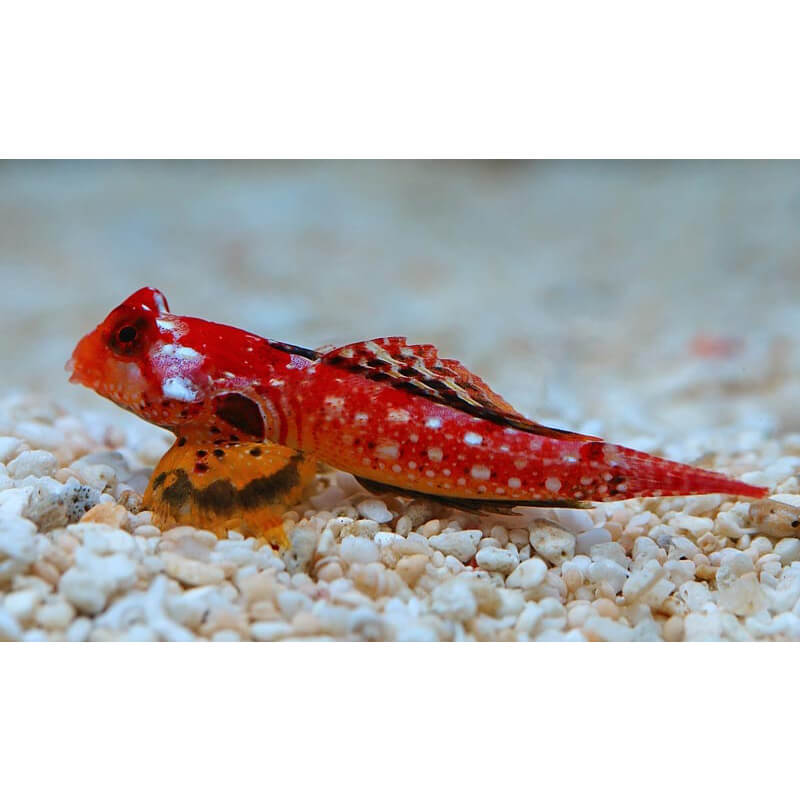
Ruby Red Dragonet
Also known as the Red Mandarin or Ruby Mandarin Dragonet
The Ruby Red Dragonet is an exceptionally rare and breathtakingly beautiful color variant of the popular Mandarin Dragonet, featuring intense ruby-red coloration instead of the typical blue and green. Native to the Indo-Pacific region, this stunning morph occurs naturally but is extremely uncommon in the wild, making specimens highly sought-after and premium-priced. Like all Mandarin Dragonets, they require specialized care with emphasis on continuous microfauna availability. Their slow, graceful swimming motion, intricate patterns, and spectacular red coloration make them among the most desirable marine fish, but only for experienced aquarists prepared to meet their demanding feeding requirements.
Key Features
Scientific Name: Synchiropus sycorax
Common Names: Ruby Red Dragonet, Red Mandarin, Ruby Mandarin, Red Mandarin Dragonet
Adult Size: 2.5–3 inches (6–8 cm)
Lifespan: 3–5+ years with proper care and feeding (potentially longer)
Temperament: Peaceful; non-aggressive toward all tankmates
Reef Compatibility: Completely reef-safe – will not harm corals or invertebrates
Minimum Tank Size: 30 gallons minimum (50+ gallons strongly recommended for stable microfauna)
Experience Level: Advanced – specialized feeding requirements, rarity, and premium price
Habitat & Tank Requirements
Natural Habitat: Found on protected lagoons, rubble zones, and reef flats with abundant live rock and coral at depths of 3–60 feet. They navigate slowly through coral branches and live rock hunting for tiny invertebrates.
Tank Environment:
- Mature, well-established aquarium absolutely essential (6+ months minimum, 12+ months ideal)
- Abundant live rock with maximum surface area for microfauna colonization
- Sandy substrate or fine rubble bottom
- Peaceful, stress-free environment with no aggressive fish
- Low to moderate, gentle water flow (strong currents stress them)
- Copepod and amphipod refugium mandatory for long-term success
- Dense coral or rock structures for security and perching
Water Parameters:
- Temperature: 72–78°F (22–26°C)
- Salinity: 1.023–1.025 specific gravity
- pH: 8.1–8.4
- Ammonia/Nitrite: 0 ppm
- Nitrate: <10 ppm (lower is better; dragonets sensitive)
- Alkalinity: 8–12 dKH
Essential Equipment:
- Quality protein skimmer
- Excellent biological filtration
- Refugium with copepod culture absolutely mandatory
- Stable water parameters and temperature control
- Regular water changes (10–15% weekly minimum)
Diet & Feeding
Primary Natural Diet:
- Live copepods (primary food source – 70%+ of diet)
- Live amphipods
- Small benthic invertebrates
- Microfauna on live rock and substrate
- Feed continuously throughout daylight hours by “grazing”
Aquarium Feeding Strategy:
- Thriving microfauna population essential before adding fish
- Weekly live copepod additions mandatory (200–1000+ depending on tank size)
- Refugium continuously producing copepods
- Training to frozen foods:
- Extremely rare; success rate under 10%
- Ruby Red morph particularly resistant to frozen food training
- Never purchase assuming frozen food acceptance
- Frozen copepods occasionally accepted (rare)
- Frozen cyclops, baby brine shrimp (rarely accepted)
- Live food supplementation:
- Add live Tisbe copepods weekly
- Add live Apocyclops copepods weekly
- Alternate species for nutritional variety
- Maintain dense refugium macroalgae for pod breeding
Feeding Schedule:
- Continuous grazing behavior from dawn to dusk
- Supplement with live copepods 2–3 times weekly minimum
- Monitor body condition daily
- Should appear rounded and well-fed, never pinched or thin
Behavior & Compatibility
Temperament:
- Extremely peaceful and docile
- Non-aggressive toward all tankmates
- Slow, graceful, deliberate movements
- Easily intimidated or stressed by active fish
- Shy initially but becomes more visible once comfortable
- Males territorial toward other male dragonets only
Tank Mates:
- Compatible with: Small peaceful fish including clownfish, gobies, firefish, cardinalfish, peaceful wrasses, Royal Grammas, basslets, anthias, small peaceful tangs
- Caution with: Other dragonets (competition for limited food), fast aggressive feeders, very active fish
- Avoid: Multiple dragonets (will starve), aggressive dottybacks, damselfish, large wrasses, any predatory fish, any fish that competes for microfauna
Social Behavior:
- Only one dragonet per tank unless system is very large (100+ gallons) with abundant food
- Males extremely territorial toward other male dragonets
- Male and female pairs possible if microfauna population supports both
- Peaceful toward all other species
- Competition with multiple dragonets results in starvation
Reef Compatibility:
- Completely reef-safe with all corals (SPS, LPS, soft corals)
- Will not harm any invertebrates
- Safe with all shrimp, crabs, snails, and cleanup crew
- May perch on coral branches (causes no damage)
- Ideal for peaceful reef aquariums
Acclimation & Care Tips
Initial Acclimation:
- Float bag for temperature equalization (20–30 minutes)
- Dim or turn off lights during introduction
- Verify abundant microfauna population before adding
- May hide initially but begins grazing within hours
- Never rush acclimation with this sensitive species
Signs of a Healthy Specimen:
- Rounded, full body with no pinched or sunken appearance
- Active grazing behavior throughout the day
- Clear, bright, alert eyes
- Vibrant ruby-red coloration with intricate patterns
- Smooth skin with no spots, lesions, or cloudiness
- Graceful, deliberate swimming movements
- Continuously “pecking” at rocks and substrate
CRITICAL Warning Signs of Starvation:
- Sunken belly or concave appearance
- Pinched area behind head
- Listless behavior, resting on bottom frequently
- Faded or dull coloration
- Reduced grazing activity
- If observed, immediate intervention required or fish will die
Color & Development
Coloration Characteristics:
- Body: Intense ruby-red to deep crimson base color
- Patterns: Intricate vermiculated (wavy) patterns in orange, white, and yellow
- Face: Orange and red patterns with expressive, large eyes
- Fins: Elaborate dorsal and pelvic fins with red, orange, and white patterns
- Rarity: Natural color morph; significantly rarer than blue/green Mandarins
- Sexual Dimorphism: Males have larger, more elaborate dorsal fin spine
Color Intensity:
- Healthy diet maintains intense ruby-red coloration
- Stress, poor nutrition, or illness causes dramatic fading
- Proper lighting (blue spectrum) enhances natural brilliance
- Males display most vibrant colors during courtship displays
Male vs Female Identification:
- Males: First dorsal spine dramatically elongated, more intense colors, slightly larger
- Females: Smaller dorsal fin, slightly duller coloration, rounder body
- Size difference minimal; fin structure most reliable indicator
Rarity and Value:
- Ruby Red color morph extremely rare in wild
- Significantly more expensive than standard Mandarins (often 2–5x price)
- Limited availability; often special order only
- Premium reflects rarity and collection difficulty
Size & Growth:
- Typically available at 1.5–2.5 inches
- Reach adult size within 8–15 months
- Slow growth rate
- Small size makes them suitable for nano reefs (if food adequate)
Swimming & Behavioral Characteristics
Unique Swimming Motion:
- Slow, hovering, graceful movements
- Pectoral fins provide primary propulsion
- Rarely swims rapidly (only when startled)
- “Hops” from rock to rock methodically
- Absolutely mesmerizing to observe
Grazing Behavior:
- Spends entire day hunting and pecking at surfaces
- Approaches rock and coral surfaces slowly
- Pecks at substrate with small mouth searching for copepods
- May spend 10+ hours daily actively feeding
- Continuous movement throughout aquarium
Breeding Potential
Spawning Behavior:
- Males perform elaborate courtship dances at dusk
- Pairs rise together in water column
- Release eggs and sperm simultaneously at peak of rise
- Spawning ritual absolutely spectacular to witness
- Eggs are planktonic and extremely difficult to raise
- Larval rearing requires advanced techniques and rotifer cultures
Why Choose a Ruby Red Dragonet?
Ruby Red Dragonets represent the pinnacle of dragonet beauty—combining the graceful elegance of Mandarin Dragonets with extraordinarily rare ruby-red coloration. They offer mesmerizing behavior, spectacular appearance, and complete reef-safety. However, they are exclusively for advanced aquarists with:
- Mature reef systems (12+ months minimum)
- Thriving, sustainable microfauna populations
- Established refugiums producing copepods continuously
- Willingness and budget for weekly live food supplementation ($800–$2000+ annually)
- Realistic expectations about frozen food training (nearly impossible)
- Experience with sensitive, specialized species
The Ruby Red Dragonet is not simply a “colorful fish”—it’s a long-term commitment requiring preparation, dedication, and ongoing investment. When these demanding requirements are met, they become living jewels that provide years of captivating beauty and fascinating behavior. Their rarity, spectacular coloration, and graceful movements make them ultimate centerpiece fish for experienced aquarists with appropriate systems.
Success requires treating them as the rare, specialized species they are—not as typical aquarium fish. The reward for proper care is owning one of the most beautiful and sought-after fish in the marine hobby.
| Service Level | Quarantined |
|---|
You must be logged in to post a review.
Related products
Astraea Snail
Price range: $29.99 through $79.99
Chromis
Price range: $19.99 through $39.99
Flame Hawkfish
$99.99
Foxface
$149.99
Moorish Idol
$179.99
Reviews
There are no reviews yet.