
Goldflake Angelfish (Wild Caught)
$599.99
Apolemichthys xanthopunctatus
| Care Level | High |
| Temperament | Semi-aggressive |
| Color Form | brownish-yellow to deep gold color |
| Diet | Omnivore |
| Reef Compatible | Not reef-safe |
| Water Conditions | 72–78°F (22–26°C), Sg: 1.020–1.025, pH: 8.1–8.4, dKH: 8–12 |
| Max Size | 10″-11″ |
| Family | Pomacanthidae |
| Minimum Tank Size | 125 gallons |
Live Arrival Guarantee
Approximate Purchase Size: Small: 1-2.5″; Medium: 2.5-3.75″; Large: 4-5″
Goldflake Angelfish (Wild Caught)
Also known as the Gold-Spangled Angelfish or Goldflake Angel
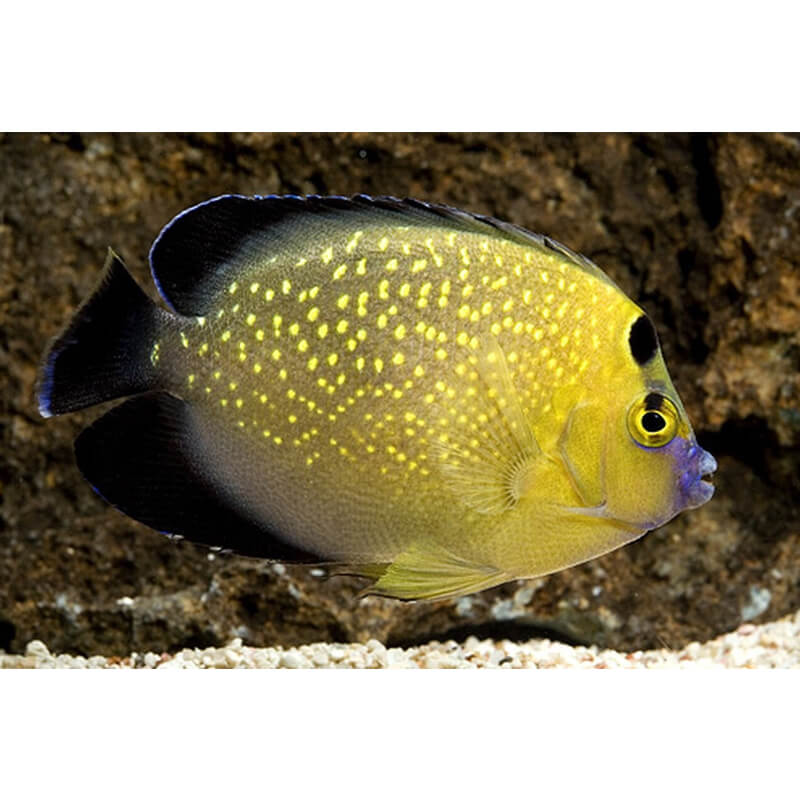
The wild-caught Goldflake Angelfish is an extraordinarily beautiful and highly prized species featuring stunning deep blue to black body coloration adorned with numerous golden-yellow spots creating a spectacular starry-night effect. Wild specimens offer the authentic coloration and larger initial size of fish collected from their natural Pacific reef habitats. Native to the Western Pacific, particularly around Fiji, Samoa, and the Cook Islands where they inhabit deeper reef slopes, this species represents one of the most visually striking and collectible large angelfish available, though it demands expert care and patience from experienced aquarists.
Key Features
- Scientific Name: Apolemichthys xanthopunctatus
- Common Names: Goldflake Angelfish, Gold-Spangled Angelfish, Yellow-spotted Angelfish
- Adult Size: 8–10 inches (can reach 11 inches in optimal conditions)
- Lifespan: 10–15+ years with proper care (requires expert husbandry)
- Temperament: Semi-aggressive; territorial but generally peaceful for a large angelfish
- Reef Compatibility: Not reef-safe – will nip at soft corals, LPS, and clams
- Minimum Tank Size: 125 gallons minimum (150–180+ gallons strongly recommended)
- Experience Level: Advanced to expert (wild specimens are notoriously challenging)
Habitat & Tank Requirements
- Tank Environment: Provide extensive live rock structures with large caves, deep overhangs, and multiple hiding spots combined with substantial open swimming areas. Wild-caught Goldflake Angels are often shy initially and require secure refuges where they can retreat until fully acclimated. They come from deeper reef environments (60–150+ feet) and appreciate dimmer lighting initially.
- Water Parameters:
- Temperature: 72–78°F (22–26°C) (prefer cooler end due to deep-water origins)
- Salinity: 1.020–1.025
- pH: 8.1–8.4
- Ammonia/Nitrite: 0 ppm
- Nitrate: <10 ppm (pristine water quality absolutely essential)
- dKH: 8–12
- Calcium: 380–450 ppm
- Phosphate: <0.03 ppm
- Lighting: Moderate to low lighting preferred initially. Deep-water collection origins mean they are adapted to reduced light penetration. Provide ample shaded areas and dim refuges under rockwork. Gradually acclimate to brighter lighting over weeks.
- Aquascape: Stable, complex rockwork with multiple large territories and substantial caves. Create distinct zones with visual barriers. Wild specimens require more extensive hiding opportunities than captive-bred fish during a critical acclimation period.
- Compatibility: Generally peaceful for a large angelfish but can be territorial. Best kept as the only large angelfish unless the tank substantially exceeds 200+ gallons. Compatible with other semi-aggressive species once established. However, wild specimens may be initially timid and can be outcompeted for food by aggressive tank mates. Establish a peaceful community first, adding more assertive fish only after the Goldflake is feeding confidently and behaving normally.
Diet & Feeding
Wild-caught Goldflake Angelfish are notoriously finicky feeders requiring patience and persistence:
- Meaty Foods: Mysis shrimp, enriched brine shrimp, chopped seafood (squid, clams, mussels, scallops), krill, prawns, marine fish flesh, premium frozen carnivore preparations
- Plant Matter: Marine algae sheets (nori, sea lettuce, dulse), spirulina, fresh vegetables, herbivore preparations
- Specialty Foods: High-quality angelfish formulas containing natural sponge material (absolutely essential, sponges are primary natural food), color-enhancing preparations
- Live Foods May Be Required: Wild specimens often initially refuse all prepared foods and may require live adult brine shrimp, live black worms, live mysis, or live ghost shrimp to stimulate feeding response
- Feeding Challenges: This is the species’ most notorious characteristic—wild Goldflakes can be extremely difficult to get feeding initially. Some specimens take days to weeks to accept any food. Patience, persistence, and variety are absolutely essential. Soaking foods in garlic extract, vitamin supplements, or amino acids may help stimulate appetite.
- Live Rock Grazing: Abundant live rock with rich natural growth is critical, they may initially subsist primarily on picking at live rock before accepting prepared foods
- Feeding Schedule: Once feeding is established, feed 2–3 times daily. During initial acclimation, offer food 4–5 times daily in small amounts to encourage feeding response.
Notes & Considerations
- Behavior: Wild-caught Goldflake Angels are typically shy, cautious, and secretive initially, often hiding for extended periods (days to weeks) after introduction. They are naturally wary fish from deeper reef environments and require considerable patience during acclimation. Once fully established and feeding confidently (which may take several weeks to months), they become more visible and active. Even when acclimated, they retain a somewhat reserved demeanor compared to bolder angelfish species.
- Coral Compatibility: Definitely NOT reef-safe. Will nip at soft corals (leather corals, zoanthids, mushrooms, xenia), large-polyp stony corals, and destructively attack clam mantles. They also consume sponges, tunicates, and virtually all sessile invertebrates. Strictly suited for fish-only or FOWLR (fish-only-with-live-rock) systems exclusively.
- Spectacular Authentic Coloration: Wild specimens often display the most intense, authentic coloration with deep, rich blue-black body color that provides dramatic contrast to the golden spots. The body is covered with numerous small, precisely defined golden-yellow to bright yellow spots or “flakes” creating a stunning starry-night effect. Each spot is distinct and cleanly defined. The face shows yellow highlights. Fins display blue margins with golden spotting. Wild specimens from certain collection areas (particularly Fiji) are renowned for especially vibrant spot intensity and distribution.
- Collection Challenges: Goldflakes inhabit deeper reef slopes and drop-offs (60–150+ feet), making collection difficult, dangerous, and expensive. Divers must use technical diving equipment and ascend slowly with specimens to prevent decompression issues. This contributes to higher costs and occasional swim bladder complications if decompression wasn’t managed perfectly.
- Acclimation Critical Period: The first 4–8 weeks after arrival represent the most critical and challenging period. Wild Goldflakes have historically high mortality rates during this acclimation phase, primarily due to feeding refusal, stress-related diseases, or failure to adapt to aquarium conditions. Extended quarantine and expert care during this period are absolutely essential.
- Deep-Water Sensitivity: Coming from deeper, cooler waters with reduced light, wild Goldflakes can be highly sensitive to bright lighting, warm temperatures, and water quality fluctuations. They strongly prefer temperatures at the cooler end of reef ranges (72–76°F optimal) and initially require dimly lit environments.
- Decompression Considerations: Deep-water collection occasionally results in swim bladder complications even with proper decompression protocols. Reputable suppliers should only offer wild specimens that have been held for extended periods (6–12+ weeks minimum) and demonstrate completely normal swimming behavior and buoyancy control.
- Sponge Dependency: In wild environments, sponges constitute the majority of their natural diet. Captive wild specimens absolutely require foods containing substantial sponge material to prevent severe nutritional deficiencies, immune system compromise, and lateral line erosion over time.
Why Choose Wild-Caught Goldflake Angelfish?
Wild specimens offer specific characteristics for expert collectors:
- Authentic Natural Coloration: Wild-caught fish from premium collection areas (Fiji, Samoa) often display the most intense, vivid golden spotting against the deepest blue-black backgrounds
- Larger Initial Size: Wild specimens often arrive at larger sizes (6–9 inches) providing immediate visual impact without years of growing juveniles
- Collector’s Specimen: For advanced aquarists and collectors, successfully acclimating and maintaining a wild Goldflake represents a significant achievement and badge of expertise
- Natural Behavior: Wild specimens display natural behavioral patterns and instincts developed in reef environments
- Geographic Variations: Different collection locations produce subtle variations in spot patterns, color intensity, and body proportions that collectors appreciate
Quarantine Absolutely Critical and Extended
Quarantined wild-caught Goldflake Angelfish are absolutely non-negotiable:
- Extended Duration Essential: Minimum 8–12 weeks quarantine (preferably 12–16 weeks) is absolutely essential for wild Goldflakes—longer than almost any other species due to notoriously difficult acclimation
- Feeding Establishment: Extended quarantine is the ONLY way to confirm this notoriously finicky species is eating consistently before your substantial investment arrives. Many wild Goldflakes die from starvation or feeding-related stress within the first 2 months.
- Deep-Water Acclimation: Allows complete recovery from depth-related physiological stress and full adjustment to standard aquarium lighting, temperature, and pressure
- Disease Prevention: Comprehensive treatment eliminates parasites (cryptocaryon, brooklynella, flukes), bacterial infections, and allows monitoring for chronic health issues common in wild specimens
- Swim Bladder Assessment: Extended observation confirms normal buoyancy control and absence of decompression-related complications
- Stress Recovery: Prolonged peaceful quarantine allows total recovery from collection trauma, decompression stress, multiple handling events, and lengthy shipping
- Behavioral Confirmation: Extended period ensures emergence from hiding, establishment of normal swimming patterns, confident feeding behavior, and absence of neurological issues
- Mortality Risk Reduction: Given that wild Goldflakes have historically high mortality rates in the first 2–4 months, extended quarantine allows passage through the highest-risk period before arrival
- Investment Protection: Given extraordinary cost ($400–$800+ for wild specimens), extended quarantine provides absolutely essential protection for what represents a very substantial financial investment in challenging, high-risk livestock
Our highly meticulous, 10-16+ week quarantine protocol for wild-caught Goldflake Angelfish ensures optimal health, vibrant coloration, and confident behavior through extended observation, peaceful habitat, premium nutrition, gentle treatments, and careful monitoring—resulting in a stunning, resilient specimen that embodies one of the most challenging and rewarding achievements in marine angelfish keeping.
| Service Level |
Quarantined |
|---|
You must be logged in to post a review.
Related products
Blue Leg Hermit Crabs
Price range: $19.99 through $74.99
Copperband Butterflyfish
Price range: $149.99 through $218.99
Coral Beauty Angelfish
Price range: $79.99 through $91.99
Margarite Snail
Price range: $11.99 through $54.99
Reviews
There are no reviews yet.