
Fu Manchu Lionfish
$159.99
Dendrochirus biocellatus
| Care Level | Intermediate |
| Temperament | Peaceful with tankmates but predatory |
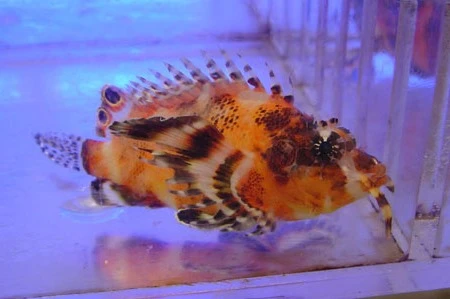
| Color Form | Red, white, and brown banded body with feather-like pectoral fins and twin ocelli (eyespots) |
| Diet | Carnivore |
| Reef Compatible | Reef safe with caution |
| Water Conditions | sg 1.020–1.025, 72–78°F, pH 8.1–8.4 |
| Max Size | 5″ |
| Family | Scorpaenidae |
| Minimum Tank Size | 30 gallons |
Fu Manchu Lionfish
Also known as Twinspot Lionfish, Ocellated Lionfish, Frillfin Turkeyfish
The Fu Manchu Lionfish is one of the most spectacular and sought-after dwarf lionfish species, featuring elaborate feather-like pectoral fin rays that resemble whiskers or a mustache (hence the “Fu Manchu” name), combined with striking red, white, and brown banding. This small, peaceful predator is prized for its ornate appearance and manageable size. Like all lionfish, it possesses venomous spines requiring careful handling, but its beauty and fascinating behavior make it a centerpiece species.
Key Features
- Scientific Name: Dendrochirus biocellatus
- Common Names: Fu Manchu Lionfish, Twinspot Lionfish, Ocellated Lionfish
- Adult Size: Up to 4-5 inches
- Lifespan: 8-12 years with proper care
- Temperament: Peaceful; slow-moving ambush predator
- Reef Compatibility: Reef safe with caution; will eat small fish and ornamental shrimp
- Minimum Tank Size: 30 gallons minimum preferred
- Experience Level: Intermediate; venomous spines require careful handling
Habitat & Tank Requirements
Tank Environment: Provide ample live rock formations with caves, overhangs, and ledges for perching and hunting. Appreciates moderate water flow and subdued lighting. Nocturnal tendencies; provide hiding spots for daytime resting. Secure all decorations.
Water Parameters:
- Temperature: 72-78°F (22-26°C)
- Salinity: 1.020-1.025
- pH: 8.1-8.4
- Good water quality essential
Equipment Recommendations:
- Quality filtration system
- Protein skimmer
- Moderate water circulation
- Subdued lighting preferred (or provide shaded areas)
These maintain healthy conditions for this ambush predator.
Diet & Feeding
Fu Manchu Lionfish are carnivorous ambush predators requiring meaty foods.
Recommended foods include:
- Primary: Fresh or frozen silversides, ghost shrimp, grass shrimp
- Live foods: Live ghost shrimp, live grass shrimp (helpful for training to frozen)
- Frozen foods: Frozen silversides, frozen krill, frozen shrimp, chopped seafood
- Variety: Squid, scallops, marine fish pieces
- Training: May require live foods initially; wean to frozen gradually
Feeding Frequency: 2-3 times weekly; large meals (slow metabolism)
Special Note: Often requires live foods initially but can be trained to accept frozen foods with patience. Use a feeding stick to target feed and train to freeze. DO NOT overfeed; lionfish have slow metabolism and easily become obese.
Social Structure & Compatibility
- Tankmates: Compatible with fish too large to swallow; avoid small fish
- Peaceful: Non-aggressive toward appropriate-sized tankmates
- Predatory: Will consume any fish or shrimp that fits in mouth
- Multiple Lionfish: Can sometimes coexist with other dwarf lionfish in larger tanks
- Reef Caution: Will eat ornamental shrimp; safe with corals
Notes & Considerations
- Absolutely stunning appearance: One of the most ornate lionfish species.
- Elaborate feather-like pectoral fin rays resemble elaborate whiskers or mustaches.
- Beautiful red, white, and brown banding pattern.
- Two distinctive ocelli (eyespots) on the dorsal fin give the “biocellatus” name.
- Smaller dwarf lionfish species; suitable for moderate aquariums.
- VENOMOUS SPINES: Dorsal, anal, and pelvic spines contain potent venom.
- Spine stings are extremely painful; can cause severe localized pain, swelling, nausea.
- Pain can persist for hours to days depending on severity.
- Medical attention may be required for severe stings.
- Always exercise extreme caution when working in a tank.
- Never handle with bare hands; use nets or containers carefully.
- Be aware of lionfish location during all maintenance.
- Hot water immersion (as hot as safely tolerable) helps break down venom proteins.
- Keep first aid supplies and hot water readily available.
- Spines are defensive only; fish are not aggressive but will defend if cornered.
- Slow-moving ambush predator; sits and waits for prey.
- Primarily nocturnal; most active during evening and night.
- Often rests on rockwork or caves during bright daylight.
- I will eat ANY fish small enough to fit in a surprisingly large mouth.
- Mouths can expand dramatically; they can swallow fish nearly their own size.
- Cannot be kept with small fish, gobies, blennies, or small wrasses.
- Will consume all ornamental shrimp: peppermint, cleaner, fire shrimp.
- Completely safe with corals; does not nip or damage.
- Can be kept in reef aquariums with appropriate-sized tankmates only.
- May require live foods (ghost shrimp) initially to stimulate feeding.
- Can be trained to accept frozen foods with patience using a feeding stick.
- DO NOT feed live goldfish or freshwater feeders (causes nutritional issues).
- Slow metabolism; feed 2-3 times weekly only.
- Overfeeding causes obesity and shortened lifespan.
- May become lethargic if overfed; portion control critical.
- Very hardy once established and feeding properly.
- Relatively disease-resistant compared to many species.
- Can jump or swim near the surface; secure lid recommended.
- May be shy initially but becomes bold once comfortable.
- Often perches on rockwork in a hunting position.
- Uses elaborate pectoral fins to “herd” prey into corners.
- Fascinating hunting behavior to observe.
- Native to Indo-Pacific coral reef regions.
- More expensive than common dwarf lionfish due to ornate appearance.
- Excellent centerpiece fish for appropriate reef or fish-only systems.
- Long-lived with proper care and feeding schedule.
Why Choose a Quarantined Fu Manchu Lionfish?
Purchasing a quarantined specimen from us means you’re starting with a healthier, better-acclimated lionfish. All fish are observed, treated as needed, and most importantly, trained to accept frozen foods before sale. This is critical as many lionfish arrive requiring live foods. Our specimens are already weaned to frozen, saving you time and ensuring proper nutrition. Proper quarantine also ensures optimal health. This provides the strongest foundation for long-term success with this spectacular species.
| Service Level | Quarantined |
|---|
You must be logged in to post a review.


Reviews
There are no reviews yet.