
Diamond Goby
$129.99
Valenciennea puellaris
| Care Level | Easy |
| Temperament | non-aggressive |
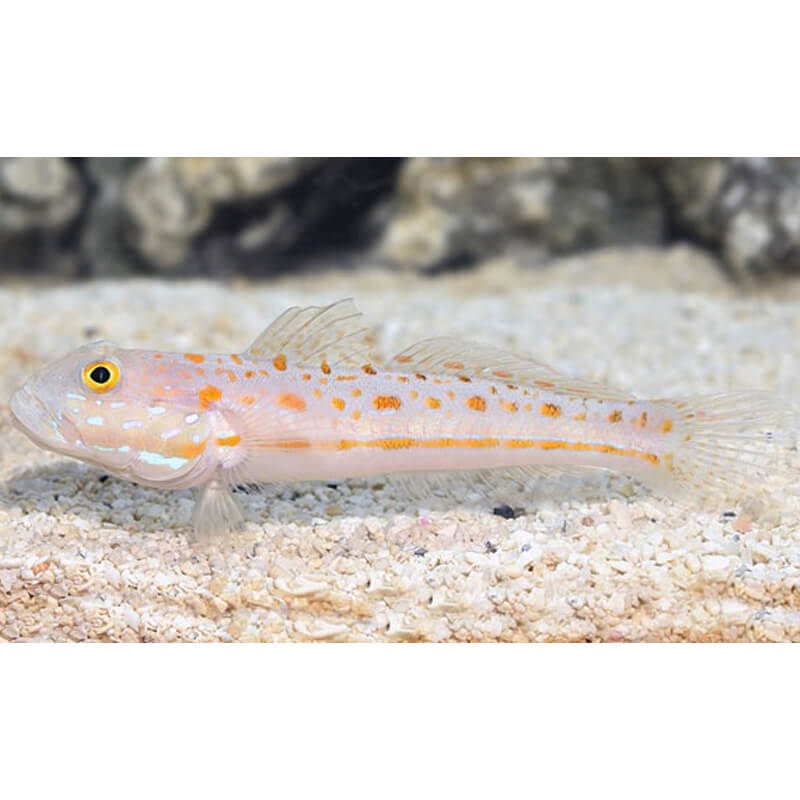
| Color Form | White body with orange-yellow spots |
| Diet | Carnivores |
| Reef Compatible | Reef- safe |
| Water Conditions | 72–78°F (22–26°C), 1.023–1.025 specific gravity, pH: 8.1–8.4, 8–12 dKH |
| Max Size | 6″ |
| Family | Gobiidae |
| Minimum Tank Size | 30 gallons |
3-Day Guarantee
Approximate Purchase Size: Small to medium
Diamond Goby
Also known as Diamond Watchman Goby, Orange-Spotted Sleeper Goby, Maiden Goby, Pretty Prawn Goby
The Diamond Goby is a peaceful, bottom-dwelling sand-sifting fish that spends most of its time buried or sifting through sand searching for small food particles. Its white body with orange or yellow-spotted markings makes it distinctive and attractive. They are hardy, easy to care for, and provide a useful function in aquariums by aerating the substrate and reducing detritus. Diamond Gobies are ideal for both beginner and intermediate hobbyists and are comfortable in a variety of marine tank setups.
Key Features
- Scientific Name: Valenciennea puellaris
- Common Names: Diamond Goby, Diamond Watchman Goby, Orange-Spotted Sleeper Goby, Maiden Goby, Pretty Prawn Goby
- Adult Size: Up to 6 inches (≈ 15 cm)
- Lifespan: About 5 years with proper care
- Temperament: Peaceful; bottom-dweller; active sand-sifter
- Reef Compatibility: Reef-safe; does not harm corals or invertebrates
- Minimum Tank Size: 30 gallons recommended due to size and sand-sifting behavior
- Experience Level: Beginner to Intermediate — hardy but requires proper substrate and stable conditions
Habitat & Tank Requirements
Natural Habitat: Diamond Gobies are native to the Indo-Pacific region, typically found in sandy lagoons, reef flats, and sandy bottoms near coral reefs. They burrow in the sand to search for food and shelter.
Tank Environment:
- Use fine sand substrate at least 2.5–3 inches deep to allow natural burrowing and sifting behavior
- Provide open sandy bottom space with scattered rockwork for shelter, avoiding over-compacted structures to prevent collapse
- Gentle to moderate water flow with stable filtration
- Suitable for single goby or bonded pairs; avoid keeping multiple individuals in the same tank if space is limited
Water Parameters:
- Temperature: 72–78°F (22–26°C)
- Salinity: 1.023–1.025 specific gravity
- pH: 8.1–8.4
- Ammonia/Nitrite: 0 ppm
- Nitrate: <20 ppm
- Alkalinity: 8–12 dKH
Essential Equipment:
- Efficient filtration system
- Stable moderate lighting
- Quality protein skimmer recommended for tanks over 30 gallons
- Regular water changes (10–15% weekly or 20% biweekly)
Diet & Feeding
Diamond Gobies are carnivorous sand-sifters that feed on tiny invertebrates, microfauna, and organic particles in the substrate. They do not eat only algae and require a diet that mimics their natural feeding behavior.
Recommended Foods:
- Pellets/Flakes: High-quality marine micro-pellets
- Frozen Foods: Mysis shrimp, brine shrimp, copepods
- Small live benthic invertebrates
- Prepared mixes: Omnivore-enriched frozen options
Feeding Schedule:
- Feed 1–2 small meals daily
- Place food near the sand bed so goby can find it during sifting
- Variety in diet helps maintain vibrant coloration, health, and activity
Behavior & Compatibility
Temperament: Diamond Gobies are peaceful and shy. They spend most of their time partially buried in sand, emerging occasionally to sift substrate for food. They are generally compatible with other peaceful reef fish, invertebrates, and corals.
Tank Mates:
- Compatible with peaceful mid- and top-dwelling fish
- Avoid other aggressive sand-sifters or large predatory species
- Best kept singly or in bonded pairs due to territorial behavior toward their own kind
Pairing Behavior: Diamond Gobies may form pairs and maintain small burrows together. Multiple gobies in the same tank may compete for space if the tank is not large enough.
Acclimation & Care Tips
Initial Acclimation: Float bag in tank to equalize temperature for 15–20 minutes before introduction.
Signs of Healthy Specimen
- Active, consistent sand-sifting behavior
- Clear, bright eyes with no cloudiness
- Smooth fins with no tears or damage
- Vibrant orange/yellow spots with consistent body coloration
- Eager feeding response
Color & Development
Coloration Characteristics: White body with bright orange or yellow spots along dorsal and lateral regions. Fins are semi-transparent with subtle markings.
Color Intensity: High-quality diet and stable water parameters enhance spot brightness and body contrast. Stress or poor water quality may cause fading.
Size & Growth: Juveniles start at 1–2 inches, reaching adult size of up to 6 inches within 12–18 months.
Anemone Hosting Behavior
Diamond Gobies do not host anemones. They are substrate-dwelling species and interact primarily with sand, rocks, and microfauna.
Special Considerations
Captive-Bred Advantages:
- Hardier than wild-caught specimens
- Conditioned to aquarium foods
- Adapted to captive conditions
- Reduces impact on wild populations
Breeding Potential
Diamond Gobies can breed in captivity under ideal conditions with deep sand substrate and a stable tank environment. They form pairs and guard small burrows in the sand. Breeding and raising fry is challenging as fry requires tiny live foods and stable water parameters.
Why Choose a Quarantined Diamond Goby?
A quarantined Diamond Goby is already acclimated to aquarium life, free from parasites, and trained to accept a variety of foods. This ensures better survival, quicker adaptation to your tank, and overall healthier behavior. Choosing a quarantined specimen provides a hardy, active sand-sifter that improves substrate cleanliness and adds dynamic activity to your marine or reef setup.
| Service Level | Quarantined |
|---|
You must be logged in to post a review.
Related products
Aiptasia Eating Filefish
$99.99
Blue Leg Hermit Crabs
Price range: $19.99 through $74.99
Copperband Butterflyfish
Price range: $149.99 through $189.99
Midas Blenny
$99.99
Moorish Idol
$179.99
Reviews
There are no reviews yet.