
Conspicillatus Angel (Captive Bred)
$8,999.99
Chaetodontoplus conspicillatus
| Care Level | Moderate to High |
| Temperament | Peaceful to semi-aggressive |
| Color Form | Yellow with black and blue accents |
| Diet | Omnivore |
| Reef Compatible | With caution |
| Water Conditions | 72–78°F (22–26°C), Sg 1.023–1.025, pH: 8.1–8.4, 8–12 dKH |
| Max Size | 5″ |
| Family | Pomacanthidae |
| Minimum Tank Size | 150 gallons |
Live Arrival Guarantee
Approximate Purchase Size: Small: 1-2.5″; Medium: 2.5-3.75″; Large: 4-5″
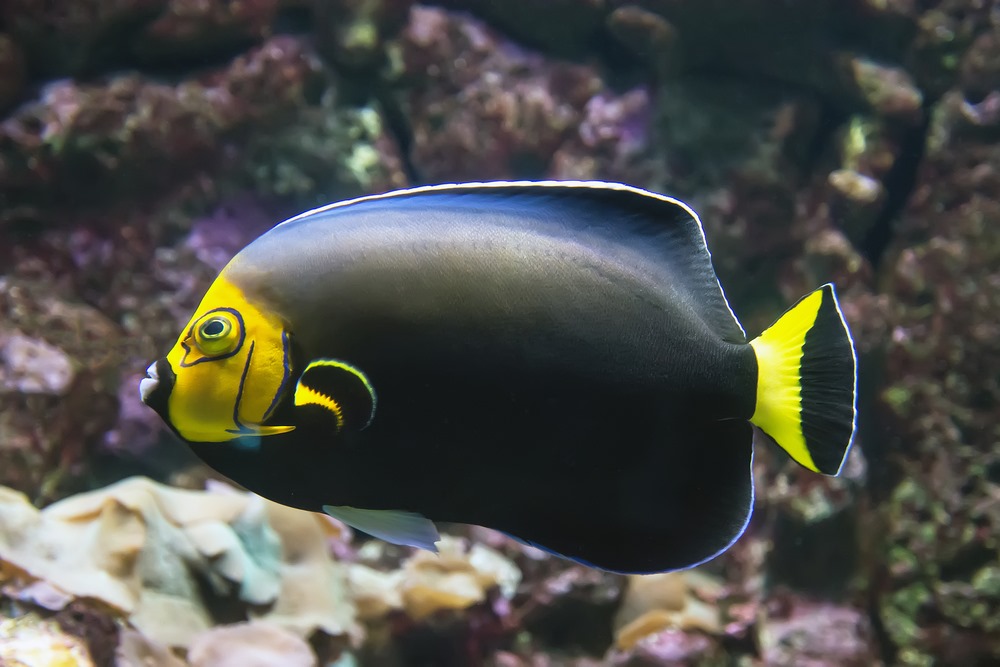
Conspicillatus Angelfish (Captive Bred)
Also known as the Conspicuous Angelfish
The Conspicillatus Angelfish is a stunning and sought-after dwarf angelfish native to the Western Pacific Ocean. This captive-bred specimen displays elegant coloration with a pearly blue-gray body adorned with intricate orange-yellow markings on the face and fins, distinctive blue vertical bars, and striking blue accents. Captive-bred Conspics are significantly hardier than wild-caught specimens, already acclimated to aquarium foods and conditions, making them an excellent choice for intermediate marine aquarists seeking a beautiful and relatively peaceful dwarf angelfish.
Key Features
- Scientific Name: Chaetodontoplus conspicillatus
- Common Names: Conspicillatus Angelfish, Conspicuous Angelfish, Conspic Angel
- Adult Size: 4–5 inches (10–13 cm)
- Lifespan: 8–15+ years with proper care
- Temperament: Peaceful to semi-aggressive; generally peaceful for a dwarf angelfish
- Reef Compatibility: Reef-safe with caution – may occasionally nip at some corals
- Minimum Tank Size: 150 gallons
- Experience Level: Intermediate – captive-bred specimens significantly easier than wild-caught
- Captive Bred Advantages: Hardy, pre-conditioned to prepared foods, disease-free, sustainable
Habitat & Tank Requirements
Natural Habitat: Found on deep outer reef slopes and drop-offs at depths of 50–200 feet throughout the Western Pacific, including Fiji, Tonga, and surrounding regions. Inhabits caves and crevices in coral-rich areas, typically as solitary individuals or in small harems.
Tank Environment:
- Abundant live rock with multiple caves, overhangs, and hiding spots
- Complex rockwork structure for territory establishment and security
- Moderate swimming space
- Well-established aquarium (3+ months recommended, though captive-bred specimens adapt to newer systems better than wild fish)
- Moderate water flow with calmer areas
Water Parameters:
- Temperature: 72–78°F (22–26°C)
- Salinity: 1.023–1.025 specific gravity
- pH: 8.1–8.4
- Ammonia/Nitrite: 0 ppm
- Nitrate: <20 ppm
- Alkalinity: 8–12 dKH
- Calcium: 400–450 ppm
Essential Equipment:
- Quality protein skimmer
- Efficient biological filtration
- Moderate water circulation
- Regular water changes (15–20% biweekly minimum)
- UV sterilizer (optional; less critical with captive-bred specimens)
Diet & Feeding
Captive-bred Conspicillatus Angelfish are omnivores that readily accept prepared foods, a significant advantage over wild-caught specimens. They require a varied diet with both protein and plant matter.
Recommended Foods:
- Frozen Foods: Mysis shrimp, enriched brine shrimp, cyclops, finely chopped krill, marine fish flesh, angelfish preparations
- Pellets/Flakes: High-quality marine angelfish pellets, spirulina-enriched formulas, herbivore pellets (readily accepted by captive-bred specimens)
- Plant Matter: Nori sheets, spirulina, marine macro algae (30–40% of diet)
- Prepared Mixes: Angelfish formula blends, marine cuisine, Formula Two
- Natural Grazing: Live rock with established microalgae and film algae
- Supplements: Vitamin C-enriched foods, garlic supplements, color-enhancing foods with carotenoids
Feeding Schedule:
- Feed 2–3 times daily
- Provide nori sheets clipped to tank glass for continuous grazing
- Variety is important for maintaining health and vibrant coloration
- Captive-bred specimens typically feed more aggressively and consistently than wild-caught
Captive-Bred Feeding Advantages:
- Already trained to accept pellets and frozen foods from hatching
- No transition period from natural to prepared foods
- More aggressive and confident feeding response
- Less picky about food types
- Easier to maintain proper nutrition
Note: In the wild, Conspicillatus Angels inhabit deep reefs and feed on sponges, tunicates, and algae. Captive-bred specimens have been raised on prepared foods from the larval stage, making them far easier to feed and maintain than their wild-caught counterparts.
Behavior & Compatibility
Temperament:
- Peaceful to semi-aggressive; one of the more peaceful dwarf angelfish species
- Less aggressive than Bicolor, Lemonpeel, or Eibli Angels
- Becomes moderately territorial once established but rarely problematic
- Generally peaceful toward non-angelfish species
- May show mild territorial behavior toward other dwarf angelfish
- Captive-bred specimens often more confident and less shy than wild-caught
Territorial Behavior:
- Establishes small territory within rockwork
- Less territorial than many other Centropyge species
- Aggression typically limited to other dwarf angelfish
- Rarely bothers other fish species
- Can coexist with other dwarf angels in larger tanks (100+ gallons) with proper planning
Tank Mates:
- Compatible with: Peaceful to semi-aggressive tangs, wrasses, clownfish, dartfish, gobies, blennies, cardinalfish, chromis, anthias, peaceful butterflyfish, dottybacks
- Caution with: Other dwarf angelfish (only in tanks 70+ gallons with multiple territories); may be intimidated by very aggressive species
- Avoid: Aggressive triggers, large aggressive angelfish, predatory fish, extremely aggressive dottybacks or pseudochromis in smaller tanks
Introduction Strategy:
- Introduced as one of the last fish or mid-sequence
- Rearranging rockwork during introduction can help
- Monitor for first few days with existing angelfish
- Captive-bred specimens typically less stressed during introduction
Reef Compatibility:
- Reef-safe with caution: Generally more reef-safe than many dwarf angelfish
- Most individuals leave most corals alone
- May occasionally pick at certain LPS corals, zoanthids, or clam mantles
- Less likely to nip corals than Bicolor, Lemonpeel, or Flame Angels
- Individual behavior varies; cannot guarantee complete reef safety
- Many aquarists successfully keep them in reef tanks
- Monitor behavior closely when first introduced to reef system
- Best success in well-fed specimens with ample natural grazing available
Acclimation & Care Tips
Initial Acclimation:
- Dim tank lights for first 24–48 hours
- Provide multiple hiding spots for security
- Minimize disturbances for first few days
- Captive-bred specimens typically acclimate faster and begin feeding sooner than wild-caught (often within 12–24 hours)
Captive-Bred Health Advantages:
- No parasites from wild environment
- No collection or shipping trauma from deep water
- Already disease-free when properly quarantined by breeder
- Stronger immune systems from optimal rearing conditions
- Better survival rates overall
- Less prone to wasting diseases or feeding issues
Color & Development
Captive-Bred Coloration: Captive-bred Conspicillatus Angels develop the same beautiful coloration as wild specimens:
- Body: Pearly blue-gray to silver-blue base color
- Face: Orange to golden-yellow markings around eyes and snout
- Fins: Orange-yellow highlights on pectoral, dorsal, and anal fins
- Vertical Bars: Distinctive blue vertical bars on body (typically 5–7 bars)
- Eye Ring: Prominent blue ring around eye
- Scale Edges: Subtle darker edging creating textured appearance
- Tail: Blue-gray with orange-yellow accents
Color Intensity Factors:
- Diet quality (spirulina, carotenoids, varied foods)
- Water quality (pristine conditions enhance colors)
- Lighting (moderate to bright lighting brings out colors)
- Stress levels (unstressed fish show better colors)
- Age and maturity
- Captive-bred fish often show excellent coloration due to optimal rearing
Regional Variations:
- Wild specimens may show slight color variations by collection location
- Captive-bred fish typically show consistent coloration
- All display the characteristic blue-gray body with orange-yellow accents
Special Considerations
Feeding:
- Already trained to accept pellets and prepared foods
- More aggressive and confident feeders
- No difficult transition from natural foods
- Easier long-term maintenance
Disease Resistance:
- Free from wild parasites and pathogens
- Lower disease risk overall
- Less stress-related illness
- Healthier baseline condition
Sustainability:
- Reduces pressure on wild populations
- Environmentally responsible choice
- Supports advancement of marine aquaculture
- Helps preserve natural reef ecosystems
Temperament:
- Often bolder and more confident than wild fish
- Better adapted to aquarium life
- More interactive with keeper
- Less prone to hiding or stress
Tank Size Considerations
Minimum Requirements:
- 55 gallons: Acceptable for single specimen
- 70–90 gallons: Better for long-term health and reduced stress
- 100+ gallons: Allows for potential multiple dwarf angelfish with careful planning
Space Benefits:
- Larger tanks reduce territorial behavior
- More swimming space for active fish
- Better water stability
- Easier to maintain multiple territories if adding other dwarf angels
Pairing & Multiple Specimens
Keeping Pairs:
- Males and females can be paired in tanks 70+ gallons
- Sexual dimorphism difficult to detect visually
- Introduce pair simultaneously for best results
- Monitor for aggression during pairing
- Not all individuals will pair successfully
Multiple Dwarf Angelfish:
- Can coexist with other Centropyge species in tanks 100+ gallons
- Introduce simultaneously when possible
- Provide distinct territories with visual barriers
- Conspics are less aggressive, making them good candidates for mixed dwarf angel tanks
- Monitor closely during introduction period
Breeding Information
Captive Breeding:
- These fish are the result of successful captive breeding programs
- Breeding marine angelfish is extremely challenging
- Requires specialized facilities and expertise
- Larval rearing very difficult (requires rotifers, copepods, extensive care)
- Home breeding not practical for most hobbyists
- Support breeders by purchasing captive-bred specimens when available
Why Choose a Captive-Bred Conspicillatus Angelfish?
Choosing a captive-bred Conspicillatus Angelfish is a great decision for your tank and the environment. These fish are healthier, stronger, and easier to care for than wild-caught ones, which come from deep, stressful waters. They are raised in aquariums from a young age, are used to eating prepared foods, and have no wild parasites.
They adjust quickly, are more confident, and have better chances of survival. Buying captive-bred fish also helps protect wild reefs and supports sustainable fish farming. Although they cost more, they are healthier and easier to keep. Our quarantine process ensures your fish arrives healthy, eats well, and will be a beautiful, peaceful, and long-lasting part of your aquarium for many years.
| Service Level | Quarantined |
|---|
You must be logged in to post a review.
Reviews
There are no reviews yet.