
Live Barracuda Fish for Sale: Care Challenges, Tank Requirements, and Feeding Guide

Live Barracuda Fish for Sale: Care Challenges, Tank Requirements, and Feeding Guide
Price: $299.99
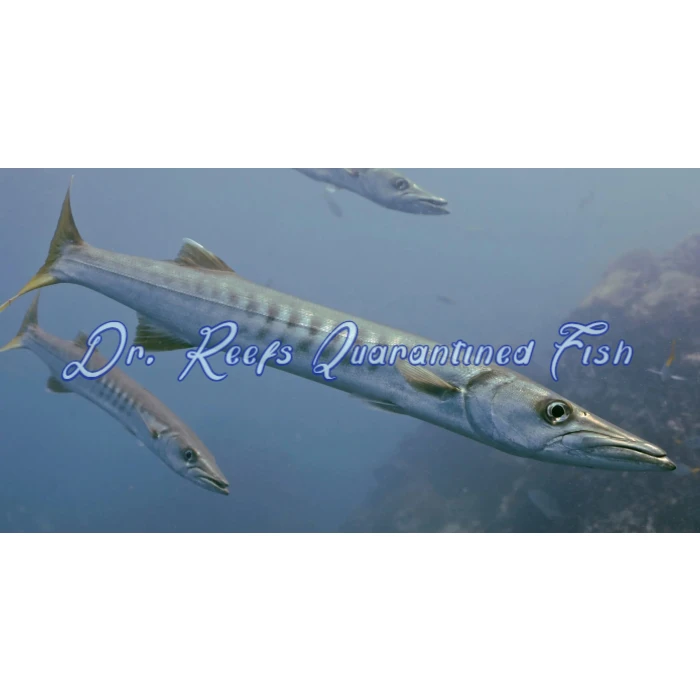
There are fish that fill a tank, and then there are fish that own a tank. The Great Barracuda is firmly in the second category. Sleek, fast, predatory, and built like a torpedo, the Great Barracuda is one of the most thrilling and visually commanding fish you can ever keep in a large saltwater aquarium. This is not a beginner fish. This is not a community fish. This is a showpiece predator for serious aquarists who want something that stops conversations and dominates every inch of the tank it calls home. At Dr. Reef’s Quarantined Fish, every Great Barracuda is fully quarantined, parasite-treated, and conditioned to eat prepared foods before it ships to you. Let’s cover everything you need to know.
What Is a Great Barracuda?
The Great Barracuda, known scientifically as Sphyraena barracuda, is one of the most recognizable predatory fish in the ocean. Found throughout tropical and subtropical waters worldwide, including the Atlantic, Indian, and Pacific Oceans, it is the largest member of the Barracuda family and one of the apex predators of coral reef ecosystems.
Great Barracudas are built for speed and ambush. Their long, torpedo-shaped body, powerful jaws filled with razor-sharp fang-like teeth, and explosive burst speed make them extraordinarily effective hunters in the wild. In the ocean, they can reach lengths of up to 6 feet, though aquarium specimens generally stay in the 2 to 3 foot range depending on tank size and management.
What makes the Great Barracuda so fascinating in an aquarium setting is its behavior. It does not dart around nervously like smaller reef fish. It hovers. It watches. It patrols with slow, deliberate movements and then erupts into explosive speed when it decides to act. Watching a Great Barracuda in a large tank is like watching a perfectly engineered predator on display.
At $299.99 from Dr. Reef’s Quarantined Fish, you are getting a fully prepared, healthy, and eating animal that is ready to become the centerpiece of a serious predator tank.
Why Buy From Dr. Reef’s Quarantined Fish?
Buying a Great Barracuda without proper sourcing is a gamble that rarely ends well. These are large, sensitive fish that do not tolerate the stress of shipping well unless they have been properly prepared beforehand.
Here is exactly what Dr. Reef does before your Great Barracuda ships:
- Full quarantine observation period to confirm the animal is stable, alert, and behaving normally
- Proactive treatment for external parasites, including ich, velvet, and flukes
- Food conditioning so the fish is already accepting frozen and prepared prey before it leaves
- Health screening to confirm body condition, fin integrity, and eye clarity is all excellent
- Only animals that meet every health standard are cleared for shipping
A Great Barracuda that arrives stressed, sick, or refusing food is one of the hardest fish in the hobby to turn around. Their size, their sensitivity, and their demanding care requirements mean that starting with an unquarantined fish is a recipe for heartbreak and financial loss.
Dr. Reef’s process exists precisely to prevent that outcome. Thousands of customers trust Dr. Reef’s Quarantined Fish because the results speak for themselves. Healthy fish, long lives, and reef keepers who actually enjoy their hobby instead of constantly fighting disease outbreaks.
Species Overview
Scientific Name: Sphyraena barracuda
Common Names: Great Barracuda, Giant Barracuda, Cuda
Origin: Tropical and subtropical waters of the Atlantic, Indian, and Pacific Oceans. Commonly found around coral reefs, seagrass beds, and open coastal waters.
Adult Size in the Wild: Up to 5 to 6 feet and over 100 pounds in exceptional specimens. Most wild adults range from 2 to 4 feet.
Aquarium Size: With proper tank management, aquarium specimens typically reach 18 to 30 inches. Tank size directly influences growth rate and maximum size.
Lifespan: Great Barracudas can live over 14 years in the wild. In captivity with excellent care, lifespans of 8 to 12 years or more are achievable.
Temperament: Aggressive predator toward any fish or invertebrate small enough to eat. Generally non-aggressive toward humans in an aquarium setting when not threatened.
Activity Level: Moderate. They alternate between slow, hovering patrols and explosive bursts of speed. They are most active during feeding time and in the early morning and evening hours.
Care Challenges
The Great Barracuda is listed as a care challenge fish, and that label is completely honest. Before purchasing, every potential keeper needs to understand what they are committing to.
Challenge 1: Tank Size
Great Barracudas need enormous tanks. A juvenile may start in a 200-gallon system, but a growing adult will need 500 gallons or more. The tank must be long rather than tall, giving the fish a straight, open swimming lane to patrol. Barracudas are built for speed and straight-line movement. A short or cramped tank causes chronic stress, fin damage, and behavioral problems.
Challenge 2: Feeding
In the wild, Great Barracudas eat live fish almost exclusively. Training them to accept frozen or prepared foods takes time, patience, and experience. This is one of the most valuable parts of what Dr. Reef does during the quarantine process. A food-conditioned Barracuda from Dr. Reef saves you weeks of difficult feeding attempts and the added cost and complexity of maintaining live feeder fish.
Challenge 3: Tankmates
Almost everything smaller than a Great Barracuda is a potential meal. This severely limits your tank mate options. Most keepers house Great Barracudas alone or with only a few very large, robust companions.
Challenge 4: Water Quality
Great Barracudas are heavy waste producers and sensitive to water quality swings. They need oversized filtration, consistent water changes, and stable parameters at all times. A water quality crash in a tank housing a Great Barracuda can be fatal very quickly.
Challenge 5: Stress Sensitivity
Barracudas are easily stressed by sudden changes in lighting, loud noises, vibrations near the tank, and the presence of unfamiliar people or animals. A calm, stable environment is essential for long-term health.
None of these challenges is impossible to meet. But they require honest planning, serious investment, and genuine commitment. If you are ready for that, the Great Barracuda is one of the most rewarding fish in the entire hobby.
Tank Requirements
Minimum Tank Size
A juvenile Great Barracuda needs at least 200 gallons to start. As the fish grows, you will need to upgrade. A fully grown aquarium specimen needs 500 gallons or more with a tank length of at least 8 feet. Long rectangular tanks are strongly preferred over cube or tall designs.
Water Parameters
- Temperature: 72 to 82 degrees Fahrenheit
- Salinity: 1.020 to 1.025 specific gravity
- pH: 8.1 to 8.4
- Ammonia and Nitrite: 0 ppm
- Nitrate: Under 20 ppm, lower is always better
- Dissolved Oxygen: High levels required, strong surface agitation is important
Substrate
A fine sand substrate works well, but bare-bottom tanks are also popular for large predator setups because they are easier to keep clean. If using sand, keep the layer shallow (1 to 2 inches) to prevent dead spots in a high-waste environment.
Aquascape
Keep the aquascape minimal and open. Great Barracudas need unobstructed swimming lanes. A few large rock structures along the back and sides are fine, but the center of the tank should remain open water for patrol swimming. Avoid sharp decorations or anything with edges that could injure a fast-moving fish.
Filtration
Oversized filtration is not optional. Plan your filtration for a system at least twice the actual tank volume to handle the significant bioload a Great Barracuda produces. A large sump, a powerful protein skimmer, strong biological filtration, and mechanical filtration working together are all necessary. Weekly or bi-weekly water changes of 15 to 20 percent help maintain water quality between filtration cycles.
Tank Cover
This is absolutely critical. Great Barracudas are powerful, fast fish that can and will jump if startled. A secure, heavy-duty tank cover or screen top that can withstand impact is required. Do not skip this step. An uncovered tank housing a Great Barracuda is a serious accident waiting to happen.
Lighting
Standard marine aquarium lighting on a natural day and night cycle works well. Avoid sudden, dramatic lighting changes that could startle the fish. A gradual sunrise and sunset cycle using a timer is ideal.
Feeding Guide
Feeding a Great Barracuda correctly is one of the most important and most challenging aspects of keeping this species.
Natural Diet
In the wild, Great Barracudas are almost exclusively fish eaters. They rely on explosive ambush speed to catch fast-moving prey fish. They are not scavengers, and they do not typically eat stationary food off the bottom.
What to Feed in Captivity
- Frozen whole silversides (one of the best staple foods)
- Frozen smelt
- Frozen mackerel or herring pieces
- Frozen shrimp (large, whole)
- Frozen squid
- Fresh fish fillets like tilapia, whitefish, or salmon (chopped to an appropriate size)
- Live feeder fish (only as an occasional supplement, not a staple)
Feeding Schedule
Feed two to three times per week for adults. Juveniles can be fed every other day in smaller amounts. Great Barracudas have fast metabolisms when young and slow down as they mature. Overfeeding leads to dangerous nitrate accumulation and digestive issues.
How to Feed
The most effective method is using long feeding tongs or a feeding wand to present food items in the water column, mimicking the movement of live prey. Wiggling the food slightly triggers the Barracuda’s predatory response. Many keepers use a feeding stick to dangle silversides or smelt just below the water surface, which activates the fish’s natural hunting instinct immediately.
Never hand-feed a Great Barracuda directly. Their strike speed and jaw strength make hand feeding genuinely dangerous.
Dr. Reef Advantage: Because every Great Barracuda from Dr. Reef’s Quarantined Fish is already conditioned to accept frozen foods during quarantine, you skip the most frustrating part of owning this species. Food-refusing wild-caught Barracudas can go weeks without eating and are extremely difficult to turn around. Dr. Reef’s conditioning process means your fish recognizes feeding time and responds immediately.
Aquarium Compatibility
Great Barracudas have a very specific compatibility profile.
Compatible Tank Mates
The safest option is keeping a Great Barracuda alone as the sole display animal in a large, dedicated predator tank. If you want tank mates, they must be large, robust, and fast enough to avoid becoming a meal. Possible companions in a very large system include:
- Large Groupers (must be similar size or larger)
- Large Lionfish (with monitoring, Barracuda may still attempt to eat them)
- Large Moray Eels are housed in rock structures
- Large Porcupine Pufferfish
- Large Triggers (with caution)
Do Not House With:
- Any fish smaller than the Barracuda’s mouth width
- Invertebrates of any kind
- Corals or reef structures (this is an FOWLR-only animal)
- Other Barracudas, unless the tank is exceptionally large and both animals are introduced simultaneously as juveniles
Reef Compatibility
The Great Barracuda is absolutely not reef-safe. It belongs exclusively in a large, open, Fish-Only With Live Rock (FOWLR) or bare predator tank setup. It will consume any invertebrate, damage corals through physical contact, and create a bioload completely incompatible with a delicate reef ecosystem.
Common Health Issues and How Dr. Reef Prevents Them
Marine Ich and Velvet: Common in stressed or newly imported fish. Dr. Reef treats every animal proactively before shipping, eliminating the most common disease risks before they become your problem.
Lateral Line Erosion (HLLE): A condition that causes pitting and discoloration along the lateral line and face, usually caused by poor water quality, nutritional deficiencies, or activated carbon exposure. Maintaining excellent water quality and a varied diet prevents this.
Fin Damage: Caused by a tank that is too small, sharp decorations, or aggressive tank mates. A properly sized, open tank with a smooth aquascape eliminates this risk.
Parasitic Infections: Flukes and other external parasites are treated during Dr. Reef’s quarantine process, giving your fish the cleanest possible start.
Nutritional Deficiency: Feeding only one prey item over a long period can cause health decline. Rotating between silversides, smelt, shrimp, and squid provides a complete nutritional profile.
Stress-Related Decline: The single most common cause of Great Barracuda health problems in captivity is chronic stress from an undersized tank, poor water quality, or a chaotic environment. Give this fish space, stability, and calm, and it will thrive.
Preparing Your Tank Before Your Great Barracuda Arrives
- Confirm tank size is appropriate and all swimming lanes are clear and open
- Verify all water parameters are stable and within the correct range
- Confirm filtration and skimmer are running at full capacity
- Have frozen silversides or smelt thawed and ready for the first feeding attempt
- Check that your tank cover is secure and impact-resistant
- Use drip acclimation carefully over 45 to 60 minutes, keeping the lighting dim throughout
- Keep the room quiet and avoid hovering over the tank during the first 24 hours
- Do not add any other new animals at the same time
Because Dr. Reef’s Great Barracuda is already quarantined and treated, no separate hospital tank protocol is needed on your end. Your job is simply to provide the right environment and let the fish settle in.
Frequently Asked Questions
Are Great Barracudas dangerous to keep? In an aquarium setting, they are not aggressive toward humans unless directly threatened or provoked. However, their jaw strength and strike speed are significant. Never put your hands in the tank during feeding, and always use feeding tongs. They deserve respect as apex predators.
Can a Great Barracuda be kept with other Barracudas? Only in very large systems, and only if both animals are introduced simultaneously as juveniles. Adult Great Barracudas are generally solitary and may become aggressive toward others of their species.
How fast do Great Barracudas grow? Juveniles grow relatively quickly in their first two years. Growth slows significantly as they mature. In captivity, growth rate is largely controlled by tank size and feeding frequency.
Is this fish for beginners? No. The Great Barracuda is an advanced-level species that requires a very large tank, excellent water quality management, specialized feeding techniques, and experience handling large predatory fish. It is best suited for aquarists who already have experience with large FOWLR systems.
Why does it cost $299.99? The price reflects the quarantine process, parasite treatment, food conditioning, the rarity of properly prepared Great Barracudas available for sale, and the guarantee of receiving a healthy and stable animal. A cheap, unquarantined Barracuda that arrives sick or refuses food will cost you far more in the long run.
Does Dr. Reef offer a live arrival guarantee? Yes. Dr. Reef’s Quarantined Fish stands behind every animal they ship. Visit the website for the most current guarantee and shipping policy details.
Final Thoughts
The Great Barracuda is not just a fish. It is an experience. It is the kind of animal that makes your aquarium feel like a window into the open ocean, a place where a real apex predator lives and hunts and commands every inch of the space around it. For the right aquarist with the right setup, there is nothing else in the saltwater hobby quite like it.
At $299.99, a fully quarantined, conditioned, and healthy Great Barracuda from Dr. Reef’s Quarantined Fish is an investment in one of the most extraordinary animals you will ever own. Dr. Reef’s commitment to fish health, honest care information, and genuine customer support make them the only source worth trusting for a fish of this caliber.
Check availability today at Dr. Reef’s Quarantined Fish. Predator fish of this quality and preparation do not stay in stock for long.