
Katherine Wrasse: Habitat, Behavior, and Aquarium Care Tips

Katherine Wrasse: Habitat, Behavior, and Aquarium Care Tips
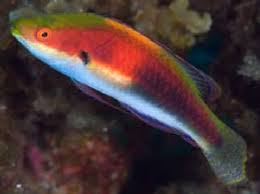
Among the many species in the wrasse family, the Katherine’s Fairy Wrasse (Cirrhilabrus katherinae) stands out as a rare and beautiful gem that most aquarists rarely encounter. When it does appear in the aquarium trade, it tends to sell quickly, and with good reason. Here’s a complete look at this captivating species.
Natural Habitat
The Katherine’s Fairy Wrasse belongs to the genus Cirrhilabrus, a group commonly known as Fairy Wrasses or Velvet Wrasses. These fish inhabit the coral reefs of the Indo-Pacific, typically found in areas with abundant live rock, coral rubble, and open swimming space. Like most fairy wrasses, they tend to occupy the mid-water column, swimming actively through the reef during the day and resting among the rocks at night, sometimes inside a self-produced mucus cocoon, a behavior shared with parrotfish.
Appearance and Sexual Dimorphism
Katherine’s Wrasse is a visually striking species with notable differences between males and females. Males display a bold, wide red stripe running along the middle of their body, flanked by thin white and black lines, a vivid combination that makes them a true showstopper under reef lighting. Females are an overall red-to-pink color with a distinctive black spot near the base of the tail fin. Juveniles and females can change sex under the right social conditions, as this species is a sequential hermaphrodite. Adults typically reach about 3 inches (7–8 cm) in length.
Aquarium Care Tips
Tank Requirements
The Katherine’s Fairy Wrasse thrives in a well-established saltwater aquarium of at least 50–90 gallons, with ample live rock for shelter and open spaces for swimming. The tank must be fitted with a tight-fitting, secure lid, as fairy wrasses are notorious jumpers, especially when startled. A sandy substrate is beneficial but not strictly required for this genus, unlike some Halichoeres wrasses that bury themselves at night.
Stable reef water parameters apply: temperature 72–78°F, salinity around 1.020–1.025, and a consistent pH of 8.1–8.4. Moderate water flow and reef-quality lighting help the fish display their best coloration.
Behavior and Social Structure
Katherine’s Wrasse is a peaceful, active species that explores every corner of the aquarium throughout the day. It is considered reef safe and will not harm corals. It may occasionally pick at very small crustaceans or copepods, which actually makes it a beneficial hunter of tiny reef pests. This species is shy and docile, so avoid pairing it with aggressive fish that may bully or outcompete it for food.
A harem setup of one male with several females works well, particularly when all fish are introduced to the tank simultaneously. Males can be territorial with one another, so keep only one male per tank unless the system is very large. Adding the largest males last helps reduce conflict when housing multiple Cirrhilabrus species together.
Diet
Katherine’s Fairy Wrasse is primarily carnivorous. Offer a varied diet of vitamin-enriched frozen mysis shrimp, frozen brine shrimp, high-quality marine pellets, and small meaty foods. Feed two to three times daily to keep the fish healthy and to preserve its vibrant coloration. A diet rich in color-enhancing nutrients goes a long way with this species.
Because Katherine’s Wrasse is rarely seen in the aquarium trade, sourcing from a reputable, quarantine-focused supplier ensures you’re receiving a healthy, eating specimen that’s been properly acclimated before arriving in your home.