
Gem Tang: Why This Rare Fish Is Highly Sought After

Gem Tang: Why This Rare Fish Is Highly Sought After
Few fish in the saltwater aquarium hobby command as much attention, admiration, and discussion as the Gem Tang (Zebrasoma gemmatum). Its striking appearance, extreme rarity, and premium price tag have made it a true trophy fish for serious reef keepers. But what exactly makes the Gem Tang so special, and is it worth the investment?
What Is the Gem Tang?
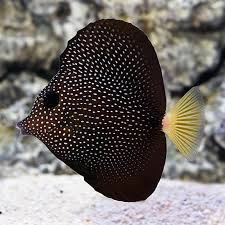
The Gem Tang is a member of the Acanthuridae family, the surgeonfish and tangs, and belongs to the same genus as the popular Yellow Tang and Sailfin Tang. Its scientific name, gemmatum, means “jeweled” in Latin, and one look at this fish makes the name obvious. Its body is a deep, iridescent black blanketed with brilliant white spots across every surface, finished off with a vivid yellow anal fin and tail accents. Under reef lighting, the contrast is breathtaking.
Where Does the Gem Tang Come From?
The Gem Tang is endemic to the Western Indian Ocean, with its primary range centered around Madagascar, Mauritius, and extending to the coasts of Mozambique and Natal, South Africa. In the wild, these fish inhabit coral reefs and rocky areas with strong currents and surge, in remote, deep, and difficult waters to reach. The combination of a restricted geographic range and challenging collection conditions is a major reason why Gem Tangs are so rarely seen in the aquarium trade.
Prices for Gem Tangs typically range from several hundred to several thousand dollars per fish, depending on size and availability. This is not an exaggeration. A healthy, mid-sized specimen can legitimately command $2,000–$3,000 or more on the open market.
Tank Requirements
Despite the premium price, the Gem Tang is not impossibly difficult to care for, but it does demand a large, well-established system. A minimum of 180 gallons is strongly recommended for a long-term home, as these fish are powerful, active swimmers that can reach up to 8–9 inches in length. A six-foot tank provides the horizontal “runway” they need to thrive.
Gem Tangs come from high-surge reef environments, so strong, consistent water flow is essential. High oxygen levels, pristine water quality, and stable reef parameters (temperature 74–82°F, pH 8.1–8.4, salinity 1.023–1.025) are non-negotiable. A high-quality protein skimmer and robust filtration system are critical.
Feeding the Gem Tang
Like all tangs, the Gem Tang is primarily herbivorous. In the wild, it grazes on algae growing across the reef. In the aquarium, provide a steady supply of marine algae, including nori sheets clipped to the glass, spirulina-enriched foods, and high-quality herbivore pellets. Supplement occasionally with frozen mysis or other meaty foods. A well-fed Gem Tang is less likely to become territorial or show curiosity toward LPS corals.
Reef Compatibility and Tankmates
The Gem Tang is 100% reef safe in terms of not consuming corals as a food source. It actually benefits the reef by grazing on algae that would otherwise compete with coral growth. In the wild, Gem Tangs are solitary and territorial, patrolling their own patch of reef. In the aquarium, keep only one Gem Tang per system, and introduce it thoughtfully alongside other non-aggressive tankmates. It may show mild aggression toward other tangs, particularly similar-bodied species, so adding all tangs simultaneously is advised when possible.
Why It Remains a Prized Possession
The Gem Tang sits at the intersection of breathtaking beauty and genuine scarcity. Unlike many “rare” fish that are simply uncommon in the trade, the Gem Tang’s rarity is rooted in real-world geography and ecology. For collectors and serious reef enthusiasts, owning a healthy, thriving Gem Tang represents the pinnacle of the hobby.
If you’re considering adding one, always source from a trusted supplier who quarantines fish prior to sale. A slow drip acclimation over 1–2 hours and a stint in a quarantine tank before introduction to the display are best practices. At Dr. Reef’s Quarantined Fish, that standard is built into every fish we offer, because a fish this special deserves the best possible start.