
Halichoeres Biocellatus

Halichoeres Biocellatus: Care Guide for the Xmas Red-lined Wrasse
The Two-Spot Wrasse, known scientifically as Halichoeres biocellatus, is one of those reef fish that rewards patient observation. Not every aquarist knows its name yet, but those who do keep coming back to it. With its intricate patterning, active personality, and genuine reef compatibility, the Two-Spot Wrasse is a species that belongs in more tanks than it currently occupies. This care guide covers everything you need to know, and explains why purchasing yours through Dr. Reef’s Quarantined Fish gives you the strongest possible start.
Getting to Know Halichoeres Biocellatus
The Two-Spot Wrasse is a member of the large and diverse Halichoeres genus within the family Labridae. Native to the Indo-Pacific region, this species is found across a range that spans from the Indian Ocean to the central Pacific, typically inhabiting shallow reef environments rich with rubble, sand, and coral structure.
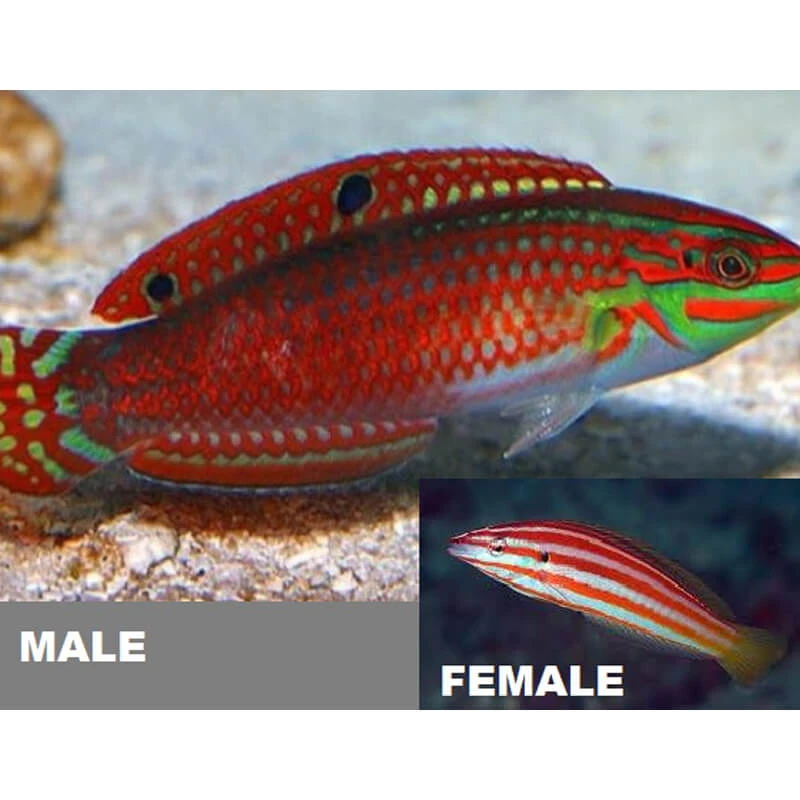
The common name comes from the two distinctive ocellated spots, or eyespots, that appear on the dorsal fin. These markings give the fish a look that is both subtle and distinctive, setting it apart from other Halichoeres species while keeping it understated enough to complement the bold colors often found in a mixed reef display.
Like most wrasses, Halichoeres biocellatus displays sexual dichromatism, meaning males and females look noticeably different. Initial phase fish, which includes females and younger males, tend to show more muted coloration with reddish-orange and white banding patterns. Terminal phase males develop richer greens and pinks with more complex facial markings. Both phases are attractive, but terminal males are particularly sought after by serious collectors.
Tank Requirements for the Two-Spot Wrasse
Aquarists considering the Two-Spot Wrasse should prepare an environment that mirrors the species’ natural habitat as closely as possible.
- Tank Size: A minimum of 50 gallons is recommended for a single specimen. Like most active wrasses, Halichoeres biocellatus benefits from open swimming space and will become stressed in cramped conditions.
- Sand Bed: This is a critical requirement that cannot be overlooked. Two-Spot Wrasses are sand-divers. When threatened, startled, or simply settling in for the night, they bury themselves in the sand substrate. A sand bed of at least 2 to 3 inches depth, composed of fine-grain sand, is non-negotiable. Without it, the fish cannot express its natural behavior and will suffer chronic stress.
- Rockwork and Structure: Provide ample live rock with varied hiding spaces and open channels for swimming. Halichoeres biocellatus is curious and exploratory, and it will use every part of the tank over the course of a day.
- Lighting: Moderate reef lighting is well-tolerated. The Two-Spot Wrasse does not have specific lighting demands and adapts well to most reef lighting setups.
- Water Parameters: Maintain salinity between 1.023 and 1.025, temperature between 74 and 80 degrees Fahrenheit, and pH between 8.1 and 8.4. Consistent, stable parameters are far more important than hitting any single target number. Wrasses as a family are sensitive to sudden shifts in water chemistry.
- Secure Lid: All wrasses are accomplished jumpers, particularly during the adjustment period after introduction to a new tank. A tightly fitted lid or mesh cover is essential.
Reef Compatibility
The Two-Spot Wrasse is an excellent candidate for reef aquariums. It does not nip at coral polyps or harass sessile invertebrates. In fact, Halichoeres wrasses are well known for performing a valuable service in reef tanks: hunting and consuming small parasites, flatworms, and pest invertebrates that other fish ignore. Many reef keepers deliberately add wrasses from this genus as part of an integrated pest management approach.
The caveat is small ornamental crustaceans. Tiny shrimp and amphipods may be consumed, as these fall within the natural diet of this species. Larger cleaner shrimp such as Lysmata amboinensis are generally safe, but nano shrimp should be kept separately.
Feeding Halichoeres Biocellatus
The Two-Spot Wrasse is a carnivore that eats readily in captivity. Offer a varied diet of high-quality frozen foods including Mysis shrimp, brine shrimp, and marine-based pellets. Most specimens transition quickly to prepared foods once settled, making daily feeding straightforward.
Feed two to three small portions daily rather than one large meal. Because they are naturally foragers throughout the day, spreading feedings helps maintain natural behavior and reduces competition in community tanks.
Acclimation and Quarantine
Wrasses from the Halichoeres genus can be delicate during the transition period immediately following capture and transport. Stress during this phase suppresses immune function and makes fish vulnerable to parasitic infection, bacterial illness, and nutritional decline.
Purchasing a Two-Spot Wrasse that has already been through a proper quarantine period makes an enormous difference in outcomes. At Dr. Reef’s Quarantined Fish, every Halichoeres biocellatus is held in dedicated quarantine systems, observed daily for signs of illness or stress, and only made available once it is eating confidently and displaying healthy behavior.
This process protects not only the individual fish but also every other animal in your display tank. Dr. Reef’s quarantine protocol is the foundation of the store’s reputation, and it is the reason hobbyists across the country trust Dr. Reef when sourcing less common or more demanding species.
Tankmates for the Two-Spot Wrasse
Halichoeres biocellatus is peaceful toward most reef fish and integrates well into community displays. Good tankmates include clownfish, gobies, dartfish, basslets, small tangs, and other peaceful semi-aggressive species of comparable size.
Avoid housing with aggressive or territorial wrasses that may bully smaller species. Also avoid keeping two male Halichoeres biocellatus in the same tank unless the system is large enough to clearly establish separate territories.
Why the Two-Spot Wrasse Deserves More Attention
Part of what makes the Two-Spot Wrasse underappreciated is simply a matter of visibility in the trade. It does not have the flashy celebrity status of a Mandarin fish or the instant name recognition of a clownfish. But for serious reef hobbyists who value active, functional, compatible fish with genuine character, it checks nearly every box.
Dr. Reef’s Quarantined Fish consistently stocks species that the wider trade undervalues, and the Two-Spot Wrasse is a perfect example. If you are building a diverse and healthy reef community, this is exactly the kind of fish that elevates the entire system.