
Flame Hawkfish

Flame Hawkfish for Sale: Personality and Tank Compatibility
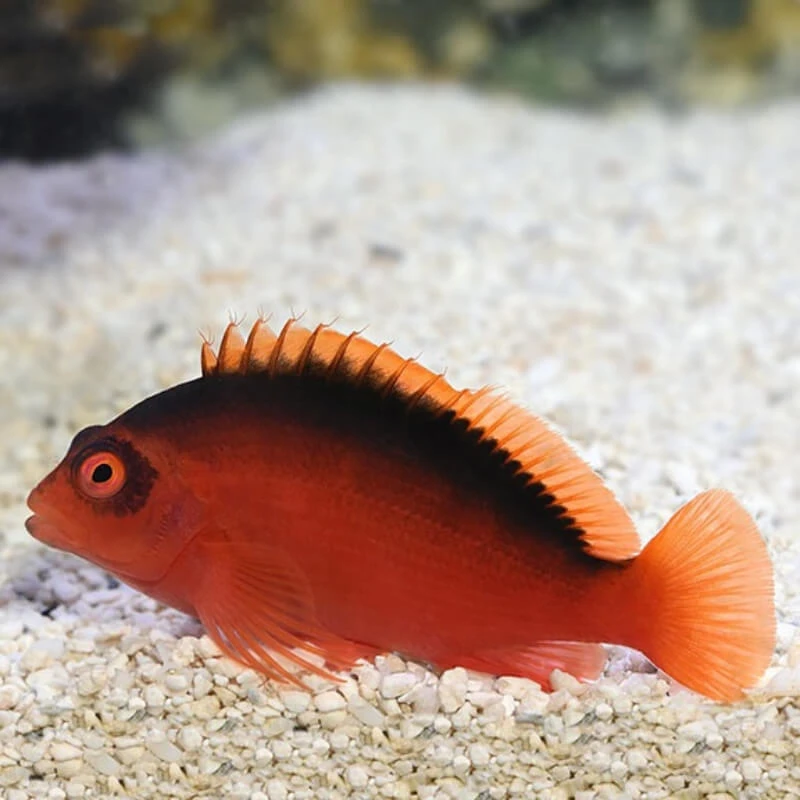
If you are looking for a fish that combines vivid color, bold personality, and a surprisingly manageable care profile, the Flame Hawkfish (Neocirrhites armatus) deserves a top spot on your list. Bright red with a dramatic black lattice pattern along the dorsal region and around the eyes, the Flame Hawkfish is one of the most striking small fish available in the marine aquarium trade. And when you source one from Dr. Reef’s Quarantined Fish, you are getting far more than good looks.
Meet the Flame Hawkfish
The Flame Hawkfish is a member of the family Cirrhitidae and is native to the coral-rich reefs of the Pacific Ocean, from Hawaii to the Tuamoto Islands. In the wild, they are commonly found perched motionlessly on coral heads, particularly on Pocillopora and Stylophora corals, where they survey their surroundings with sharp, alert eyes.
Unlike many reef fish, hawkfish lack a swim bladder. This means they sink when they stop swimming, which is why you will almost always find them resting on rocks, corals, or the substrate rather than hovering mid-water. This perching behavior gives them an endearing and watchful quality that aquarists find captivating. They seem to study you as much as you study them.
Personality: What to Expect
The Flame Hawkfish has a personality that is outsized for its body. Typically reaching only three to four inches in length, this fish is bold, curious, and highly interactive with its keeper. Many Flame Hawkfish will recognize the person who feeds them and will approach the glass in anticipation. They are not shy, and they are not passive.
That said, their boldness can tip into aggression toward smaller or slower tankmates. Flame Hawkfish are ambush predators by nature, and they will make short work of small shrimp, small gobies, and tiny ornamental invertebrates if given the opportunity. Understanding this personality trait is essential when planning your tank.
The good news is that Flame Hawkfish are generally peaceful with fish of similar or larger size and are not known to be fin nippers. They hold their own without being destructive to the overall harmony of a mixed-species display tank.
Tank Compatibility Guide
Reef Safe Concerns: The Flame Hawkfish is considered partially reef safe with caution. It will not bother corals or anemones, but any small crustaceans including cleaner shrimp, peppermint shrimp, and sexy shrimp are fair game. If your reef tank includes ornamental shrimp, think carefully before adding a Flame Hawkfish.
Compatible Tankmates: Medium-sized semi-aggressive to peaceful fish work well alongside the Flame Hawkfish. Good companions include tangs, angelfish, larger dottybacks, wrasses, and dartfish. Avoid pairing them with very small or timid species that might be intimidated or preyed upon.
Same Species: Two male Flame Hawkfish in the same tank will likely clash. A male and female pair can coexist, but sexing hawkfish is not straightforward without professional experience. A single Flame Hawkfish per tank is the safest approach for most home aquarists.
Tank Requirements
- Tank Size: A minimum of 30 gallons is recommended. Because Flame Hawkfish are perching fish rather than active open-water swimmers, the footprint of the tank matters more than height.
- Aquascape: Provide plenty of rocks, ledges, and coral structure for the Flame Hawkfish to claim as perching territory. They are territorial about their favorite spots and will return to the same positions repeatedly.
- Water Parameters: Like all marine fish, Flame Hawkfish require stable, high-quality water. Target a salinity of 1.023 to 1.025, temperature between 72 and 78 degrees Fahrenheit, and maintain low nitrate levels with regular water changes and good filtration.
- Lighting: Moderate to high lighting is appropriate, particularly if you are keeping coral alongside your Flame Hawkfish.
Feeding the Flame Hawkfish
Flame Hawkfish are carnivores and enthusiastic eaters, which makes them one of the easier saltwater fish to feed in captivity. They readily accept a wide range of meaty foods including frozen Mysis shrimp, krill, brine shrimp, and high-quality marine pellets.
Feed small amounts two to three times daily. Because they are ambush predators, they prefer food that sinks or drifts past them rather than chasing items rapidly across the water column. Target feeding with a pipette or feeding stick works particularly well.
Why Buy Your Flame Hawkfish from Dr. Reef’s Quarantined Fish
Dr. Reef’s Quarantined Fish is not just a seller. It is a system built around the long-term success of both the fish and the hobbyist. Every Flame Hawkfish available through Dr. Reef goes through a full quarantine process before being offered for sale.
Wild-caught marine fish, including hawkfish, are frequently exposed to stress, disease, and parasitic infection during collection and transport. Introducing an unquarantined fish directly into a display tank risks spreading illness to every other inhabitant. Dr. Reef eliminates this risk by holding each fish in dedicated quarantine systems, monitoring for health issues, treating proactively, and only releasing fish that have been confirmed healthy and eating well.
The difference in survival rates between quarantined and unquarantined fish is significant. Hobbyists who have purchased through Dr. Reef consistently report stronger outcomes, faster acclimation, and fewer losses. That track record is built on a genuine commitment to fish welfare and customer success.
A Fish Worth the Investment
The Flame Hawkfish is a centerpiece-quality fish at a fraction of the cost of many rare reef species. Its vivid red coloration is eye-catching from across the room, its personality makes it a daily source of entertainment, and its care requirements are manageable for intermediate to advanced hobbyists.
When you combine that appeal with the peace of mind that comes from purchasing through Dr. Reef’s Quarantined Fish, you are making a smart, well-informed choice for your reef tank. Browse the current availability at Dr. Reef and see why hobbyists keep coming back when they want healthy, quarantined marine fish done right.