
Chalk Bass Care Guide: Hardy, Colorful, and Reef Safe

Chalk Bass Care Guide: Hardy, Colorful, and Reef Safe
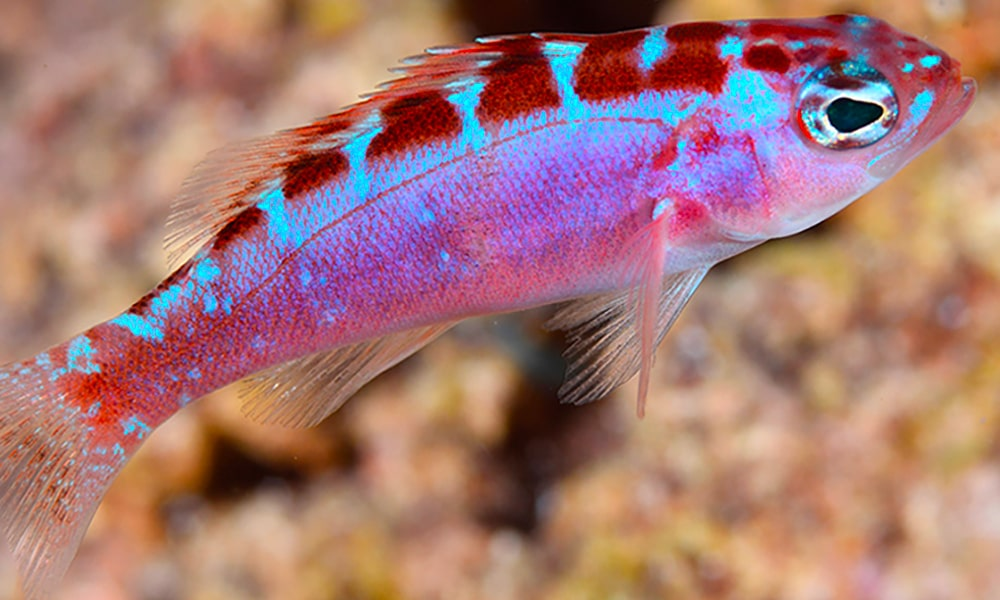
If you have ever scrolled through stock photos of saltwater fish and stopped on something small, striped in purple and gold, and clearly full of personality, there is a good chance you were looking at a Chalk Bass. This little bass is one of those fish that quietly wins people over. It is not flashy in the way a tang or an angelfish is, but it has charm, it is genuinely easygoing, and it settles into a reef tank without much fuss. For hobbyists who want color and character without the drama, the Chalk Bass is worth a closer look.
What Is a Chalk Bass?
The Chalk Bass (Serranus tortugarum) is a small member of the sea bass family found in the Caribbean, usually hovering near rubble piles and rocky ledges in loose groups. In the wild, it spends its time picking at small crustaceans and darting for cover when a predator swims past. In the home aquarium, that same instinct shows up as a fish that loves to hide among rockwork, then pop out the moment food hits the water.
Unlike many marine fish that are shy or stressed for weeks after arrival, the Chalk Bass tends to acclimate quickly and start eating within a day or two once it feels secure. That is part of why it shows up so often on lists of beginner-friendly saltwater fish, even though its coloring looks like something only an experienced reefer would keep.
Chalk Bass Appearance and Size
A Chalk Bass rarely grows past two and a half inches, which makes it a great fit for smaller and mid-sized systems. Its body is marked with alternating stripes of lavender, blue, and orange running from nose to tail, with a soft yellow highlight along the fins. The pattern looks almost hand-painted, and it holds its color well under standard reef lighting, unlike some fish that fade once they are out of a display tank.
Because it stays small and slender, it rarely competes for space the way larger bass or grouper relatives do. This is one reason it pairs so well with peaceful community fish rather than aggressive tank bullies.
Tank Requirements for Chalk Bass
Minimum Tank Size
A single Chalk Bass can live comfortably in a tank as small as twenty gallons, though thirty gallons or more gives it room to establish a territory and feel less exposed. If you plan to keep more than one, which is often recommended since they are naturally social, aim for at least forty gallons with plenty of rockwork so each fish can claim its own hiding spot.
Water Parameters
This fish is not picky, but it still deserves stable reef conditions. Keep temperature between 72 and 78 degrees Fahrenheit, salinity around 1.020 to 1.025, and pH steady between 8.1 and 8.4. Sudden swings in any of these numbers stress the fish far more than a slightly off baseline, so consistency matters more than chasing perfect numbers.
Is the Chalk Bass Reef Safe?
Yes, and this is one of its biggest selling points. The Chalk Bass will not touch corals, clams, or most invertebrates, which makes it a safe pick for mixed reef displays. The one exception is very small ornamental shrimp or pods, which it may snack on if given the chance. If you keep a cleanup crew, that is usually not a dealbreaker, but it is worth knowing before you stock a tank built around delicate shrimp species.
Chalk Bass Diet and Feeding
In the wild, this fish eats small crustaceans and zooplankton, and in captivity it does best on a varied diet of mysis shrimp, finely chopped seafood, and quality marine pellets. Feeding twice a day in small portions keeps it active and colorful without overloading your system with waste. Most Chalk Bass are strong eaters once settled, which is one more reason they are considered such a forgiving fish for people newer to the hobby.
Chalk Bass Temperament and Tank Mates
Chalk Bass are peaceful toward almost everything except their own kind if the tank is too small. In a group, mild squabbling over territory is normal and rarely causes injury as long as there is enough rock to break up sightlines. They do well alongside clownfish, gobies, wrasses, and other calm reef fish, and they generally ignore corals and larger tank mates entirely.
Why Quarantine Matters for Chalk Bass
Even a hardy fish like this one can carry parasites or stress-related illness picked up during collection and shipping. That is exactly why a proper quarantine period before introducing any new fish to your display tank is so important. It gives the animal time to recover, start eating reliably, and get treated for anything it may be carrying before it ever touches your reef. Pairing that with a slow, careful acclimation process at drop-off time gives your Chalk Bass the best possible start.
If you already keep other fish, it is also worth checking a stocking compatibility chart before adding a new species, just to confirm your current tank mates will get along.
Where to Buy a Healthy, Quarantined Chalk Bass
A fish this hardy still deserves a healthy start, and that starts with where you buy it. Dr. Reef’s offers a wild-caught Chalk Bass for $49.99 that has already gone through a full quarantine process before it ships. If you are exploring other members of the basslet family, that category is a good place to browse similar species with comparable size and temperament.
For anyone building out a peaceful reef community, it also helps to understand what truly reef safe actually means before you shop, since not every fish labeled that way behaves the same in every tank.
The Chalk Bass is proof that you do not need a difficult, high-maintenance fish to get real color and personality in a reef tank. Give it a stable home, a bit of rockwork to explore, and a proper quarantine before it arrives, and it will reward you with years of easy, colorful company.