
Starck’s Damsel
$159.99
Chrysiptera starcki
| Care Level | Easy to Moderate |
| Temperament | Semi-aggressive |
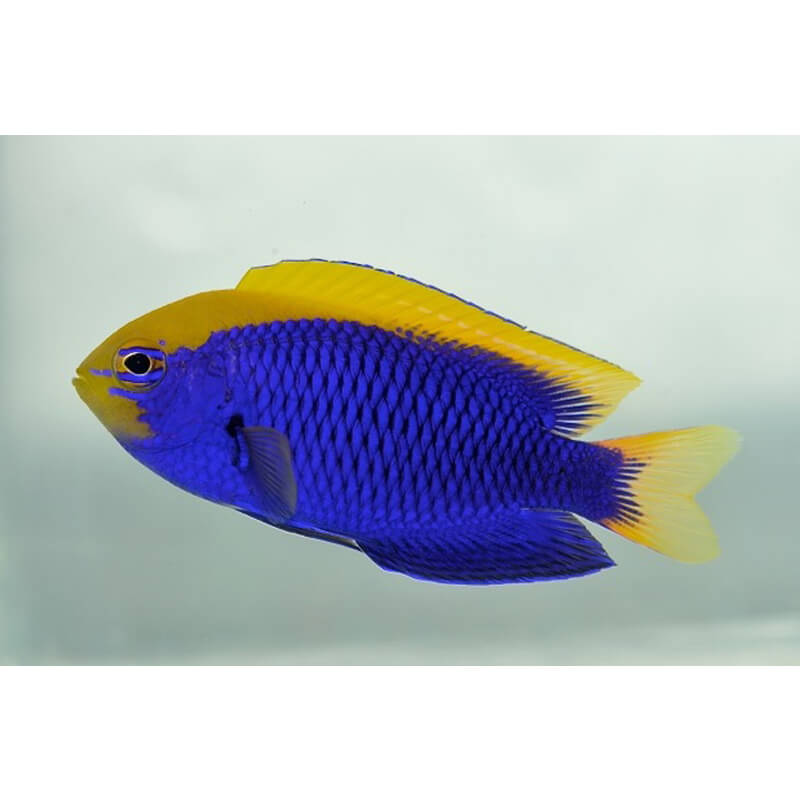
| Color Form | Rich deep blue and tail fin area feature bright yellow coloring, |
| Diet | Omnivore |
| Reef Compatible | Reef-safe |
| Water Conditions | 72–79 °F (≈ 22–26 °C), 1.020–1.025 sg, pH: 8.1–8.4. |
| Max Size | 3.9″ |
| Family | Pomacentridae |
| Minimum Tank Size | 30 gallons |
3-Day Guarantee
Approximate Purchase Size: Small to medium
Description
Starck’s Damselfish.
Also known as: Starck’s Demoiselle, Starcki Damsel.
The Starck’s Damselfish is a small and beautiful reef fish, renowned for its vivid blue body and yellow accents along the dorsal region. Native to deeper reef slopes and rocky outer reefs in the western Pacific, it is appreciated for its hardiness and relative calm, making it suitable for stable reef or community aquariums. While it may be semi-territorial with age or if kept in small tanks, its manageable size and attractive coloration make it a solid choice for many aquarium hobbyists.
Key Features
Scientific Name: Chrysiptera starcki.
Common Names: Starck’s Damselfish, Starck’s Demoiselle, Starcki Damsel.
Adult Size: ~3–3.9 inches (≈ 7–10 cm).
Lifespan: ~5+ years under proper care.
Temperament: Semi-aggressive, generally peaceful when young or singly, but may defend territory as they mature.
Reef Compatibility: Reef-safe, generally does not nip corals or disturb rockwork, though care is advised with very small or delicate invertebrates.
Minimum Tank Size: 30 gallons (≈ 100+ liters) for a single specimen; larger tanks recommended for community setups or multiple fish.
Experience Level: Beginner to Intermediate, hardy, undemanding diet and environment, but benefits from stable water conditions and adequate space.
Habitat & Tank Requirements
Natural Habitat:
Starck’s Damselfish is native to the western Pacific, from the Ryukyu Islands and Taiwan down to Australia, New Caledonia, and Tonga. It inhabits deeper outer reef slopes and rocky outcrops, often at depths of 20–60 meters, where it shelters in crevices and rubble zones rather than the shallow reef crests.
Tank Environment:
- Provide ample live rock with caves, overhangs, or holes to mimic crevices and hiding places.
- Allow moderate open water space, these fish are active swimmers.
- Moderate water flow and good filtration help simulate natural reef-slope conditions and maintain water quality.
- Offer stable, mature aquarium conditions, avoid brand-new or poorly cycled tanks.
Recommended Water Parameters:
- Temperature: 72–79 °F (≈ 22–26 °C).
- Salinity: 1.020–1.025 sg.
- pH: 8.1–8.4.
Diet & Feeding
Starck’s Damselfish is omnivorous. In the wild, it feeds on a mix of algae, plankton, and small invertebrates.
Recommended Foods in Captivity:
- Marine flakes or pellets for omnivores.
- Frozen or live foods: mysis shrimp, brine shrimp, small planktonic crustaceans.
- Occasional algae-based foods or spirulina to support natural coloration and nutrition.
Feeding Schedule:
Offer small meals once or twice daily. Provide only what the fish can consume quickly to maintain water quality.
Behavior & Compatibility
- As juveniles or when first introduced, Starck’s Damselfish is relatively peaceful.
- May become semi-territorial or defensive of a small space as they mature, especially if the tank is small or overly crowded.
- Best kept singly or with peaceful, robust tank mates, avoid overly timid or very small fish that may be harassed.
Suitable Tank Mates:
Peaceful or semi-aggressive reef fish (clownfish, wrasses, gobies, etc.), reef-safe invertebrates. Avoid aggressive species or numerous other damselfish in small tanks.
Reef Compatibility
Starck’s Damselfish is generally considered reef-compatible. It does not typically damage corals, disturb rockwork, or pose threat to most invertebrates, making it a good candidate for mixed reef setups, provided space and shelter are adequate.
Acclimation & Care Tips
- Add only into a well-established, cycled aquarium with stable parameters.
- Provide plenty of hiding places with live rock or similar structures from the start.
- Keep water stable (temperature, salinity, pH) and ensure good filtration and flow.
- Offer varied diet and small, regular feedings rather than infrequent large feedings.
- Monitor behavior when housed with other damselfish or aggressive species; if aggression occurs, consider rehoming or increasing space.
Signs of a Healthy Specimen
- Active swimming and regular exploration of tank space.
- Bright, consistent coloration (deep blue body with yellow dorsal region).
- Eagerness to eat, readily accepts flakes, pellets, frozen or live foods.
- Smooth fins and intact body, no tears or damage.
- Clear eyes, no visible spots, lesions, or rapid breathing.
Color & Development
- Body: rich deep blue, often with scales edged in darker tones; dorsal region and tail fin area feature bright yellow coloring, producing a beautiful contrast.
- Adults remain compact, around 3–4 inches in aquariums, and generally maintain their striking coloration under proper care.
Special Considerations
- Though less aggressive than many damselfish, Starck’s can become territorial in smaller tanks or when paired with conspecifics or similar-looking fish. Keep singly or ensure ample space.
- They are not commonly aggressive but may harass smaller or timid tank mates if they encroach on their territory.
- Water quality and stable conditions are important. They tolerate a range but thrive when water parameters are stable (temperature, salinity, pH).
- Availability may be more limited than common damselfish, and price can be higher due to deeper-water collection origin.
Breeding Potential
Starck’s Damselfish are egg-layers. In the wild, they form pairs. Males flash colors to attract females, who lay eggs on rock or rubble surfaces. The male fertilizes, guards, and fans the eggs until they hatch, protecting them during this period. Captive breeding is seldom attempted. Success requires stable water conditions, quiet environment, and adequate tank space. Eggs and larvae are very small and delicate, making rearing challenging.
Why Choose a Quarantined Starck’s Damselfish?
A quarantined Starck’s Damselfish arrives healthy, free from parasites, and already accustomed to aquarium conditions. Our quarantine process involves health observation, dietary conditioning, and acclimation, giving you a strong, stress-free fish that adjusts quickly, shows vibrant color, and integrates well into your reef or FOWLR system.
Additional information
| Service Level | Quarantined |
|---|
Reviews (0)
You must be logged in to post a review.
Shipping & Delivery
Reviews
There are no reviews yet.