
Copperband Butterflyfish
Price range: $149.99 through $189.99
Chelmon rostratus
| Care Level | Advanced |
| Temperament | Peaceful |
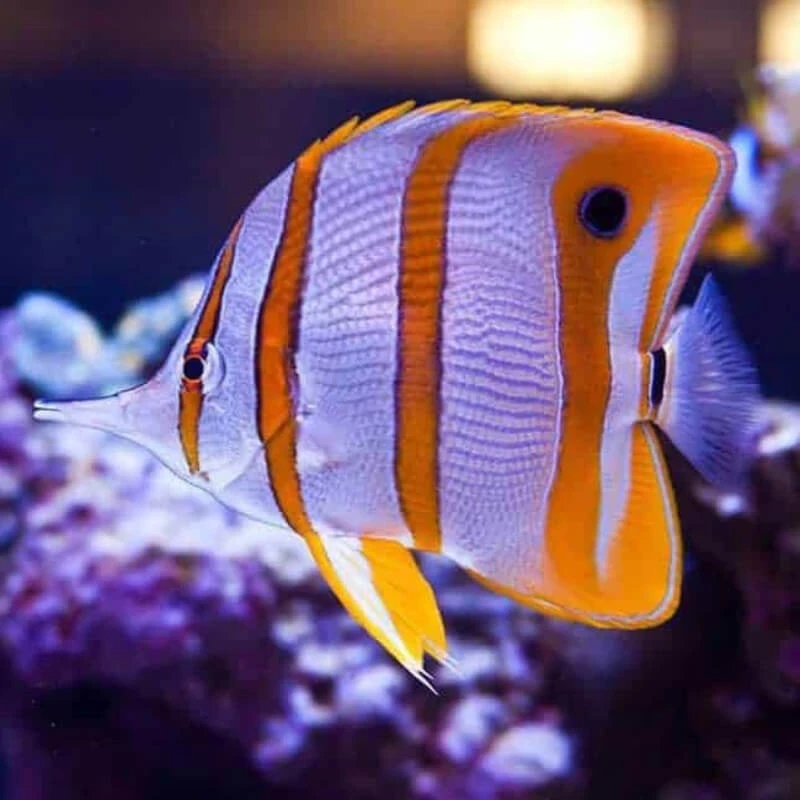
| Color Form | White body with copper-orange vertical bands and elongated snout |
| Diet | Omnivore |
| Reef Compatible | With caution |
| Water Conditions | sg 1.020–1.025, 72–78°F, pH 8.1–8.4 |
| Max Size | 8“ |
| Family | Chaetodontidae |
| Minimum Tank Size | 125 gallons |
3-Day Guarantee
Approximate Purchase Size: Small: 1-2″; Medium: 2-3″; Large 3-5″
Copperband Butterflyfish
Also known as Beaked Coralfish, Banded Longsnout Butterflyfish
The Copperband Butterflyfish is one of the most recognizable and sought-after marine fish, displaying stunning copper-orange vertical bands and an elongated snout. While challenging to maintain, this species is highly valued for its beauty and its ability to control nuisance Aiptasia anemones.
Key Features
- Scientific Name: Chelmon rostratus
- Common Names: Copperband Butterflyfish, Beaked Coralfish
- Adult Size: Up to 8 inches
- Lifespan: 5-7 years with proper care (often shorter due to feeding difficulties)
- Temperament: Peaceful but can be territorial toward conspecifics
- Reef Compatibility: With caution; may nip at soft corals and small inverts but generally reef safe
- Minimum Tank Size: 125 gallons minimum
- Experience Level: Advanced; challenging to acclimate and feed
Habitat & Tank Requirements
- Tank Environment: Provide live rock with abundant hiding places and natural food sources. This species uses its elongated snout to probe crevices for food. Requires well-established, mature tanks with stable conditions.
- Water Parameters:
- Temperature: 72-78°F (22-26°C)
- Salinity: 1.020-1.025
- pH: 8.1-8.4
- Pristine water quality is critical
- Equipment Recommendations:
- High-quality protein skimmer
- Excellent filtration system
- Moderate water circulation
- UV sterilizer (recommended to reduce parasite load) Maintaining excellent water quality is essential for success.
Diet & Feeding
Copperband Butterflyfish can be difficult to feed initially. Recommended foods include:
- Staples: High-quality marine pellets (once fully acclimated)
- Frozen Foods: Mysis shrimp, brine shrimp, chopped clams, marine cuisine, vitamin-soaked foods
- Live Foods: Live blackworms, live brine shrimp, Aiptasia anemones (often necessary initially)
- Natural Foraging: Benefits from live rock with microfauna, tube worms, small crustaceans
- Feeding Frequency: 3-4 times daily once feeding consistently
- Special Note: May refuse all foods initially; patience and variety are critical
Notes & Considerations
- Challenging species requiring significant patience during acclimation period.
- Highly effective at controlling Aiptasia anemones; often added specifically for this purpose.
- Very sensitive to poor water quality and prone to parasitic infections.
- It may take days or weeks to begin accepting prepared foods.
- Elongated snout is delicate and can be damaged during shipping or by aggressive tankmates.
- Territorial toward other Copperbands; only one per tank unless mated pair.
- Generally peaceful toward other species but should not be kept with aggressive fish.
- Secure aquarium lid recommended; can jump when stressed.
- Not recommended for new aquariums; requires mature, stable systems.
- Success rate greatly improve with quarantined, feeding specimens.
Why Choose a Quarantined Copperband Butterflyfish?
Purchasing a quarantined specimen from us means you’re starting with a healthier, better-acclimated fish. All fish are observed, treated as needed, and MOST IMPORTANTLY conditioned to accept prepared foods before sale. This dramatically increases your chances of long-term success with this challenging but spectacular species.
| Service Level | Quarantined |
|---|---|
| Size | Sm-Med, Large |
1 review for Copperband Butterflyfish
You must be logged in to post a review.

seajackson –
We got our copperband over a year ago now and he’s been doing great. Took a little work to find out what he likes to eat (at first he only ate live brine and bloodworms) and the answer was clams! He now gets a middle neck clam every other day and has been growing very quickly.