
Barnacle Blenny Care Guide for Nano Reef Aquariums

Barnacle Blenny Care Guide for Nano Reef Aquariums
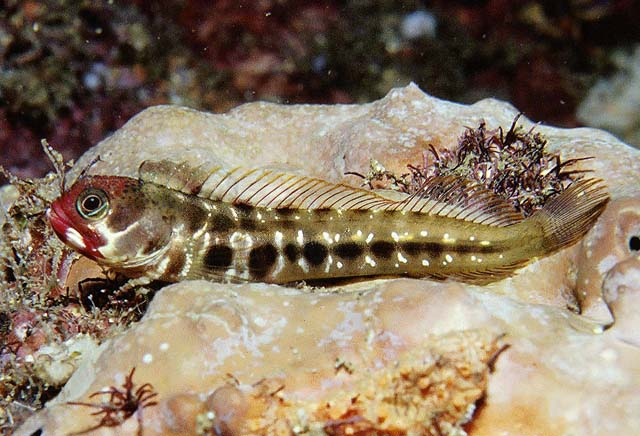
This tiny, expressive perching fish spends its life poking out of a single hole in the rock, and that habit is exactly what makes it such a good nano reef fish
Not every blenny spends its day cruising rockwork and grazing algae. The Barnacle Blenny does something different. It claims a single small hole, whether that is an old barnacle shell, a gap in live rock, or a bored-out crevice, and spends most of its life perched right at the entrance, watching the tank with a pair of comically expressive eyes. For a small, established nano reef, that behavior makes it one of the most entertaining fish you can add.
Here is what this species actually needs to thrive in a small system.
Meet the Barnacle Blenny
Scientifically known as Acanthemblemaria hancocki, the Barnacle Blenny is a member of the Blenniidae family known for its compact size, intricate spotted pattern, and personable nature. Unlike grazing species such as the Tailspot Blenny or Lawnmower Blenny, this fish is primarily carnivorous, feeding on plankton and small food particles drifting past its perch rather than picking algae off rock. That single difference changes almost everything about how you feed and house it compared to other members of the Blenny family.
Size and Why It Fits a Nano Tank
This is a genuinely tiny fish, rarely growing past an inch and a half. That size, combined with its habit of staying anchored to one spot rather than actively patrolling the whole tank, makes it one of the least space-demanding fish available for a small reef. A Barnacle Blenny will not outgrow a nano tank the way many other saltwater fish eventually do.
Natural Behavior: Life in a Single Hole
In the wild, this species occupies abandoned barnacle shells and small holes in rock and coral rubble, rarely straying more than a body length from its chosen entrance. That instinct carries directly into captivity. Once a Barnacle Blenny picks a home, it tends to stay there, poking its head and front half out to feed and retreating instantly at the first sign of a threat.
This habit is part of the appeal, but it also means the fish needs the right structure available from day one, or it may spend weeks searching for a suitable spot instead of settling in.
Ideal Nano Reef Setup
Rockwork and Hiding Spots
Live rock riddled with small holes, crevices, and gaps is essential. This is not a fish that benefits from open swimming space the way a wrasse or blenny grazer does. What it needs is texture: plenty of small openings roughly its own body width, positioned throughout the rockwork so it has options for a home base.
Minimum Tank Size
A 10-gallon nano tank is enough room for a single Barnacle Blenny, provided the rockwork inside offers real structure rather than a few large, smooth boulders. Bigger is always fine, but this species does not need extra swimming room the way larger blennies or wrasses do.
Feeding a Carnivorous Blenny
Because this species does not rely on algae, feeding looks different from most other blennies in the hobby. Offer:
- High-quality marine pellets sized appropriately for a very small mouth
- Vitamin-enriched flake foods
- Finely chopped or frozen meaty foods that drift past its perch
Target feeding near the fish’s chosen hole often works better than broadcast feeding across the tank, since a Barnacle Blenny is reluctant to leave its perch to chase food elsewhere.
Temperament and Tankmates
Barnacle Blennies are generally peaceful but can show territoriality toward other blennies competing for the same small tank space, particularly if suitable holes are limited. Stick to one per nano tank unless the aquarium offers an unusually large number of separate hiding spots spread well apart.
Pair this species with equally peaceful nano-appropriate tankmates. Fast, aggressive feeders will outcompete a fish this small and this sedentary at every meal. Before adding any new fish to a nano system that already houses one, it is worth checking What Makes a Fish Truly Reef Safe? so every addition stays compatible with a small, closely balanced tank.
Sourcing a Healthy, Quarantined Specimen
A properly conditioned Barnacle Blenny should already be feeding on prepared foods before it ever leaves quarantine, which matters enormously for a fish this small and this dependent on finding food quickly in a new environment. Purchasing from a supplier that observes, treats, and confirms feeding before shipping removes much of the risk that comes with such a tiny, specialized species.
Once your fish arrives, take the introduction slowly. The Acclimation Guide walks through drip acclimation and temperature matching, both of which reduce stress on a fish that is about to spend its first hours searching for a permanent home in unfamiliar rock.
Pricing and Availability
The Barnacle Blenny is typically available at Dr. Reef’s Quarantined Fish for around $69.99, occasionally listed at $89.99 depending on current stock. Given its small size and limited swimming range, it is one of the more affordable entertaining fish you can add to a nano display.
Is the Barnacle Blenny Right for Your Nano Reef?
If you want a fish that brings real personality to a small tank without needing open swimming space or heavy algae growth to survive, the Barnacle Blenny is worth seeking out. Give it plenty of small holes to choose from, feed it meaty foods rather than algae wafers, and keep competition for hiding spots low, and this tiny perching fish will reward you with some of the most engaging behavior available in a nano reef.