
Chevron Tang Care and Buying Guide for Reef Aquariums

Chevron Tang Care and Buying Guide for Reef Aquariums
The Chevron Tang draws a lot of questions from hobbyists browsing tang options, partly because of its striking pattern and partly because of its price tag. Rather than a straight narrative, here are the questions people actually ask before buying one, answered directly.
What does a Chevron Tang actually look like?
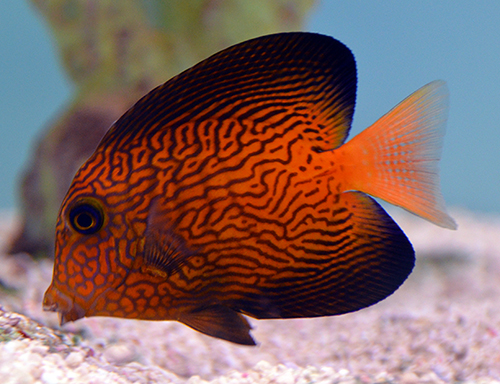
Ctenochaetus hawaiiensis has an olive brown to gray body marked with bold chevron-shaped stripes, and sail like dorsal and anal fins edged in yellow. Juveniles start with much bolder, brighter patterning that mellows as the fish matures, though adults still carry plenty of visual interest.
How big does it get, and what tank size does it need?
Adults reach 7 to 9 inches, and this species needs a minimum of 180 gallons. That size requirement is non-negotiable. A Chevron Tang in a smaller tank will struggle with stress, stunted growth, and a much shorter lifespan than the 8 to 12-plus years it can reach with proper space.
Is it reef safe?
Yes. The Chevron Tang is completely reef safe and will not bother corals or invertebrates. Its diet is algae and detritus, not coral tissue, which makes it a common pick for mixed reef systems.
What does it eat, and how often?
This species is a herbivore that grazes constantly in the wild, so feeding should try to mirror that.
- Nori sheets offered regularly, ideally daily
- Spirulina-based pellets or flakes
- Frozen herbivore blends for variety
- Two to three feedings per day, in amounts the fish can finish in a couple of minutes
A varied diet also helps keep the coloration sharp and prevents the fading that comes from stress or poor nutrition.
Will it fight with other fish?
Generally, no. The Chevron Tang is one of the more peaceful surgeonfish and rarely bothers unrelated species. It gets along fine with gobies, wrasses, blennies, and cardinalfish. Where it can show aggression is toward other tangs of similar body shape, particularly other Ctenochaetus species like Kole Tangs or Tomini Tangs, so pairing those in a smaller system is asking for trouble. Checking the compatibility chart before adding one to a tank with existing tangs is a smart step.
What water conditions does it need?
Keep temperature between 74 and 82°F, salinity around 1.023 to 1.025, and pH between 8.1 and 8.4. Nitrate should stay under 20 ppm. None of these numbers are unusual for a reef tank, but consistency matters more than hitting any single reading perfectly.
Why does quarantine matter so much for this species?
Given the price tag on a Chevron Tang, buying one that skips a real health check before shipping is a significant gamble. At Dr. Reef’s Quarantined Fish, every Chevron Tang goes through a documented quarantine protocol before it is ever listed, which means it has already been observed for parasites, confirmed eating, and cleared before it ships to you. That matters a great deal more with a fish at this price point than it would with a $30 damselfish.
How should I introduce it to my tank?
Float the bag to equalize temperature, dim the lights for the first several hours, and give the fish immediate access to nori and hiding spots. Following a complete acclimation guide rather than rushing this step reduces stress and helps the fish start grazing sooner.
What does a Chevron Tang cost?
Pricing currently runs $1,499.99, discounted from a $1,999.99 list price. That places it firmly in the premium tier of tangs, reflecting both its striking appearance and its more limited availability compared to common species like Yellow Tangs or Blue Tangs. Orders over $500 receive a discounted shipping rate, and orders over $750 ship free, all backed by a live arrival guarantee.
Is the Chevron Tang worth buying?
If your tank meets the 180-gallon minimum, is fully established, and you are looking for a genuinely distinctive centerpiece fish rather than a common reef staple, the Chevron Tang delivers on both looks and function as an active algae grazer. The price is real, but so is the rarity and the visual payoff once the fish settles in.
Check current availability in the shop, or visit the FAQ page if you have more questions about shipping or guarantees before you order.