

Marine Betta: The Most Misunderstood Saltwater Fish?

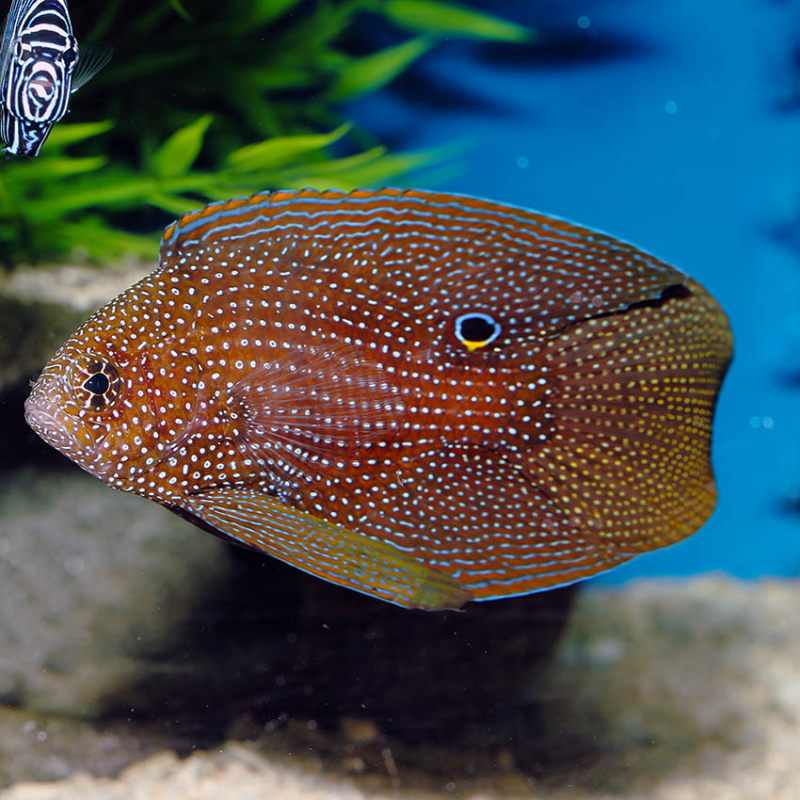
Most reef keepers want a fish that shows off. Something bold, bright, and always out in the open. The Marine Betta is the opposite of that, and that is exactly why it gets such a bad rap. People buy it expecting a showpiece and feel let down when it hides for weeks. But once you understand what this fish actually is, it stops feeling disappointing and starts feeling kind of amazing. You can see the full range of saltwater fish Dr. Reef carries if you want to compare it against other options.
It’s Not Shy. It’s Smart.
The Marine Betta, also called the Comet, has one of the coolest survival tricks in the whole ocean. When it feels threatened, it tucks its head away and flares out its dorsal fin. That fin has a big white-rimmed spot on it that looks just like the head of a moray eel. Predators see what looks like an eel staring back at them, and they back off. That is not a shy fish being weird. That is a fish that figured out how to look terrifying without actually being dangerous.
This same instinct carries over into your tank. A Marine Betta loves caves and ledges, and it will use every one you give it. It is not hiding because it is scared of you. It is doing exactly what kept its ancestors alive for millions of years.
Why People Get Frustrated With This Fish
Here is where the misunderstanding really starts. Someone buys a Marine Betta expecting a fish that swims around in plain view, and instead they get a fish that vanishes into the rockwork for days. Add in the fact that many Marine Bettas come from the ocean wanting only live food, and a new owner can start to think something is wrong.
Nothing is wrong. This is just who the fish is. It hunts at dusk and at night in the wild, tucked into reef crevices during the day. Ask a nocturnal animal to perform on demand in bright daylight, and of course it is going to disappoint you. The fish is not the problem. The mismatch between expectations and reality is the problem.
What Makes It Genuinely Special
Once you stop expecting a Yellow Tang and start appreciating what a Marine Betta actually is, this fish becomes one of the most rewarding in the hobby. Every glimpse feels earned. Watching it flare that fake eye spot for the first time is something people remember years later. It is a true conversation piece, the kind of fish where guests lean in and ask, “Wait, what is that?”
It also plays well with a mixed tank in one important way. A Marine Betta will not touch your corals. It ignores them completely. The one thing to watch for is small fish and small shrimp, since this is an ambush predator and anything under about three inches can look like a snack. Pair it with fish that can hold their own, like larger tangs, angelfish, or reef-safe wrasses, and there is no issue at all.
The Real Challenge: Getting It to Eat
If there is one genuine hurdle with this species, it is feeding. Fresh from the ocean, a Marine Betta often wants live food only, and switching it over to frozen shrimp or silversides takes patience. This first stretch, usually the toughest few weeks, is where most of the frustration in the hobby actually comes from. Once a Marine Betta accepts frozen food, it typically stays on it without any more fuss.
This is exactly why buying a fish that has already made that switch matters so much. Every Marine Betta from Dr. Reef’s Quarantined Fish goes through an extended quarantine protocol, typically four to six weeks given how shy this species is. During that time, the fish is monitored for health, treated as needed, and most importantly, trained onto frozen food before it ever ships. Dr. Reef also has a full write-up on the Marine Betta if you want to read even more before deciding.
A Marine Betta that arrives already eating frozen food skips the hardest part entirely. You get straight to the fun part: waiting patiently for those rare, magical glimpses.
Wait, Is This the Same Fish as a Betta Fish?
If the name has you picturing a small, colorful freshwater fish in a bowl, that is a fair mix-up. Despite the shared name, the Marine Betta and the classic freshwater Betta fish are not related at all. The freshwater Betta splendens is a small, territorial fish that lives happily in a modest home tank, while the Marine Betta is a much larger reef predator that needs live rock, caves, and full marine conditions to thrive. The two share a nickname because of a passing resemblance in fin shape, nothing more. Worth knowing before you order the wrong one by accident.
What It Costs
A quarantined Marine Betta from Dr. Reef runs $149.99. Given the extended quarantine and feeding conditioning that goes into each one, that price reflects a real head start on the single hardest part of keeping this fish.
Setting Your Marine Betta Up for Success
Give it a tank of at least 55 gallons, with plenty of caves and overhangs built from live rock. Keep the lighting on the dimmer side, since that actually encourages it to come out more often. Feed a varied, meaty diet a few times a week, and keep tankmates to fish larger than about three inches so nothing ends up on the menu by accident.
Before bringing one home, check the compatibility chart to make sure your current fish are the right size match, and follow the acclimation guide for a smooth introduction. The FAQ page is also worth a look if you have questions before ordering.
The Takeaway
The Marine Betta only seems misunderstood because it gets compared to fish it was never trying to be. It is not a centerpiece that performs on command. It is a patient, clever predator that rewards patient, curious owners. Start with a properly quarantined specimen from Dr. Reef’s Quarantined Fish that has already learned to eat frozen food, and this fish stops being a frustrating mystery and starts being one of the most fascinating additions in your entire tank.
For more honest care guides like this one, visit the Dr. Reef blog.