
Marine Betta for Sale: Is This Shy Predator Worth Adding to Your Reef Tank?

Marine Betta for Sale: Is This Shy Predator Worth Adding to Your Reef Tank?
Most reef keepers want bold, colorful fish that swim openly around the tank. The Marine Betta does not do that. It lurks in caves, moves slowly, and hides from the spotlight.
And yet people are obsessed with it. Why?
What Is the Marine Betta?
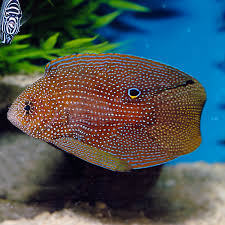
The Marine Betta (Calloplesiops altivelis) is also called the Comet. It is a striking fish with a deep brown or black body covered in small white spots, and a large false eye spot near its tail that mimics a moray eel head. This trick confuses predators and makes the Marine Betta one of nature’s better survival stories.
It grows to about 8 inches and comes from the Indo-Pacific. In the wild it hangs out under ledges and in caves near reef slopes. In a home tank, it does exactly the same thing.
Marine Betta for Sale at Dr. Reef’s
The Marine Betta is available at Dr. Reef’s Quarantined Fish. Quarantined specimens arrive eating and in stable condition, which is especially important for a fish that can be reluctant to feed in a new environment.
Is It Actually Reef Safe?
Mostly, yes. The Marine Betta will not bother corals. It ignores them completely. The issue is that it is an ambush predator. Small fish and small shrimp are potential prey.
Think of it like this: anything small enough to fit in its mouth is at risk. That means no small gobies, no small dartfish, and no ornamental shrimp like fire shrimp or cleaner shrimp. Pair it with larger fish that can hold their own, and you have no problem.
Getting It to Eat
This is where most people struggle with the Marine Betta. Fresh out of the ocean, it often wants live food only. Getting it switched to frozen is the main challenge of keeping this species.
Here is what works:
- Start with live ghost shrimp or small feeder shrimp to trigger the feeding response
- Gradually introduce thawed frozen shrimp alongside live food
- Feed at night or in dim light, which is when it naturally hunts
- Use feeding tongs and move the food slightly to simulate movement
Once a Marine Betta is eating frozen food consistently, it usually stays on it without issue. The hard part is that first few weeks.
Tank Requirements
A minimum of 55 gallons works for one Marine Betta. Give it plenty of overhangs and caves using live rock. It needs to be able to disappear completely when it wants to, which is often. The tank does not need to be particularly bright, and dimmer lighting actually encourages it to come out more.
Water parameters are standard reef range: 74 to 80 degrees, salinity 1.023 to 1.025, pH 8.1 to 8.4.
Common Questions
Will it ever swim out in the open? Yes, but usually at night or when the lights are dim. Over time and once it feels secure, it does become bolder.
Is it aggressive toward other fish? Not at all, unless the other fish fits in its mouth. It is one of the more docile fish in the hobby when it comes to large tankmates.
Can I keep two together? Two can coexist in a large tank with enough territory, but they are not schooling fish. One per tank is simpler.
Worth Adding?
For the hobbyist who wants something unusual and does not need a fish that performs on demand, the Marine Betta is one of the most interesting fish in the saltwater hobby. The false eye spot alone makes it a talking point every time someone looks at the tank.
It demands patience during the feeding transition and suitable tankmates. Give it those two things and it will reward you for years.
Browse available Marine Bettas at drreefsquarantinedfish.com.