

Can a Marine Betta Live With Clownfish?Can a Marine Betta Live With Clownfish?

Can a Marine Betta Live With Clownfish?
Short answer: it depends almost entirely on size.
The Marine Betta is one of the more unusual fish in the hobby, with a moray-mimicking eye spot and a shy, cave-dwelling personality. Clownfish are the opposite: bold, active, and usually one of the first fish people add to a tank. Putting the two together sounds simple, but there’s a real risk most people don’t think about until it’s too late.
What the Marine Betta Actually Is
Also known as the Comet, the Marine Betta is a slow-moving ambush predator. It spends most of the day hiding in caves and rockwork, becoming more active at dusk and at night. It’s not aggressive in the traditional sense. It doesn’t chase, doesn’t nip fins, and generally ignores anything it isn’t trying to eat.
That last part is the catch. The Marine Betta is a predator, and its idea of a meal is any fish small enough to fit in its mouth. Dr. Reef’s Marine Betta product listing is direct about this, noting that anything under 3 inches is at real risk, fish between 3 and 5 inches are a gray area once the Betta is established, and anything 6 inches or larger is generally safe.
Where Clownfish Fit Into That
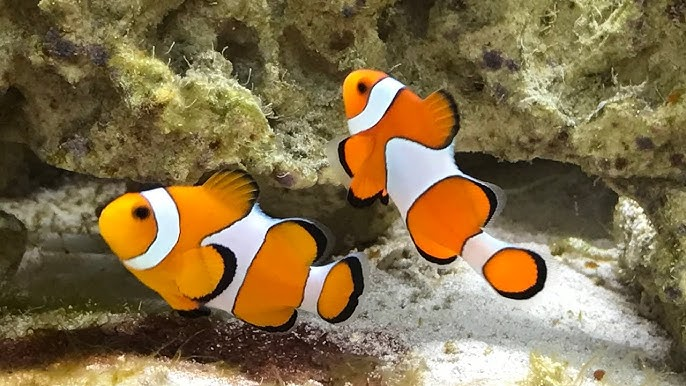
This is where things get tricky. Most clownfish species, including the common Ocellaris and Percula varieties, top out at around 3 to 4 inches as full adults. Juveniles are much smaller than that.
That puts clownfish squarely in the risk zone for most of their lives, especially early on. A small or juvenile clownfish added to a tank with an established Marine Betta is genuinely at risk of becoming a meal, not because the Betta is hunting aggressively, but because it’s an opportunistic predator and a small, brightly colored fish swimming in open water is exactly the kind of target it’s built to catch.
When It Might Actually Work
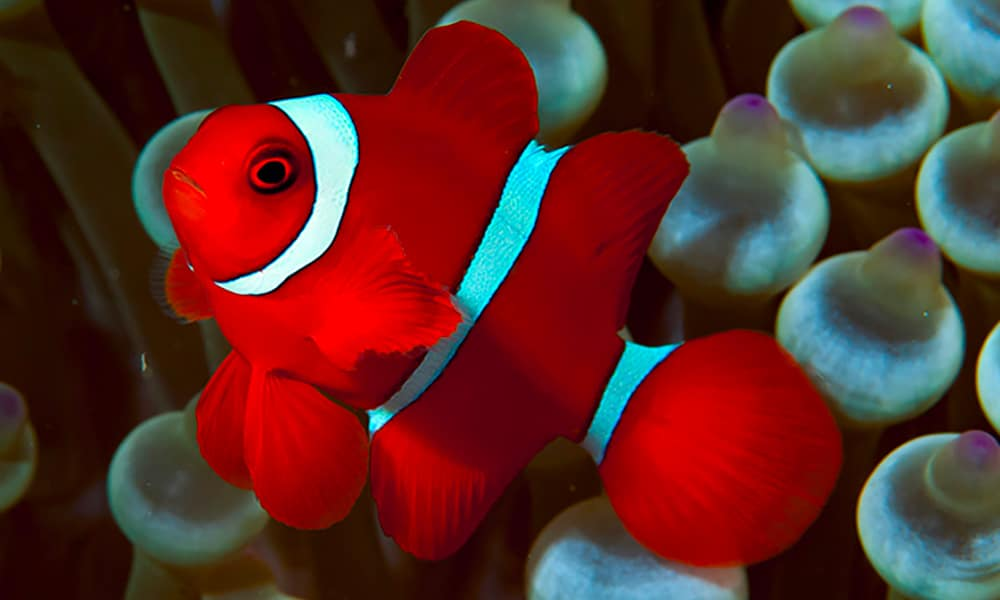
There are a few scenarios where the combination is safer. Fully grown clownfish, especially larger species like Maroon Clownfish, which can reach 6 inches or more, fall outside the danger zone. Introducing clownfish that are already close to full adult size, rather than small juveniles, reduces the risk considerably.
Order also matters. Adding the clownfish first and letting them establish territory before introducing the Marine Betta tends to go better than dropping small clownfish into a tank where a hungry predator already feels at home.
What Dr. Reef’s Compatibility Guidance Says
Beyond size, the Marine Betta generally does well with large tangs, big angelfish, larger wrasses, triggerfish, and other similarly sized peaceful to semi-aggressive fish. Dr. Reef’s compatibility chart is a useful reference for checking how a specific species pairs with fish you’re already planning to keep, rather than relying on guesswork.
If clownfish are a must-have for your setup, pairing them with a Marine Betta works best when the clownfish are already well established and closer to full size before the Betta is added, not the other way around.
Why Quarantine Matters Even More With Predatory Fish
A Marine Betta that arrives stressed, underweight, or not yet eating reliably can behave less predictably once it settles into a display tank. A properly quarantined and conditioned specimen tends to settle in calmer and stick to its normal feeding pattern rather than treating every small fish in the tank as an easy target.
Dr. Reef’s quarantine protocol covers how fish are observed and conditioned before they’re ever listed for sale, which matters just as much for a predatory species like this as it does for anything else in the shop.
Pricing to Know Before You Decide
On Dr. Reef’s shop page, a quarantined Marine Betta is priced at $149.99, while an Ocellaris Clownfish runs $29.99. That’s a manageable combination budget-wise, which makes it even more worth getting the sizing and timing right before committing to both in the same tank.
The Bottom Line
A Marine Betta and clownfish can share a tank, but only with the right sizing and the right order of introduction. Small or juvenile clownfish are genuinely at risk, while larger, well-established clownfish are much safer additions.
If you’re set on keeping both, plan around size from the start rather than hoping for the best. Checking a compatibility chart before buying either fish is a simple step that can save you from an unpleasant surprise a few weeks down the road.