
Orange Shoulder Tang for Sale: The Stunning Color Transformation Most Owners Never Expect

Orange Shoulder Tang for Sale: The Stunning Color Transformation Most Owners Never Expect
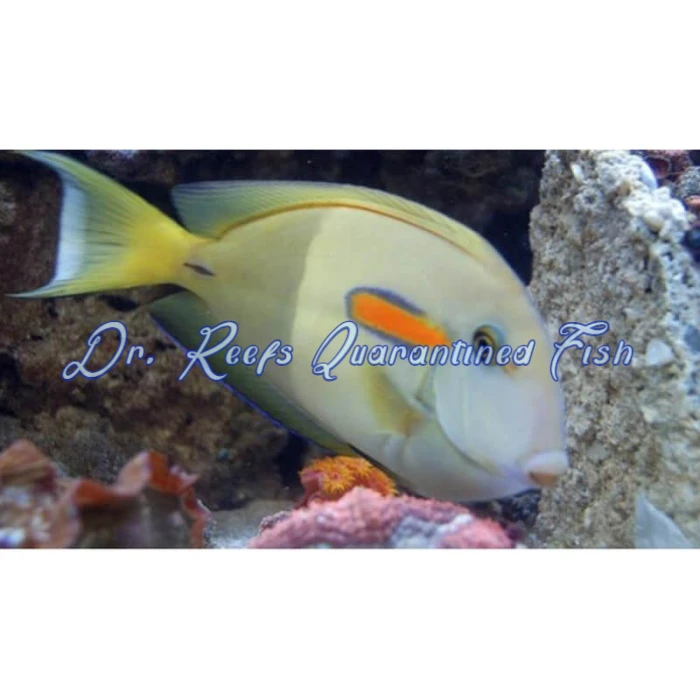
Most people who buy an Orange Shoulder Tang as a juvenile have no idea what they are really getting into. They see a small, bright yellow fish with the faintest hint of an orange marking behind the eye, and they think it is a pleasant-looking tang with a nice pop of color. Then, over the next few years, something remarkable happens. That yellow body slowly deepens. The fish thickens. The orange shoulder marking does not just grow. It transforms into a vivid, eye-catching band of orange and yellow ringed in dark blue-gray, blazing against a slate-olive body that would look completely at home on the wall of an art gallery. By the time this fish reaches full adult size, usually somewhere between 10 and 14 inches, it looks almost nothing like the fish that first came home in that bag.
That transformation is exactly why the Orange Shoulder Tang (Acanthurus olivaceus) is one of the most rewarding long-term investments in the saltwater hobby. And when that fish comes from Dr. Reef’s Quarantined Fish, already eating well and fully treated, you are set up to enjoy every single stage of that journey.
Understanding the Color Change
The Orange Shoulder Tang starts life as a pale yellow to gray juvenile with only a faint trace of orange behind the eye. As the fish matures, the body color shifts to a rich olive tone, with the posterior half of the body turning noticeably darker. The tail gradually develops a lyre shape. And the orange shoulder patch that gives this fish its name becomes one of the most distinctive markings in the entire tang family. A bold, vivid band outlined in blue-gray makes a fully grown specimen look like it was painted by hand.
This color shift typically begins around the three-inch mark and continues developing over three to five years. A juvenile brought home at two to three inches will approach five to six inches within the first year under good care. By years two and three, most specimens are showing eight to nine inches of length and early adult coloration. The full payoff arrives between years four and five, and it is absolutely worth the wait. You can read more about what to expect in Dr. Reef’s care guide for Orange Shoulder Tang as well.
Tank Requirements
Adult Orange Shoulder Tangs reach 12 to 14 inches in the wild, with aquarium specimens commonly hitting 10 to 12 inches. This means you need to plan for an adult-sized fish from day one. A minimum of 125 gallons is suitable for a smaller specimen, but a 180-gallon or larger system is genuinely the right home for an adult. Provide a mix of open swimming space and live rock with crevices and caves for grazing and retreating.
Keep only one Orange Shoulder Tang per tank. They do not tolerate their own kind in shared space, and conflicts with other surgeonfish in similar genera can arise in smaller setups.
Water parameters to maintain:
- Temperature: 72°F to 78°F
- pH: 8.1 to 8.4
- Specific Gravity: 1.020 to 1.025
- dKH: 8 to 12
Strong biological and mechanical filtration, a good protein skimmer, and weekly water changes of 10 to 15 percent keep this fish at its best.
Diet
The Orange Shoulder Tang is a committed herbivore. In the wild it grazes heavily on algae, diatoms, detritus, and filamentous plant material scraped from sand and rockwork. In the aquarium, daily nori sheets on a feeding clip are essential. Supplement with Spirulina, algae pellets, seaweed blends, and frozen herbivore mixes. Rotate foods regularly to support immune health and help the fish express its full adult coloration. Feed two to three times per day and always keep seaweed available for steady grazing throughout the day.
An underfed tang is a stressed tang, and a stressed tang is far more susceptible to ich and other diseases. Proper feeding is one of the most important things you can do for this fish.
Tank Mates
The Orange Shoulder Tang is one of the more peaceful members of the Acanthurus family. It generally minds its own business with non-tang species and does very well alongside wrasses, gobies, anthias, chromis, cardinalfish, and similarly peaceful reef fish. Avoid pairing it with highly aggressive surgeonfish or predatory species that may stress it. In large enough systems, it can share space with other tangs from different genera, but add it thoughtfully and watch for any signs of conflict.
If you are building out a tang community and want to explore other members of the Acanthurus genus, Dr. Reef’s tangs collection offers a wide range of quarantined species including the powder blue tang, powder brown tang (with its own care guide on the Dr. Reef blog), and the doctorfish tang.
Reef Safe?
Yes. The Orange Shoulder Tang is fully reef safe and will not bother corals or invertebrates. It is also one of the hobby’s most effective natural algae grazers, actively working over rocks, substrate, and glass throughout the day. A large reef tank with algae buildup will genuinely benefit from this fish’s presence.
Why Start With a Quarantined Fish?
Wild-caught tangs are among the most common carriers of marine ich and internal parasites. A fish that looks perfectly healthy at purchase can introduce a full tank epidemic within days of going into an established display. Dr. Reef’s quarantine protocol treats every Orange Shoulder Tang for ich, flukes, and common marine parasites over a minimum four to six week period, confirms the fish is eating a variety of prepared foods, and ships only when the fish is healthy, settled, and ready. That is the foundation your long-term relationship with this fish deserves.