
Snowflake Eel for Sale: Care Requirements, Diet, and Tank Compatibility

Snowflake Eel for Sale: Care Requirements, Diet, and Tank Compatibility
If you are looking for a fish that brings a completely different kind of presence to your saltwater aquarium, the Snowflake Eel is one of the best choices in the entire hobby. Bold, beautiful, surprisingly interactive, and far more manageable than most people expect, the Snowflake Eel is the perfect introduction to keeping moray eels at home. At Dr. Reef’s Quarantined Fish, every Snowflake Eel is fully quarantined, parasite-treated, and eating prepared foods before it ships to your door. Visit Dr. Reef’s website for current pricing and availability.
What Is a Snowflake Eel?
The Snowflake Eel, known scientifically as Echidna nebulosa, is one of the most popular and widely kept moray eel species in the marine aquarium hobby. It is native to the tropical Indo-Pacific Ocean, where it inhabits coral reefs and rocky coastal areas from the Red Sea and East Africa all the way to Hawaii and the Pacific Islands.
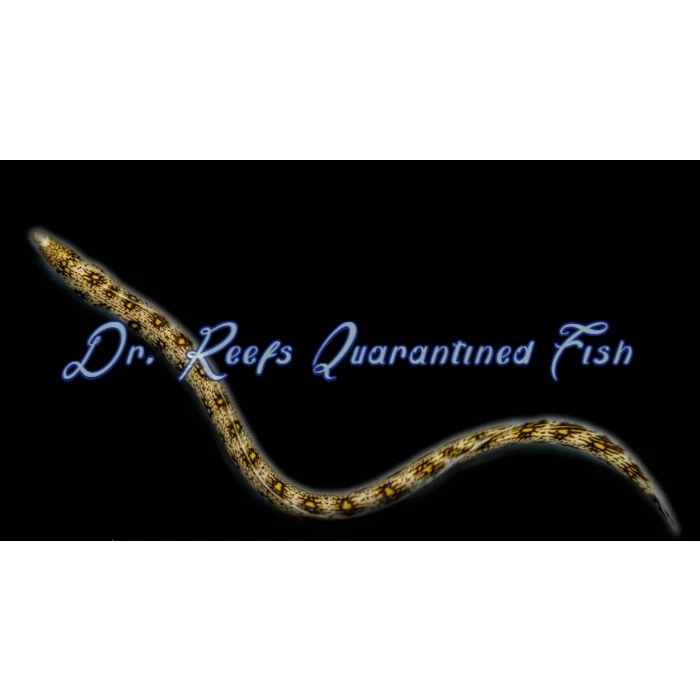
The name comes from the eel’s striking coloration. A white to cream-colored body is covered with irregular black and yellow spots and blotches that create a pattern reminiscent of snowflakes or abstract brushwork. The large, expressive nostrils and slightly gaping mouth that show off their impressive teeth give the Snowflake Eel a face full of personality that becomes genuinely endearing once you get to know the animal.
Most Snowflake Eels reach 24 to 36 inches in captivity, making them a substantial but manageable species for hobbyists with appropriately sized systems. They are one of the hardiest, most adaptable, and most forgiving eel species available in the hobby, which is one of the many reasons they remain perennially popular with both beginner and experienced saltwater keepers.
Why Buy From Dr. Reef’s Quarantined Fish?
Snowflake Eels from unquarantined sources frequently arrive stressed, carrying parasites, and refusing food. An eel that arrives in poor condition and refuses to eat is an extremely stressful animal to nurse back to health, particularly in an established community tank where introducing medication can harm other inhabitants.
At Dr. Reef’s Quarantined Fish, every Snowflake Eel goes through a complete preparation process before it ships:
- Full quarantine observation confirming normal behavior, movement, and body condition
- Proactive treatment for ich, velvet, flukes, and other external parasites
- Food conditioning so the eel is already accepting frozen and prepared prey before shipping
- Health screening confirming clear eyes, smooth skin, intact body, and alert behavior
- Only eels meeting every health standard are cleared for shipping
A Snowflake Eel from Dr. Reef arrives ready to explore its new home and eat with confidence from the very first feeding. Visit Dr. Reef’s website for current pricing and to check availability.
Species Overview
Scientific Name: Echidna nebulosa
Common Names: Snowflake Eel, Snowflake Moray, Clouded Moray
Origin: Indo-Pacific Ocean, Red Sea, East Africa to Hawaii
Adult Size: 24 to 36 inches in captivity, occasionally reaching 39 inches
Lifespan: 15 to 20 years or longer with excellent care
Temperament: Peaceful toward fish too large to eat. Semi-aggressive toward other eels in undersized systems. Not generally aggressive toward humans unless provoked or mishandled.
Activity Level: Moderate. Most active during feeding time and evening hours. Spends significant time tucked into rockwork caves during daylight hours.
Care Requirements
Tank Size
A single Snowflake Eel requires a minimum of 75 gallons. A 100-gallon or larger system is ideal for a full-grown adult and provides better water volume stability and more rockwork territory for the eel to establish its home range. The tank footprint matters alongside volume. A longer tank with more horizontal space gives the eel room to move naturally.
Water Parameters
- Temperature: 72 to 78 degrees Fahrenheit
- Salinity: 1.020 to 1.025 specific gravity
- pH: 8.1 to 8.4
- Ammonia and Nitrite: 0 ppm
- Nitrate: Under 20 ppm
Aquascape
Rockwork with caves, tunnels, and crevices is essential for Snowflake Eels. They are naturally reclusive animals that need secure hiding spots to feel safe and comfortable. An eel without adequate hiding options becomes chronically stressed and develops health problems over time.
Build your aquascape with multiple cave options of different sizes. The eel will choose a primary den and spend most of its time there, emerging to explore and feed. A well-designed rockscape with interconnected hiding spots produces an eel that becomes increasingly bold and visible over time as it gains confidence in its environment.
Tank Cover
This is absolutely non-negotiable. Snowflake Eels are notorious escape artists that will find and exploit any gap in a tank cover, no matter how small it appears. A fully secure lid with no gaps larger than half an inch is required. An eel that escapes a tank at night rarely survives until morning. Check your cover before you purchase the eel and fix any gaps before it arrives.
Filtration
Snowflake Eels produce significant waste and require robust biological and mechanical filtration. A quality protein skimmer, oversized biological filtration, and regular water changes of 15 to 20 percent per week keep water quality within the range this species needs long-term.
Diet
Feeding is one of the most enjoyable aspects of keeping a Snowflake Eel. Unlike many moray eel species that are pure fish hunters, the Snowflake Eel is specialized for eating hard-shelled crustacean prey. Its teeth are rounded and blunt rather than sharp and fang-like, designed specifically for crushing crab and shrimp shells rather than gripping fast-moving fish.
This specialized diet is one of the reasons the Snowflake Eel has better fish compatibility than most other moray species. It is far less likely to actively hunt and consume fish tank mates than eels with sharp, fish-catching dentition.
What to Feed
- Frozen shrimp with shell on (one of the best and most natural diet choices)
- Frozen crab meat or whole small crabs
- Frozen krill
- Frozen clam meat
- Frozen squid
- Frozen silversides (occasional supplement)
Feeding Technique
Use long stainless steel or plastic feeding tongs to present food directly to the eel near its den entrance. Snowflake Eels have poor eyesight and rely heavily on their extraordinary sense of smell to detect prey. Wiggling food near the den entrance activates their feeding response quickly. Never use your bare fingers to feed a Snowflake Eel. Their bite reflex is strong, and their teeth, while rounded, can cause painful injury.
Feeding Schedule
Feed two to three times per week for adults. Snowflake Eels have slow metabolisms, and overfeeding leads to poor water quality and digestive problems. A slightly conservative feeding schedule produces a healthier, longer-lived eel than one that is fed daily or in excess.
Dr. Reef Advantage
Every Snowflake Eel from Dr. Reef’s Quarantined Fish is already accepting frozen shrimp and prepared prey before it ships. Newly imported eels that have never been offered frozen food can require weeks of patient training before they reliably accept non-living prey. Dr. Reef’s conditioning process eliminates that challenge.
Tank Compatibility
Understanding Snowflake Eel compatibility honestly is essential for building a successful community around this species.
Compatible Tank Mates
The Snowflake Eel’s crustacean-focused diet and relatively peaceful disposition toward fish make it one of the more community-friendly moray eel species available. In a properly sized system, excellent tank mates include:
- Large Angelfish
- Large Tangs and Surgeonfish
- Large Wrasses
- Lionfish in FOWLR setups
- Pufferfish
- Triggerfish in large systems
- Hawkfish
Do Not House With
- Small fish of any species that could fit in the eel’s mouth
- Ornamental shrimp, crabs, or small crustaceans of any kind. These will be eaten without exception.
- Other eels in systems under 150 gallons, as territorial conflict between eels in cramped conditions causes chronic stress and injury
Reef Compatibility
Snowflake Eels are considered semi-reef-safe. They will not eat corals or disturb anemones, making them physically safe around reef inhabitants. However, they will absolutely consume any ornamental shrimp or small crustaceans in the tank. A reef system housing a Snowflake Eel cannot also house Cleaner Shrimp, Peppermint Shrimp, small crabs, or other crustacean invertebrates.
For reef keepers who do not house ornamental shrimp and whose fish are all large enough to avoid predation, a Snowflake Eel can be an extraordinary and unexpected addition to a large reef display.
Common Health Issues and Prevention
Ich and External Parasites: Treated proactively during Dr. Reef’s quarantine process before shipping.
Skin Infections: Caused by poor water quality, physical injuries from sharp aquascape, or stress from inadequate hiding spots. Maintain excellent water quality and a smooth, cave-rich aquascape to prevent skin problems.
Escape and Injury: The most common cause of Snowflake Eel death in captivity is escape from an inadequately covered tank. A secure lid is the single most important preventive measure you can take.
Refusal to Eat: Occasionally occurs in newly introduced eels during the tank adjustment period. Give the eel 3 to 5 days to settle and locate its preferred den before attempting feeding. A food-conditioned eel from Dr. Reef almost always begins eating within the first week.
Overfeeding Related Decline: Snowflake Eels fed too frequently develop digestive problems and contribute to rapid water quality decline. Stick to a two to three times per week feeding schedule for adults.
Frequently Asked Questions
Is a Snowflake Eel dangerous to keep?
They are not aggressive toward humans under normal circumstances, but their bite reflex is strong and will activate if they smell food on your hands or feel threatened during tank maintenance. Always wash your hands thoroughly before working in the tank, use tools for maintenance near the eel, and never hand-feed. These simple precautions make keeping a Snowflake Eel completely safe.
Can a Snowflake Eel be kept with a Cleaner Shrimp?
No. Cleaner Shrimp will be eaten. This is not a compatibility issue that can be managed or trained away. It is simply the nature of the animal.
Do Snowflake Eels need a partner? No. They are naturally solitary animals and thrive alone in a properly sized, cave-rich tank. Two eels can be kept together in very large systems of 150 gallons or more, but require careful monitoring.
Why does my Snowflake Eel keep its mouth open? Moray eels breathe by pumping water over their gills using a continuous open and closed mouth motion. This is completely normal and not a sign of aggression or distress. It is simply how they breathe.
Where can I find current pricing for Snowflake Eels at Dr. Reef?
Visit Dr. Reef’s Quarantined Fish website directly for current pricing and stock availability. Inventory changes regularly, and quality quarantined eels sell quickly.
Does Dr. Reef offer a live arrival guarantee?
Yes. Dr. Reef’s Quarantined Fish stands behind every animal they ship. Visit the website for the most current guarantee and shipping policy details.
Final Thoughts
The Snowflake Eel is one of the most rewarding, most interactive, and most visually dramatic fish you can add to a saltwater aquarium. It is hardy, long-lived, surprisingly compatible with a wide range of tank mates, and full of a personality that grows richer and more engaging the longer you keep it. A fully quarantined, food-conditioned Snowflake Eel from Dr. Reef’s Quarantined Fish is the right way to start with this extraordinary species.
Visit Dr. Reef’s Quarantined Fish website today for current pricing and availability.