
Coral Catshark for Sale: Aquarium Requirements, Care Tips, and Buying Advice

Coral Catshark for Sale: Aquarium Requirements, Care Tips, and Buying Advice
Owning a shark in a home aquarium is one of the most ambitious and rewarding goals in the entire saltwater hobby. For most people, true shark keeping feels out of reach because of the enormous tank requirements most shark species demand. The Coral Catshark changes that entirely. Small enough for a serious home aquarium, hardy enough for dedicated hobbyists, and visually stunning in a way that no other small shark species can quite match, the Coral Catshark is the most practical and rewarding entry point into home shark keeping available today. At Dr. Reef’s Quarantined Fish, every Coral Catshark is fully quarantined, properly conditioned, and eating before it ships to your door. Visit Dr. Reef’s website for current pricing and availability.
What Is a Coral Catshark?
The Coral Catshark, known scientifically as Atelomycterus marmoratus, is a small, bottom-dwelling shark native to the shallow coastal waters and coral reef environments of the Indo-Pacific Ocean, from India and Sri Lanka through Southeast Asia to the Philippines and beyond.
It is a member of the family Scyliorhinidae, the catsharks, a diverse group of small, benthic sharks characterized by their slender bodies, cat-like eyes with elliptical pupils, and bottom-dwelling lifestyle. The Coral Catshark specifically is one of the smallest and most aquarium-practical shark species available in the hobby.
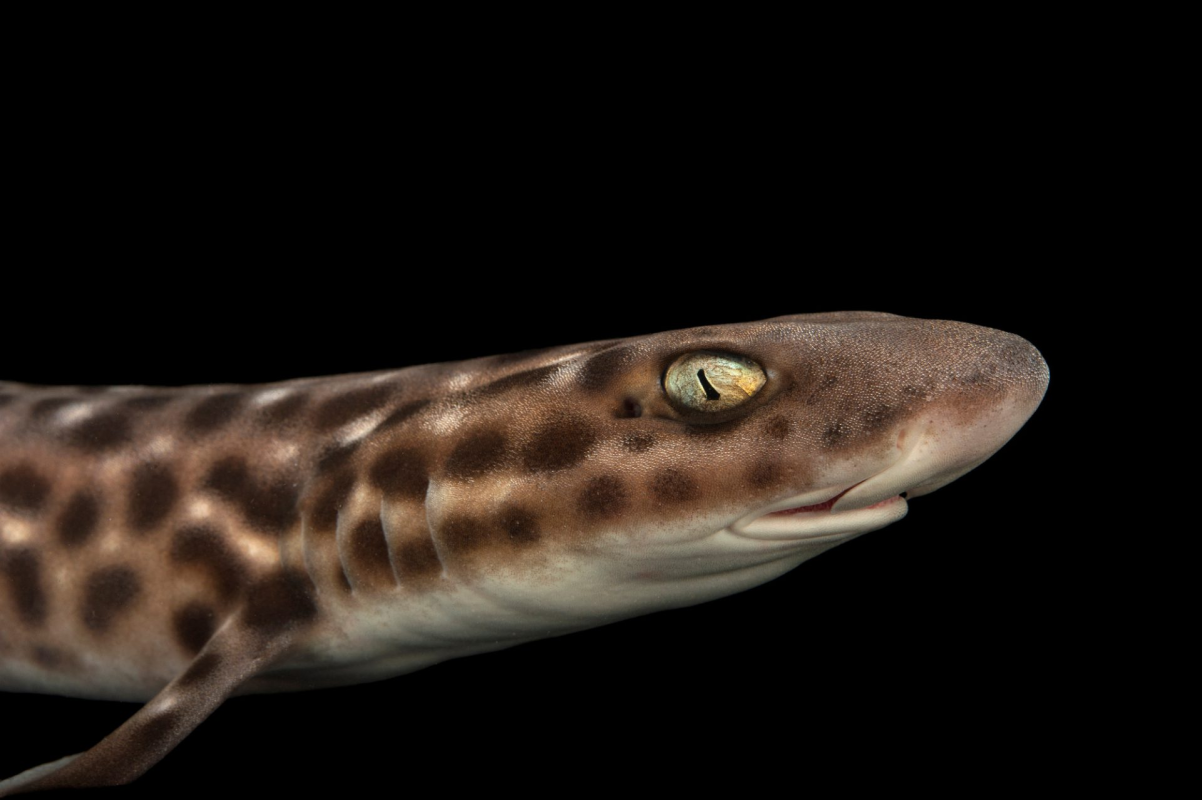
The body is slender and elegantly patterned with a white base overlaid with dark brown to black spots and blotches that create a bold, marbled pattern across the entire length of the shark. The elongated body, distinctive cat-like eyes, and graceful, sinuous swimming movement make the Coral Catshark one of the most visually captivating animals you can keep in a home aquarium.
Most Coral Catsharks reach 24 to 28 inches at full adult size, a genuinely manageable length that puts this species within reach of serious home aquarists with appropriately sized systems.
Why Buy From Dr. Reef’s Quarantined Fish?
A Coral Catshark is a significant investment in both money and aquarium commitment. Buying from a source that does not properly quarantine and prepare the animal is a risk that no serious shark keeper should take.
At Dr. Reef’s Quarantined Fish, every Coral Catshark goes through a comprehensive preparation process before it ever ships:
- Full quarantine observation period monitoring behavior, movement, feeding response, and body condition
- Proactive treatment for external parasites, including flukes and skin pathogens, is common in newly imported elasmobranchs
- Food conditioning so the shark is already accepting frozen and prepared prey before shipping
- Health screening confirming clear eyes, smooth skin, normal swimming posture, and alert behavior
- Only sharks meeting every health and behavioral standard are cleared for shipping
Coral Catsharks that arrive stressed, refusing food, or carrying parasites are extraordinarily difficult to turn around in a home aquarium setting. Dr. Reef’s process eliminates that risk and gives you the healthiest possible start with one of the most unique animals in the marine hobby.
Visit Dr. Reef’s website for current pricing and to check stock availability.
Species Overview
Scientific Name: Atelomycterus marmoratus
Common Names: Coral Catshark, Coral Cat Shark, Marbled Catshark
Origin: Indo-Pacific Ocean, India, Sri Lanka, Southeast Asia, Philippines
Adult Size: 24 to 28 inches
Lifespan: 10 to 15 years or more with excellent care
Temperament: Peaceful toward fish too large to eat. Predatory toward small fish and invertebrates. Not aggressive toward humans.
Activity Level: Low to moderate. Primarily nocturnal. Spends significant time resting on the substrate during daylight hours.
Egg Layer: Yes. Coral Catsharks are oviparous, meaning they reproduce by laying eggs encased in tough, leathery egg cases rather than giving birth to live young.
Aquarium Requirements
Meeting the Coral Catshark’s aquarium requirements honestly and completely is the foundation of successful long-term keeping. This is not an animal for compromise on any of the following points.
Tank Size
A minimum tank size of 180 gallons is required for a single adult Coral Catshark. The tank footprint and length matter more than volume alone. A tank of at least 6 feet in length provides the shark with enough straight-line swimming space to move naturally without constant turning.
A juvenile Coral Catshark can be started in a 100-gallon system, but will require an upgrade as it approaches adult size. Plan the upgrade path before purchasing the shark, so you are not caught with an adult shark outgrowing its tank.
Substrate
A soft, fine sand substrate is essential. Coral Catsharks spend most of their time resting directly on the bottom, and their underside skin is sensitive to abrasion from rough or hard substrates. Use fine aragonite sand at a depth of 2 to 3 inches. A bare-bottom tank will cause chronic skin irritation and eventual abrasion injuries on a bottom-dwelling shark.
Water Parameters
- Temperature: 72 to 77 degrees Fahrenheit. Coral Catsharks prefer slightly cooler water than typical tropical reef systems. Stability within this range is more important than the exact temperature.
- Salinity: 1.022 to 1.025 specific gravity
- pH: 8.1 to 8.4
- Ammonia and Nitrite: 0 ppm. Elasmobranchs are exceptionally sensitive to ammonia and nitrite. Even brief spikes can cause serious neurological damage.
- Nitrate: Under 20 ppm. Lower is always better for long-term elasmobranch health.
- Dissolved Oxygen: High levels required. Strong surface agitation is essential.
Filtration
Coral Catsharks are heavy waste producers relative to their size and require powerful, oversized filtration. A large sump with substantial biological media, strong mechanical filtration, and a quality protein skimmer rated above the actual tank volume is necessary. Regular water changes of 15 to 20 percent per week maintain the low nitrate and ammonia levels this species requires.
Aquascape
Keep the aquascape minimal with open sandy areas dominating the tank floor. A few rock structures along the back and sides provide visual interest and give the shark optional shelter, but the center and front of the tank should be open sand. Avoid sharp decorations or jagged rock edges anywhere near the sand bed where the shark rests.
Tank Cover
A secure tank cover is required. While Coral Catsharks are not prone to jumping the way bony fish are, their powerful tail movement during active periods can occasionally send them unexpectedly toward the surface. A cover also protects the tank from outside interference.
Equipment Safety
Cover all powerhead intakes with sponge pre-filters. Coral Catsharks investigate their environment with their snout and can injure themselves on unprotected equipment. Titanium or external heaters are strongly preferred over in-tank glass heaters that can be damaged by a resting or moving shark.
Care Tips
Acclimation
Coral Catsharks are sensitive to rapid water parameter changes during acclimation. Use the drip acclimation method for at least 60 to 90 minutes when introducing the shark to your tank. Keep lighting extremely dim or off during the entire acclimation period and for the first several hours after introduction. Minimize all activity near the tank for the first 24 hours.
Nocturnal Behavior
Coral Catsharks are naturally nocturnal animals. During daylight hours, they typically rest motionless on the sand bed, sometimes tucked partially under rockwork. They become active and hunt primarily at night. Many keepers add a dim red LED light system to their shark tank so they can observe the shark’s natural nighttime behavior without disturbing it with full-spectrum lighting.
Handling and Maintenance
Avoid unnecessary handling of the shark during tank maintenance. If you must move or handle the animal, support its full body weight and minimize air exposure to absolute zero. Never lift a shark out of water for any reason other than an absolute emergency.
Stress Management
Coral Catsharks are sensitive to chronic stress from inadequate tank size, poor water quality, inappropriate substrate, incompatible tank mates, and excessive disturbance from outside the tank. A shark that is chronically stressed stops eating, develops immune suppression, and declines over months in ways that are difficult to reverse. The tank environment must be correct from the start.
Diet and Feeding
What to Feed
- Frozen shrimp with the shell on
- Frozen squid
- Frozen clam meat
- Frozen silversides or whole small fish
- Fresh fish fillet pieces, such as tilapia or whitefish
- Frozen krill as a supplement
Feeding Technique
Use long stainless steel feeding tongs to present food near the shark on the sand bed during the evening feeding period. Coral Catsharks are olfactory hunters that detect prey primarily through smell. Placing food near the snout activates the feeding response quickly in a conditioned animal. Never hand-feed.
Feeding Schedule
Feed two to three times per week for adults. Juveniles can be fed every other day in smaller portions. Overfeeding is one of the most common mistakes with captive sharks and leads to rapid water quality decline and digestive problems. A slightly conservative feeding schedule produces a healthier, longer-lived animal.
Dr. Reef Advantage
Every Coral Catshark from Dr. Reef’s Quarantined Fish is already accepting frozen prey before it ships. A newly imported, unconditioned Coral Catshark can refuse food for weeks, which is an extremely stressful situation in a home aquarium. Dr. Reef’s food conditioning during quarantine eliminates this challenge and gives your shark the smoothest possible transition into its new home.
Tank Compatibility
Compatible Tank Mates
Coral Catsharks are peaceful toward fish and animals too large to eat. Suitable companions in a large enough system include:
- Large Groupers
- Large Angelfish
- Large Tangs
- Large Wrasses
- Moray Eels are housed in rockwork away from the sand bed
- Large Pufferfish
Do Not House With
- Small fish of any species that can fit in the shark’s mouth
- Ornamental shrimp, crabs, or any small invertebrates
- Aggressive species like large Triggers that may bite the shark’s fins
- Other sharks in systems under 300 gallons
Reef Compatibility
The Coral Catshark is not reef-safe. It will consume all invertebrates, and its physical presence on the sand bed is incompatible with a delicate reef ecosystem. It belongs exclusively in a large, open FOWLR or dedicated shark display setup.
Final Thoughts
The Coral Catshark is the most accessible, practical, and rewarding home shark-keeping experience available in the marine aquarium hobby today. It is beautiful, long-lived, behaviorally fascinating, and capable of breeding in captivity in the hands of a dedicated keeper. It demands a serious setup and genuine commitment, and it rewards that commitment with one of the most extraordinary displays a home aquarium can offer.
At Dr. Reef’s Quarantined Fish, every Coral Catshark arrives fully quarantined, properly conditioned, and eating, giving you the best possible foundation for a long and successful relationship with one of the ocean’s most captivating animals.
Visit Dr. Reef’s Quarantined Fish website today for current pricing and availability.