
Pink Streaked Wrasse

Pink Streaked Wrasse for Sale: Peaceful Reef-Safe Wrasse Guide
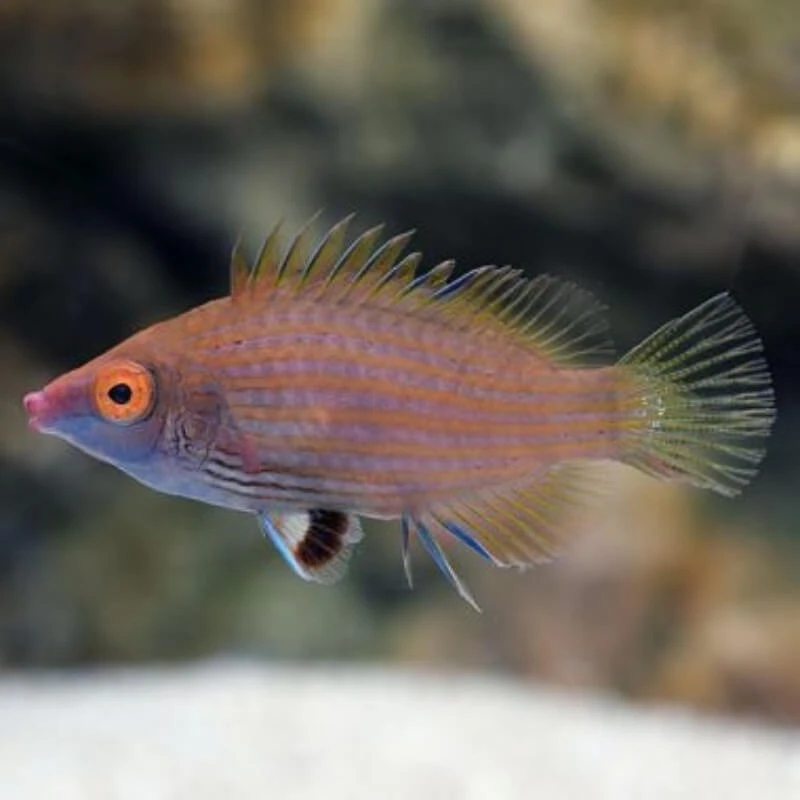
Among the smaller wrasse species available in the marine aquarium trade, few are as universally praised as the Pink Streaked Wrasse (Pseudocheilinops ataenia). Tiny, gentle, and genuinely reef safe, this fish is a standout choice for nano reef tanks, mixed community systems, and any aquarist who wants the activity and charm of a wrasse without the territorial aggression that some larger species bring. Here is everything you need to know about keeping the Pink Streaked Wrasse, and why Dr. Reef’s Quarantined Fish is the right place to start.
What Is the Pink Streaked Wrasse?
Pseudocheilinops ataenia, commonly known as the Pink Streaked Wrasse or Carpet Wrasse, belongs to the family Labridae and is closely related to the well-known Six Line Wrasse, though its temperament is considerably more peaceful. Native to the western Pacific Ocean, this species is found in shallow reef environments with abundant coral and rubble.
The fish reaches a maximum size of around 2 to 2.5 inches, making it one of the smaller wrasse options available to hobbyists. Its coloration is soft and attractive rather than bold and flashy: a pale pinkish-white body decorated with delicate horizontal pink streaks running from head to tail, giving it an elegant, almost translucent appearance under good reef lighting.
Do not let its modest size fool you. The Pink Streaked Wrasse is an active, alert fish that moves constantly through the rockwork and rubble zones of its tank, hunting microscopic prey and exploring every nook and corner of its environment.
Why the Pink Streaked Wrasse Is So Popular
In a hobby where wrasses often carry warnings about aggression, territory, or coral-nipping, the Pink Streaked Wrasse stands apart because of what it does not do. It does not harass other fish. It does not nip at coral polyps. It does not dominate a tank or make other residents miserable.
What it does do is provide constant, gentle activity that animates the lower sections of the reef. It moves through the substrate and rubble zones like a quiet, persistent forager, picking at surfaces in search of small worms, copepods, and amphipods. In established reef tanks, this behavior actively supports the health of the system by controlling small pest populations.
For hobbyists running mixed reef communities with sensitive or timid species, the Pink Streaked Wrasse adds life and movement without disruption.
Tank Requirements
- Tank Size: The Pink Streaked Wrasse can be kept in tanks as small as 20 to 30 gallons, making it one of the few wrasse species genuinely suited to nano reef setups. However, it also thrives in larger systems where it has more territory to explore.
- Sand Bed: Like most wrasses, Pseudocheilinops ataenia uses sand for sleeping and shelter. A fine-grain sand bed of at least 2 inches is strongly recommended. Without it, the fish cannot behave naturally and may become chronically stressed.
- Aquascape: Dense rockwork with numerous small crevices, overhangs, and rubble areas is ideal. The Pink Streaked Wrasse is a shy species by wrasse standards and appreciates having plenty of retreats available.
- Secure Lid: All wrasses can and will jump, particularly in the first days after introduction to a new tank. A tightly fitted lid or fine mesh cover is essential regardless of tank size.
- Water Parameters: Target salinity of 1.023 to 1.025, temperature between 74 and 80 degrees Fahrenheit, and stable pH of 8.1 to 8.4. Consistent water quality is more important than hitting any particular number, as stability supports immune health and reduces stress-related illness.
Reef Safety and Compatibility
The Pink Streaked Wrasse earns a genuine reef-safe designation. It does not harm coral of any kind and is safe with anemones and other sessile invertebrates. It may consume very small ornamental shrimp and tiny amphipods, as these fall within its natural diet, but it poses no threat to larger cleaner shrimp, snails, or other standard reef invertebrates.
For tankmates, the Pink Streaked Wrasse is compatible with nearly any peaceful to moderately semi-aggressive community fish. It pairs beautifully with clownfish, gobies, dartfish, small basslets, firefish, and other nano-compatible reef species.
Avoid housing it with aggressive fish that might bully or intimidate it. The Pink Streaked Wrasse is not equipped to defend itself against larger, assertive fish, and persistent harassment will cause it to hide constantly and decline.
Keeping multiple Pink Streaked Wrasses in the same tank is possible in larger systems. A single male with one or two females is the most stable grouping. Avoid keeping two males together in smaller tanks, as territorial disputes can occur.
Feeding the Pink Streaked Wrasse
This species is a micropredator in the wild, subsisting on tiny worms, crustaceans, and other small invertebrates found in and around the rubble and sand. In captivity, it transitions well to prepared foods including frozen Mysis shrimp, frozen copepods, and finely crushed marine pellets.
Because of its small mouth and size, food particle size matters. Very large food items will be ignored. Offer small, appropriately sized portions two to three times daily and observe feeding behavior to confirm the fish is eating well.
In a mature reef tank with an established population of copepods and amphipods in the live rock and sand, the Pink Streaked Wrasse will supplement its diet with natural prey throughout the day, which is beneficial for both the fish and the overall tank ecosystem.
The Importance of Buying a Quarantined Pink Streaked Wrasse
Small wrasse species like Pseudocheilinops ataenia can be particularly vulnerable during the collection and shipping process. Their small size means they have limited reserves to draw on when stressed, and unquarantined specimens that arrive with parasitic infections or internal illness may decline quickly and with little warning.
The standard practice in much of the marine fish trade is to move fish from the ocean to the wholesaler to the retailer to the customer with minimal recovery time and no quarantine. Each step adds stress and disease risk without giving the fish an opportunity to stabilize.
Dr. Reef’s Quarantined Fish was built specifically to break this cycle. Every Pink Streaked Wrasse available through Dr. Reef goes through a dedicated quarantine period during which it is observed, assessed, and treated proactively if any health concerns arise. Fish are only made available for sale once they are confirmed healthy and feeding consistently.
When you purchase from Dr. Reef, you are buying a fish that has already passed the most dangerous phase of transition. The first two weeks after collection are when most losses occur, and Dr. Reef absorbs that risk so you do not have to.
A Wrasse for Every Reef
The Pink Streaked Wrasse is proof that remarkable fish do not have to be large, aggressive, or expensive to be exceptional. Its combination of genuine reef safety, peaceful temperament, active foraging behavior, and modest size requirements makes it one of the most versatile and rewarding wrasse species available to hobbyists at any experience level.
Whether you are stocking your first nano reef or adding a peaceful layer of activity to an established mixed community tank, the Pink Streaked Wrasse is a species that consistently delivers. Source yours from Dr. Reef’s Quarantined Fish and start with confidence.