
Maculiceps Tang

Maculiceps Tang: Care, Habitat, Diet, and Aquarium Compatibility Guide
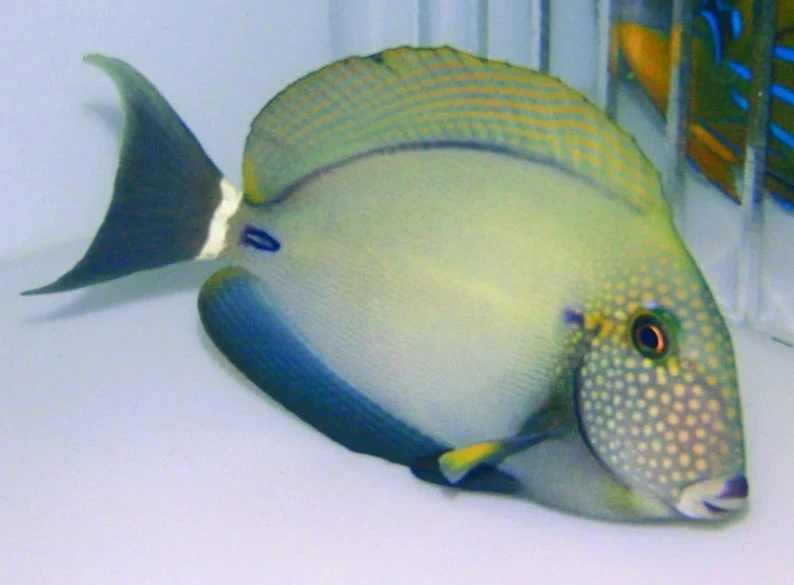
The Maculiceps Tang is a showpiece fish that turns heads in any large reef system. With its distinctive spotted head and bold patterning, Acanthurus maculiceps is a species that serious hobbyists actively seek out. Here at Dr. Reef’s Quarantined Fish, we want to make sure you are fully prepared before bringing one home.
What Kind of Fish Is It?
The Maculiceps Tang, also called the Spotted-Head Surgeonfish, comes from the Indo-Pacific and grows up to 16 inches as an adult. It is reef safe with caution, best suited for experienced hobbyists, and needs a minimum tank size of 200 gallons. It is not commonly available in the hobby, which makes sourcing a healthy specimen from a reputable quarantine facility all the more important.
Natural Habitat
In the wild, this tang lives along exposed reef flats and outer reef slopes from East Africa through the Pacific Islands. It is an active, open-water swimmer that spends its day grazing algae across large reef territories. Recreating this environment in captivity is the key to keeping it healthy and settled.
Aquarium Setup
A long 200-gallon tank with strong water flow and excellent filtration is the foundation. This species needs horizontal swimming space above all else. Keep water parameters within these ranges:
Temperature: 74 to 80 degrees Fahrenheit Salinity: 1.020 to 1.025 pH: 8.1 to 8.3 Ammonia and Nitrite: 0 ppm Nitrate: Below 20 ppm
Poor water quality quickly leads to Marine Ich and Head and Lateral Line Erosion (HLLE), both of which are stress-driven conditions. Open aquascaping with clear swimming lanes and natural grazing surfaces works best for this species.
Diet
The Maculiceps Tang is a herbivore. A plant-based diet is not optional; it is essential to its health and temperament.
Feed daily nori on a clip, algae-based pellets or flakes, and frozen herbivore blends containing Spirulina and mysis shrimp. Live rock with established algae growth gives the tang something to graze on between feedings, which reduces stress significantly. Occasional mysis shrimp can be offered as a treat, but keep the diet plant-forward at all times. A tang not getting enough algae becomes more aggressive and far more disease-prone. Feed small amounts two to three times daily.
Compatibility
This tang is semi-aggressive, especially toward other surgeonfish. It coexists well with large angelfish, clownfish, chromis, hawkfish, and reef-safe wrasses. If keeping multiple tangs, introduce the Maculiceps Tang last and ensure the tank is large enough to support separate territories. Always handle with care during transport as the caudal spines are sharp.
Why Quarantine Matters
Marine Ich, Marine Velvet, and HLLE are the three biggest health risks for this species, and all three are made worse by the stress of poor handling and skipped quarantine. Introducing an unquarantined tang directly into your display tank puts your entire system at risk.
At Dr. Reef’s Quarantined Fish, every animal goes through a thorough quarantine process before reaching you. Each tang is observed, treated where needed, and confirmed feeding before it leaves our care. Our customers consistently report faster acclimation, better feeding responses, and smoother integration into established tanks. That is what proper quarantine delivers every single time.
Final Thoughts
The Maculiceps Tang is a rewarding, long-lived centerpiece fish for large reef systems. Give it space, strong flow, a plant-based diet, and stable water quality, and it will thrive. Start with a properly quarantined specimen and you are already ahead of the game.