
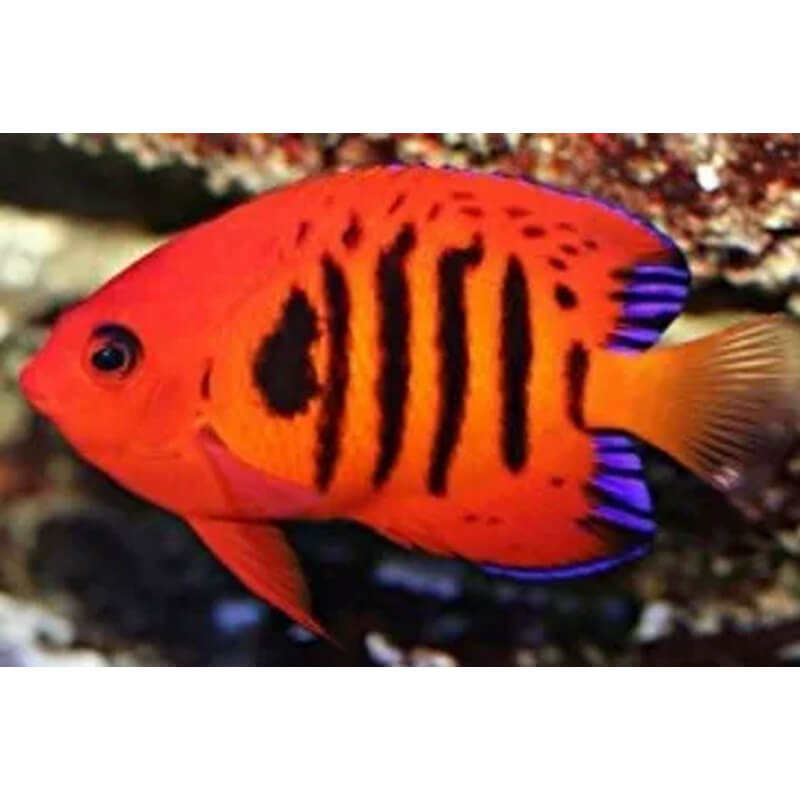
Flame Angelfish (Captive Bred)
$189.99
Centropyge loricula
| Care Level | Moderate |
| Temperament | Semi-aggressive |
| Color Form | Blue, Orange, Yellow |
| Diet | Omnivore |
| Reef Compatible | With Caution |
| Water Conditions | sg 1.020-1.025, 72-78° F, dKH 8-12, pH 8.1-8.4 |
| Max Size | 4″ |
| Family | Pomacanthidae |
| Minimum Tank Size | 70 gallons |
3-Day Guarantee
Approximate Purchase Size: Tiny to small
All Captive bred livestock will be tiny to small at best in size.
Flame Angelfish (Captive Bred)
Also known as the Japanese Pygmy Angelfish or Flame Angel
The Captive-Bred Flame Angelfish represents a significant advancement in marine aquaculture, offering aquarists one of the hobby’s most spectacular dwarf angelfish with superior hardiness, disease resistance, and sustainability. These captive-raised specimens display the same brilliant fiery red-orange coloration as their wild counterparts while providing substantial advantages in adaptability and long-term success. Supporting captive breeding programs helps reduce pressure on wild reef populations while providing aquarists with healthier, more resilient specimens that are already acclimated to aquarium life and prepared foods.
Key Features
- Scientific Name: Centropyge loricula
- Common Names: Flame Angelfish, Flame Angel, Japanese Pygmy Angelfish
- Adult Size: 4–6 inches (typically 4–5 inches in captivity)
- Lifespan: 5–10+ years with proper care (captive-bred specimens often exceed 12 years)
- Temperament: Semi-aggressive; territorial with other dwarf angelfish but generally peaceful with other species
- Reef Compatibility: With caution – may nip at soft corals, zoanthids, and clam mantles (individual variation)
- Minimum Tank Size: 70+ gallons recommended
- Experience Level: Beginner to intermediate (captive-bred hardiness makes them accessible to careful beginners)
Habitat & Tank Requirements
- Tank Environment: Provide abundant live rock structures with caves, crevices, and hiding spots. Captive-bred Flame Angels are active swimmers that appreciate both secure refuges and open areas to explore. They spend considerable time investigating rockwork and grazing on algae and biofilm, though captive-bred specimens adapt well to various aquascaping styles.
- Water Parameters:
- Temperature: 72–78°F (22–26°C)
- Salinity: 1.020–1.025
- pH: 8.1–8.4
- Ammonia/Nitrite: 0 ppm
- Nitrate: <20 ppm
- dKH: 8–12
- Calcium: 380–450 ppm
- Aquascape: Complex rockwork with multiple territories, caves, and natural algae growth. They establish small territories within rock structures and defend prime grazing areas. Captive-bred specimens are generally more adaptable to various tank layouts than wild-caught fish.
- Compatibility: Generally peaceful with most fish species but can be aggressive toward other dwarf angelfish, especially other Centropyge species. Compatible with peaceful to semi-aggressive community fish including tangs, wrasses, gobies, clownfish, dartfish, and pseudochromis. Captive-bred specimens often show slightly more moderate temperaments than wild-caught counterparts. Best added after more timid fish are established. Can sometimes be kept in male-female pairs in larger systems (90+ gallons).
Diet & Feeding
Captive-bred Flame Angelfish are trained from early development to accept diverse prepared foods:
- Meaty Foods: Mysis shrimp, vitamin-enriched brine shrimp, finely chopped seafood, high-quality marine pellets (readily accepted by captive-bred specimens), frozen carnivore preparations
- Plant Matter: Marine algae sheets (nori, sea lettuce), spirulina-based foods, natural algae growth on live rock, herbivore flakes and pellets
- Specialty Foods: Angelfish formulas containing sponge material (beneficial for long-term health), color-enhancing preparations with spirulina, astaxanthin, and natural carotenoids
- Prepared Foods Advantage: Captive-bred specimens readily accept high-quality pellets and flakes from early age, making feeding significantly easier than wild-caught specimens
- Live Rock Grazing: While not as dependent on natural grazing as wild-caught fish, they still benefit from live rock with film algae, biofilm, and microfauna
- Feeding Schedule: Feed 2–3 times daily in small to moderate portions. Captive-bred specimens are enthusiastic eaters and quickly learn feeding schedules.
Notes & Considerations
- Behavior: Captive-bred Flame Angels display active, bold, and curious personalities, often showing even more confidence than wild-caught specimens. They establish territories within rockwork but are generally less aggressive due to being raised in controlled environments without intense competition. Once established, they become highly visible throughout the tank and often interact with owners during feeding times.
- Coral Compatibility: Considered “reef-safe with caution” like wild specimens. Captive-bred Flame Angels show individual variation in coral nipping behavior. Many aquarists successfully keep them in reef systems with no issues, while some specimens develop interest in soft corals (zoanthids, leather corals, mushrooms), large-polyp stony corals, and clam mantles. Captive-bred specimens raised in coral-free systems may have slightly lower coral-nipping tendencies initially, though this is not guaranteed.
- Brilliant Coloration: Captive-bred Flame Angels display the same intense fiery red to red-orange coloration as wild specimens. Four to five vertical black bars mark the body. Dorsal and anal fins show elongated filaments with electric blue to purple-blue margins that provide stunning contrast. Color intensity in captive-bred specimens often equals or exceeds wild-caught fish when fed premium diets with color enhancers.
- Color Development: Captive-bred juveniles may show slightly less intense coloration initially but develop full adult brilliance within months when fed quality varied diets. Color enhancement foods are particularly effective with captive-bred specimens.
- Sexual Dimorphism: Like wild specimens, captive-bred Flame Angels are protogynous hermaphrodites. Males develop more intense red coloration, more pronounced vertical bars, and longer fin extensions compared to females, though differences remain subtle.
- Superior Hardiness: Captive-bred specimens show remarkable adaptability to varying water conditions, are significantly more disease-resistant than wild-caught fish, and handle shipping and acclimation stress far better due to being raised in aquarium environments from hatching.
- Reduced Acclimation Stress: Already adapted to aquarium life, processed foods, and human interaction, captive-bred Flame Angels typically settle immediately and begin feeding within hours rather than days.
Why Choose Captive-Bred Flame Angelfish?
Captive-bred specimens offer substantial advantages over wild-caught alternatives:
- Superior Health & Hardiness: Raised in disease-free, controlled environments with optimal nutrition from larval stage, resulting in robust immune systems and exceptional disease resistance
- Immediate Feeding Response: Pre-trained to accept diverse prepared, frozen, and pelleted foods from early development, eliminating the feeding challenges sometimes encountered with wild specimens
- Reduced Stress & Better Acclimation: No traumatic collection or lengthy shipping from natural reefs results in calmer, more confident fish that adapt immediately to new aquariums
- Consistent Quality: Captive breeding programs select for vibrant coloration, good health, and desirable temperament traits, often producing specimens equal to or exceeding wild quality
- Environmental Sustainability: Protects wild reef populations and marine ecosystems from collection pressure, supporting ocean conservation efforts
- Predictable Temperament: Generally display more moderate, manageable aggression compared to wild-caught specimens that may have experienced intense territorial competition
- Extended Lifespan: Proven longevity advantages with captive-bred specimens often living 10–15+ years versus 5–8 years typical for wild-caught fish
- Beginner Accessibility: Superior hardiness and feeding response make captive-bred Flame Angels suitable for careful beginners, expanding access to this spectacular species
- No Acclimation Mystery: Complete certainty about captive raising eliminates concerns about collection stress, decompression issues, or cyanide exposure
- Supporting Innovation: Purchasing captive-bred specimens supports marine aquaculture advancement and encourages breeding programs for additional species
Our captive-bred Flame Angelfish are carefully cared for over 3–4 weeks. They are fed high-quality, colorful foods, treated gently for health issues if needed, and closely watched for good behavior. This makes sure they arrive healthy, eat well, are parasite-free, and look stunning right away. They are hardy, long-lasting, and a beautiful, lively addition to your tank. Choosing captive-bred also helps the environment and gives you peace of mind.
| Service Level | Quarantined |
|---|
You must be logged in to post a review.
Reviews
There are no reviews yet.