
Zebra Mantis Shrimp for Sale: Differences from Peacock Mantis Shrimp

Zebra Mantis Shrimp for Sale: Differences from Peacock Mantis Shrimp
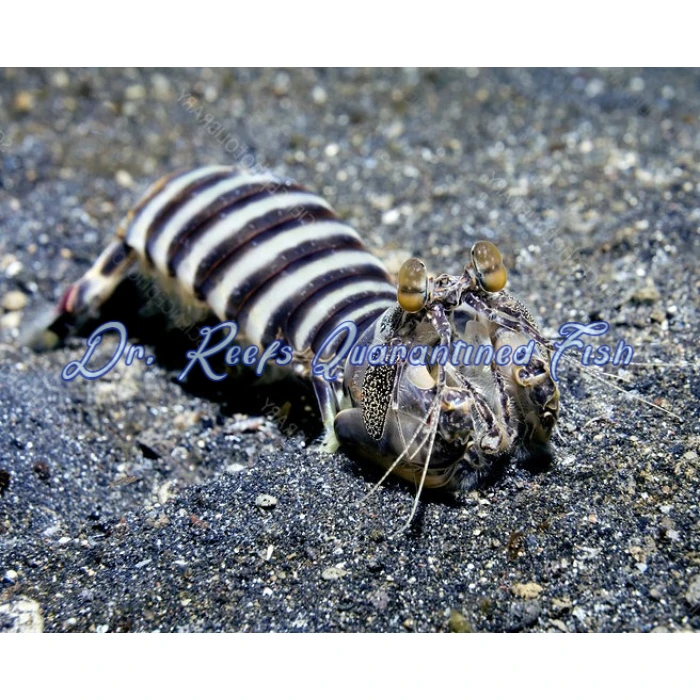
The Zebra Mantis Shrimp, scientific name Lysiosquillina maculata, also known as the Striped Mantis Shrimp, is a bold and striking smasher species featuring a dramatic black and white striped pattern. It grows to 6 to 8 inches, is rated expert care level, is not reef safe, and requires a minimum tank of 30 gallons. Dr. Reef’s Quarantined Fish offers the Zebra Mantis Shrimp at $179.99, professionally quarantined and feeding on prepared foods before overnight UPS delivery to all 50 states. Like the Peacock Mantis Shrimp, this is strictly a species only display animal.
What Is the Zebra Mantis Shrimp?
The Zebra Mantis Shrimp belongs to the Lysiosquillidae family, placing it in a different family from the Peacock Mantis Shrimp which belongs to the Odontodactylidae family. It is native to the Indo-Pacific and is one of the largest mantis shrimp species available in the aquarium trade. Its bold black and white banding pattern inspired both its common name and the alternative name Striped Mantis Shrimp.
Like the Peacock Mantis Shrimp, the Zebra Mantis is a smasher type mantis shrimp that uses powerful club-like raptorial appendages to deliver devastating strikes to prey. It is extremely aggressive, highly territorial, predatory, and requires a dedicated species only setup with acrylic or very thick glass construction.
Dr. Reef’s Quarantined Fish lists the Zebra Mantis under Inverts and Shrimps at drreefsquarantinedfish.com.
How Much Does the Zebra Mantis Shrimp Cost at Dr. Reef’s?
The Zebra Mantis Shrimp is priced at $179.99 at Dr. Reef’s Quarantined Fish. This is $30 more than the Peacock Mantis Shrimp, reflecting the Zebra Mantis’s larger maximum adult size and relative rarity compared to the Peacock in the aquarium trade. Every specimen ships professionally quarantined, feeding well on appropriate foods, and acclimated to captive conditions before delivery.
Free shipping on orders over $500. Overnight UPS delivery Tuesday through Thursday with delivery Wednesday through Friday. Payment via PayPal, Stripe, and Venmo.
Zebra Mantis Shrimp vs Peacock Mantis Shrimp: Key Differences
This is the most searched question about these two species and it deserves a thorough, direct answer. Here is a complete comparison based entirely on the confirmed Dr. Reef’s product page data for both species.
The Zebra Mantis Shrimp, Lysiosquillina maculata, has a bold black and white striped body pattern. The Peacock Mantis Shrimp, Odontodactylus scyllarus, displays a multicolored rainbow peacock pattern with vivid reds, greens, blues, and oranges throughout the body.
The Zebra Mantis grows to 6 to 8 inches adult size. The Peacock Mantis grows to 7 inches adult size. The Zebra Mantis is generally the larger species at full adult size.
The Zebra Mantis is priced at $179.99 at Dr. Reef’s. The Peacock Mantis is priced at $149.99. Both require the same minimum tank size of 30 gallons and the same water parameters.
Both species share the same care level rating of expert, the same reef compatibility rating of not reef safe, and the same absolute requirement for species only housing.
The Zebra Mantis has 12 or more color receptors in its visual system. The Peacock Mantis has 16 color receptors. Both far exceed human visual capability of 3 color receptors.
The Zebra Mantis tends to be somewhat more secretive and spends more time in its burrow than the Peacock Mantis. The Peacock Mantis is generally considered slightly more active and visible during daylight hours.
Both species belong to the smasher category and both are capable of delivering strikes with comparable destructive force. Both require acrylic or extremely thick glass aquariums.
The Zebra Mantis belongs to the Lysiosquillidae family and the Peacock Mantis belongs to the Odontodactylidae family. They are not closely related despite sharing many behavioral and husbandry similarities.
Is the Zebra Mantis Shrimp Reef Safe?
No. Confirmed not reef safe on the Dr. Reef’s product page with no exceptions. The Zebra Mantis Shrimp will destroy corals, invertebrates, and fish. Like the Peacock Mantis Shrimp, it is a strictly species only display animal. No other living creature should share its tank under any circumstances.
What Tank Does the Zebra Mantis Shrimp Require?
The minimum tank size confirmed on the Dr. Reef’s product page is 30 gallons. A 40 gallon or larger tank is preferred for full grown adults given that the Zebra Mantis can reach 8 inches in size.
The tank material requirement is identical to the Peacock Mantis Shrimp. Acrylic or extremely thick glass with a minimum half inch thickness is essential. Standard aquarium glass is not safe. The Dr. Reef’s product page warns explicitly that Zebra Mantis Shrimp strikes can damage standard glass aquariums.
A deep sand bed of 3 to 4 inches is required for burrowing behavior. PVC pipe sections can be added as supplemental hiding spots in addition to rock rubble. A secure, heavy lid is mandatory to prevent escape attempts.
All equipment inside the tank including heaters, powerheads, and thermometers should be protected from strike damage or positioned externally wherever possible.
Confirmed Water Parameters for the Zebra Mantis Shrimp
Per the Dr. Reef’s product page. Temperature 72 to 78 degrees Fahrenheit. Salinity 1.023 to 1.025. pH 8.1 to 8.4. Excellent water quality with frequent water changes. A protein skimmer is essential. Robust filtration sized above the actual tank volume is the right approach given the significant organic load this species produces from its feeding behavior.
How to Feed the Zebra Mantis Shrimp
The Zebra Mantis Shrimp is an aggressive carnivorous predator. The Dr. Reef’s product page specifies live feeder fish, live or frozen shrimp, live or frozen crabs, mollusks including clams, mussels, and snails, frozen krill, and raw seafood as the primary diet.
Shell-on prey items are important for natural smashing behavior. Providing crustaceans and mollusks with their shells intact allows the Zebra Mantis to exercise its raptorial appendages in the way nature intended and helps keep those appendages properly conditioned.
Feed two to three times per week and adjust based on the animal’s size and appetite. Remove uneaten food promptly because the Zebra Mantis may cache food in its burrow where it can decompose and impact water quality if not addressed through regular maintenance.
The Zebra Mantis Shrimp’s Visual and Sensory System
Like all stomatopods, the Zebra Mantis Shrimp possesses a remarkably complex visual system. The Dr. Reef’s product page confirms the Zebra Mantis has 12 or more color receptors and can see polarized and ultraviolet light that are completely invisible to humans.
Both eyes move independently and can track different objects simultaneously. This gives the Zebra Mantis an almost complete sphere of visual awareness that makes surprising it from behind essentially impossible in its own territory.
The Zebra Mantis is also highly intelligent by invertebrate standards, capable of recognizing individual humans and learning feeding schedules and associations. Many keepers report their mantis shrimp responding differently to familiar versus unfamiliar people approaching the tank.
Important Safety Warnings for Zebra Mantis Shrimp Keepers
The Dr. Reef’s product page is direct about the safety requirements for keeping this species. Every point below is confirmed from the live product page.
- Never place unprotected hands in the tank. The Zebra Mantis can cause serious injury. Use aquarium tools and maintain physical separation from the animal during all maintenance activities.
- Protect all internal equipment from strikes. Heaters, powerheads, and thermometers are targets. Use equipment guards or choose external setups wherever possible.
- The Zebra Mantis produces audible clicking, popping, and snapping sounds, especially during feeding. These sounds are completely normal and confirm the animal is healthy and active.
- The species may strike at the aquarium glass seemingly without provocation. This is territorial behavior and a reminder that the tank construction must be appropriate for this animal from day one.
- Molting is a vulnerable period. During and immediately after molting, the Zebra Mantis is temporarily softer and less able to defend itself. Do not add any other animals to the tank during this period.
Who Should Keep a Zebra Mantis Shrimp?
The Dr. Reef’s product page rates this species expert level and that rating is straightforward. This is a dedicated specimen display for experienced marine keepers who understand the full commitment required. A purpose built acrylic or thick glass species-only system must be in place before purchasing.
The Zebra Mantis Shrimp is not for someone looking for a community tank inhabitant, a reef safe addition, or a low maintenance species. It is for the keeper who finds predatory intelligence, dramatic coloration, and powerful natural behavior genuinely compelling and who has the patience and setup to support a long term specimen display for a one of a kind animal.
Frequently Asked Questions About the Zebra Mantis Shrimp
Q: What is the difference between the Zebra Mantis and the Peacock Mantis Shrimp?
A: The Zebra Mantis has bold black and white striping, belongs to the Lysiosquillidae family, and grows to 6 to 8 inches. The Peacock Mantis has a multicolored rainbow pattern, belongs to the Odontodactylidae family, and grows to 7 inches. The Peacock is priced at $149.99 and the Zebra Mantis at $179.99 at Dr. Reef’s. Both require identical tank setups and care levels.
Q: Is the Zebra Mantis Shrimp reef safe?
A: No. Confirmed not reef safe on the Dr. Reef’s product page. Strictly species only.
Q: What is the minimum tank size for a Zebra Mantis Shrimp?
A: 30 gallons confirmed minimum per the Dr. Reef’s product page. 40 gallons or more is preferred for adults.
Q: What tank material is required?
A: Acrylic or extremely thick glass with minimum half inch thickness. The Dr. Reef’s product page explicitly warns that strikes can damage standard aquarium glass.
Q: How big does the Zebra Mantis Shrimp get?
A: Up to 6 to 8 inches adult size confirmed on the Dr. Reef’s product page. This is generally the larger of the two mantis shrimp species available at Dr. Reef’s.
Q: Can I keep a Zebra Mantis Shrimp with other fish or invertebrates?
A: No. Single specimen only in a species dedicated tank. No exceptions.
Q: What are the confirmed water parameters?
A: Temperature 72 to 78 degrees Fahrenheit, salinity 1.023 to 1.025, pH 8.1 to 8.4.
Q: Why is the Zebra Mantis more expensive than the Peacock Mantis at Dr. Reef’s?
A: The Zebra Mantis is priced at $179.99 versus $149.99 for the Peacock Mantis, reflecting its larger adult size and relative rarity in the aquarium trade.
Essential Things to Know About Fish
The Zebra Mantis Shrimp is a dramatic, powerful, and visually striking species that demands expert level commitment, purpose built housing, and a genuine appreciation for predatory invertebrate behavior. It is not reef safe, it cannot have tankmates, and it requires acrylic or thick glass construction. These are firm requirements, not suggestions.
For the right keeper with the right setup, the Zebra Mantis Shrimp from Dr. Reef’s Quarantined Fish at $179.99 is a truly remarkable species-only display animal unlike anything else available in the marine hobby. Both the Zebra and the Peacock Mantis Shrimp are available at drreefsquarantinedfish.com, each professionally quarantined and ready to become the most talked about resident of a dedicated specimen display.