
Seahorse for Sale: Tank Setup, Feeding Tips, and Beginner Care Guide

Seahorse for Sale: Tank Setup, Feeding Tips, and Beginner Care Guide
Few animals in the entire ocean are as magical as the Seahorse. Gentle, graceful, and unlike anything else in the reef hobby, a Seahorse tank is a unique experience that captivates everyone who sees it. If you have been thinking about keeping Seahorses, this guide will walk you through everything you need to know in simple, easy steps. Dr. Reef has healthy, captive-bred Seahorses ready for your care right now.
What Is a Seahorse?
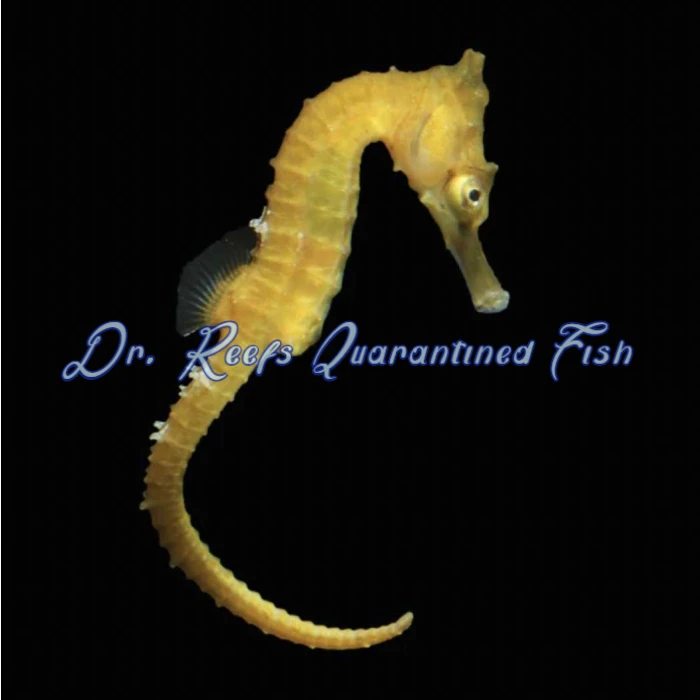
Seahorses belong to the genus Hippocampus and are found in shallow tropical and temperate coastal waters around the world. They are bony fish despite their unusual appearance. They have no scales, instead being covered by a series of hard, bony plates. They swim upright using a small dorsal fin that beats extremely rapidly, and they steer with tiny pectoral fins on either side of the head. They anchor themselves to corals, seagrasses, and other structures using a flexible prehensile tail.
One of the most famous facts about Seahorses is that the male carries and gives birth to the young. The female deposits eggs into a pouch on the male’s abdomen. The male fertilizes the eggs, carries them through the full pregnancy, and gives birth to fully formed juvenile Seahorses after a gestation period of two to four weeks, depending on the species.
Captive-bred Seahorses are strongly recommended over wild-caught individuals for several important reasons. Captive-bred Seahorses are already accustomed to aquarium life, have been raised on frozen foods, are far less prone to the stress-related diseases that often affect wild-caught specimens, and are a more sustainable and ethical choice for the hobby.
Tank Setup
Setting up the right tank for Seahorses is the most important step in becoming a successful Seahorse keeper. Seahorses have specific needs that differ from most other marine fish, and meeting those needs from the beginning makes everything else much easier.
Start with a tank of at least 30 gallons for a pair of Seahorses. Taller tanks work better than wide, shallow ones because Seahorses are vertical animals that swim and anchor at different heights throughout the water column. A tank that is at least 18 inches tall gives them room to move naturally.
Temperature is critically important. Most commonly kept Seahorse species prefer cooler water than typical reef fish, with temperatures between 68 and 74 degrees Fahrenheit being ideal. Higher temperatures stress Seahorses and make them susceptible to bacterial infections. A quality aquarium chiller is worth the investment for a dedicated Seahorse tank.
Water flow should be very gentle. Seahorses are weak swimmers, and strong currents exhaust them and prevent them from feeding properly. Use a low-flow filter or baffle your returns to create soft, gentle movement throughout the tank rather than strong directional flow.
Provide plenty of hitching posts throughout the tank. Seahorses spend most of their time anchored to something rather than actively swimming. Artificial corals, live macroalgae like Chaeto or Caulerpa, and specially designed Seahorse hitching posts all work well. The more anchoring options available at different heights, the more comfortable and natural the Seahorses will behave.
Keep the tank species-specific. Seahorses should not be kept with most regular reef fish. Fast-moving, aggressive feeders will outcompete Seahorses for food every time. Other slow-moving, peaceful species like Pipefish and certain Dragonets can work in a Seahorse system, but when in doubt, a tank dedicated entirely to Seahorses is always the safest and most rewarding choice.
Maintain salinity at 1.025 and pH between 8.1 and 8.4 with excellent water quality through regular water changes. Ammonia and nitrite should always read zero. Nitrates should be kept as low as possible, ideally below 20 ppm.
Feeding Tips
Feeding is the area where most new Seahorse keepers struggle at first. Understanding how Seahorses eat makes it much easier to get this right from the beginning.
Seahorses do not chase food. They are ambush feeders that sit still, wait for prey to drift past, and then strike with lightning speed using their snout like a vacuum. Their entire feeding strategy depends on prey coming to them rather than them pursuing it.
In the wild, Seahorses eat tiny live shrimp and other small crustaceans almost constantly throughout the day. In captivity, captive-bred Seahorses have been trained from birth to accept frozen mysis shrimp, which is the gold standard food for Seahorses in home aquariums.
Feed your Seahorses two to three times daily in small amounts. The best way to feed them is to use a target feeding station, which is simply a small dish or container placed on the sandbed. Add frozen mysis shrimp to the dish, and the Seahorses will learn to visit it at feeding time. This approach keeps the food in one place long enough for the Seahorses to eat at their own pace and makes it easy to remove uneaten food before it affects water quality.
Never drop food into the open water column and walk away. Seahorses eat slowly and methodically. Food that drifts past before they can catch it ends up on the sandbed or in the filter, causing water quality problems without feeding the fish.
Keeping a small population of live copepods and amphipods in the tank as a supplemental food source is an excellent practice. These tiny creatures live in the rockwork and sandbed and provide natural snacking opportunities for the Seahorses between feeding sessions.
A well-fed Seahorse will have a slightly rounded belly rather than a pinched or sunken appearance. Monitoring body condition at each feeding tells you immediately whether each horse is eating enough.
Health and Common Beginner Mistakes
The most common mistake new Seahorse keepers make is keeping the water temperature too warm. This single error causes more Seahorse health problems than any other factor. Invest in a reliable thermometer and a chiller if your room temperature cannot reliably keep the tank in the correct range.
The second most common mistake is keeping Seahorses with incompatible tankmates. Fast fish steal food. Aggressive fish cause stress. Even fish that seem peaceful in a regular reef tank can be a serious problem in a Seahorse system. Keep the tank dedicated to Seahorses and select any additional tankmates with great care.
The third mistake is inconsistent feeding. Seahorses have small stomachs and fast metabolisms. They need to eat multiple times per day to stay healthy. Missing feedings or feeding too little over several days can cause rapid weight loss that is difficult to recover from. Consistency is everything with this species.
Reef Compatibility
Seahorses are completely reef safe with corals and most sessile invertebrates. They have no interest in coral and pose no threat to any reef animal. Their compatibility concerns are entirely about tankmates that might harm or outcompete them, rather than anything they might do to others.
Why Buy Your Seahorse from Dr. Reef?
Seahorses are one of the most delicate and rewarding animals in the marine hobby. Buying from the right source is more important with Seahorses than with almost any other fish. Dr. Reef’s Quarantined Fish offers captive-bred Seahorses that have been properly quarantined, confirmed to be eating frozen mysis shrimp, and carefully observed before shipping. You receive a Seahorse that is healthy, acclimated to captive life, and ready to thrive in a properly set-up home system.
Dr. Reef understands that Seahorse keepers care deeply about the animals they keep. That shared commitment to animal welfare is built into every step of the process at Dr. Reef, from the quarantine period to the careful packing that gets your Seahorse to your door in the best possible condition.