
Schooling Bannerfish for Sale

Schooling Bannerfish for Sale – A Graceful and Eye-Catching Species for Large Reef Aquariums
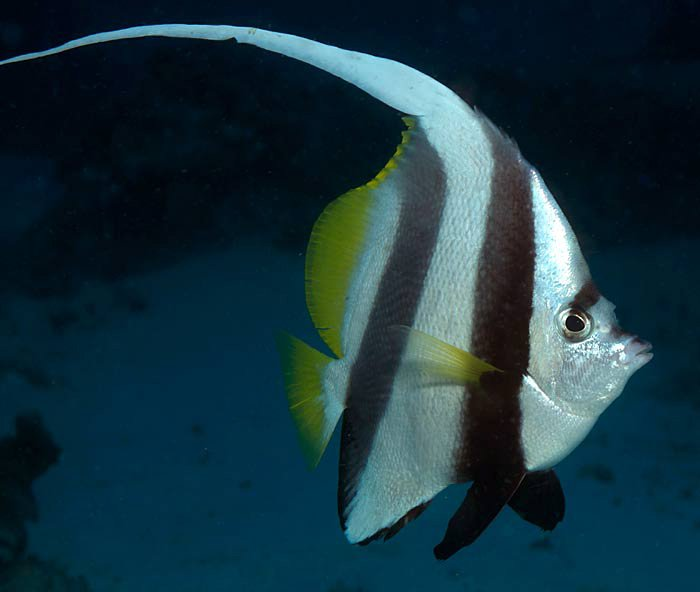
The Schooling Bannerfish (Heniochus diphreutes) is one of the most elegant and visually striking fish available in the marine aquarium hobby. With its dramatic black and white banding, flowing dorsal fin extension, and graceful schooling behavior, it brings a sense of natural reef life into the home aquarium that very few other species can match. For hobbyists with a large, well-established reef system who want something genuinely spectacular to watch, the Schooling Bannerfish deserves serious consideration.
What Is the Schooling Bannerfish?
The Schooling Bannerfish is found throughout the Indo-Pacific, from the Red Sea to the central Pacific Ocean. It inhabits open reef areas and drop-offs, where it forms large, dense schools in the mid-water, feeding on zooplankton drifting in the current. This open-water schooling lifestyle is the defining characteristic of the species and sets it apart from its close relative, the Longfin Bannerfish (Heniochus acuminatus), which tends to be more solitary and territorial.
The two species look nearly identical at first glance, both featuring bold black and white vertical bands and the signature elongated dorsal fin that trails behind the fish like a flowing banner as it swims. However, the behavioral differences between them are significant, and for reef aquarium purposes the Schooling Bannerfish is the far more desirable of the two. It is smaller, more peaceful, and critically, far more reliably reef-safe than its solitary counterpart.
Behavior in a Community Reef Aquarium
The Schooling Bannerfish is a genuinely peaceful species that integrates smoothly into a well-planned community reef aquarium. Unlike many fish that claim territories and defend them aggressively, the Schooling Bannerfish is a free-roaming, open-water swimmer that moves fluidly through the tank without fixating on any particular patch of rock or substrate. This relaxed, non-territorial nature makes it one of the easier large reef fish to incorporate into a mixed community system.
Its behavior is most natural and rewarding when kept in a group. In the wild this is a schooling species, and a solitary individual in captivity can become stressed, withdrawn, and more prone to skittish behavior. Keeping a group of three to five individuals together brings out the best in this species. The fish orient toward each other, move through the tank in loose formation, and display the kind of coordinated open-water swimming that genuinely mirrors life on a wild reef. Much like keeping a group of Fusilier Damselfish together, a small school of Bannerfish transforms a large aquarium into something dynamic and alive in a way that a single specimen simply cannot replicate.
It coexists well with a broad range of community reef species including tangs, large wrasses, anthias, dartfish, and peaceful angelfish. Its open-water swimming habit means it rarely competes directly with bottom-dwelling or rock-associated species for space, which reduces a common source of tension in community tanks. Avoid housing it with highly aggressive or predatory species that may bully or intimidate these relatively calm fish.
Reef Compatibility
Reef safety is one of the most important questions any hobbyist asks before adding a new fish to an established coral system, and the Schooling Bannerfish earns strong marks here. Because it feeds on zooplankton in the wild, it shows little interest in coral polyps or sessile invertebrates in a reef tank. It can be kept with confidence alongside hard corals, soft corals, and large polyp stony corals without the persistent nipping risk that many other butterflyfish species carry.
This distinction from other butterflyfish is critical. Many members of the Chaetodontidae family feed on coral polyps in the wild and bring that behavior directly into the aquarium. The Schooling Bannerfish, by contrast, is widely regarded as one of the safest butterflyfish for reef systems, and this reef compatibility combined with its graceful schooling behavior makes it exceptionally valuable for large display reef aquariums.
Ornamental shrimp and larger invertebrates are generally safe alongside this species. As with any fish, very small or newly introduced invertebrates should be monitored initially, but the Schooling Bannerfish is not known to be a serious threat to typical reef invertebrates.
Tank Requirements
A minimum tank size of 125 gallons is recommended for a small group, with 180 gallons or more being strongly preferred. The Schooling Bannerfish is an active, open-water swimmer that uses the full length and width of the aquarium, and inadequate space suppresses its natural schooling behavior and increases stress. A long aquarium with good horizontal swimming room suits this species far better than a tall, narrow design.
Aquascape the tank to include open swimming areas in the mid and upper sections of the water column. Unlike bottom-dwelling species that need specific substrate arrangements, the Schooling Bannerfish primarily occupies open water and benefits most from having unobstructed space to move freely as a group.
Maintain stable water parameters with salinity at 1.025 to 1.026, temperature between 74 and 80 degrees Fahrenheit, and pH between 8.1 and 8.3. Strong, consistent water flow through the mid and upper sections of the tank supports natural swimming behavior and keeps the fish active and healthy. Excellent filtration and reliable water quality are essential, as this species does not tolerate poor or fluctuating conditions well.
Feeding in Captivity
The Schooling Bannerfish is an enthusiastic and straightforward feeder in captivity, which makes daily care genuinely enjoyable. It readily accepts frozen mysis shrimp, enriched brine shrimp, finely chopped marine seafood, and quality pellet foods formulated for marine fish. Because it is a mid-water feeder by nature, it intercepts food as it drifts through the water column, making broadcast feeding the most effective approach at mealtimes.
When keeping a group, ensure that all individuals are getting adequate food. These fish are active feeders but not typically aggressive at mealtimes, so they can occasionally be outpaced by more assertive tank mates. Target feeding shyer individuals if needed to make sure everyone in the tank is eating well. Feed small amounts two to three times daily to keep the group healthy, active, and displaying their best coloration.
Why Quarantine Matters Before Adding This Fish
Introducing any new fish into an established reef system carries inherent disease risk, and the Schooling Bannerfish is no exception. At Dr. Reef’s Quarantined Fish, every specimen is held through a careful and thorough quarantine process, monitored for disease, and confirmed eating prepared foods before being made available for sale. This means the fish arriving in your system is healthy, stable, and already accustomed to prepared foods, removing much of the uncertainty that comes with adding new livestock to a carefully maintained reef.
Skipping quarantine and introducing fish directly into a display tank puts every animal in that system at risk. For a fish as graceful and rewarding as the Schooling Bannerfish, protecting that investment with a properly quarantined specimen is simply the right approach.
Final Thoughts
The Schooling Bannerfish is a remarkable species that brings genuine natural reef behavior into the home aquarium. Peaceful, reef-safe, visually stunning, and most spectacular when kept as a group, it is one of the finest choices available for hobbyists with a large, well-maintained reef system. Source a quarantined specimen from Dr. Reef’s Quarantined Fish, give it the space and water quality it deserves, and this graceful, eye-catching species will become one of the most captivating and rewarding additions your reef aquarium has ever seen.