
Saltwater Live Rock for Sale: Benefits, Types, and How To Choose the Best Rock

Saltwater Live Rock for Sale: Benefits, Types, and How To Choose the Best Rock
If your saltwater aquarium were a house, the live rock would be the foundation, the walls, and the plumbing all at once. Everything that happens inside a healthy reef tank connects back to the rock you choose. The fish that hide in it. The corals that anchor to it. The bacteria that colonize every pore of it. The water that passes through it millions of times over the life of your tank.
Choosing the right live rock is one of the most important decisions you will ever make as a reef keeper. Get it right from the start, and everything that comes after gets easier.
Dr. Reef’s Quarantined Fish carries two premium MarcoRocks options that represent the current gold standard in reef rock. The Cycled MarcoRocks Coralline Reef Saver Rock starting at $109.99 and the MarcoRocks Maricultured Live Rock starting at $119.99. Both ship free. Both offer the quality that serious hobbyists look for. And both give your tank a foundation worth building on.
This guide explains exactly what live rock does, why the type you choose matters, what sets these two options apart, and how to make the right call for your specific setup.
What Live Rock Actually Does in a Saltwater Tank
Before anything else, you need to understand what live rock is doing inside your aquarium every single day. Because it is doing a lot more than looking good.
Live Rock Is Your Primary Biological Filter
Live rock is not a decorative filler. It is the primary biological filtration system of your entire tank. The porous interior of quality reef rock is packed with microscopic channels, caves, and chambers where beneficial bacteria take up permanent residence. Those bacteria are responsible for processing every bit of waste your fish and corals produce.
How the Nitrogen Cycle Works Inside the Rock
Every time your fish eat, they produce ammonia as a metabolic byproduct. Ammonia is highly toxic. Left unchecked, it will kill everything in your tank within days. The bacteria living inside your live rock break that ammonia down into nitrite, which is also toxic. A second population of bacteria then converts nitrite into nitrate, which is far less harmful and manageable through regular water changes. This chain of conversion is called the nitrogen cycle, and your live rock drives it completely.
The porous structure of quality reef rock creates both high-oxygen and low-oxygen zones throughout its interior. Different bacterial populations thrive in each zone. That combination gives you complete processing across the entire nitrogen cycle within a single piece of rock. No mechanical filter, no chemical media, and no manufactured bio-material replicates that level of integrated biological function as naturally or as effectively.
What Else Live Rock Does for Your Tank
Beyond filtration, live rock provides the physical structure your tank needs. Fish find shelter inside its caves and crevices, which reduces stress and territorial conflict. Corals attach their bases to rock surfaces and spread their growth across them over time. Coralline algae colonize the outer surface, adding purple and pink tones that transform the visual character of your tank as it matures. Microfauna including copepods, amphipods, small worms, and other tiny organisms make their homes throughout the rock and become a living, self-sustaining food source for fish and corals.
A tank built on quality live rock is a fundamentally more stable and more rewarding system than a tank built on anything less.
The Two Options at Dr. Reef’s Quarantined Fish
Option One: Cycled MarcoRocks Coralline Reef Saver Rock
Starting at $109.99 with Free Shipping
This is where MarcoRocks Reef Saver rock meets a game-changing visual upgrade. The classic Reef Saver rock is one of the most respected dry rock products in the hobby. It is sourced specifically for porosity, color, and structural integrity. Its unique shapes make aquascaping straightforward and the results genuinely impressive.
The Coralline Color Difference
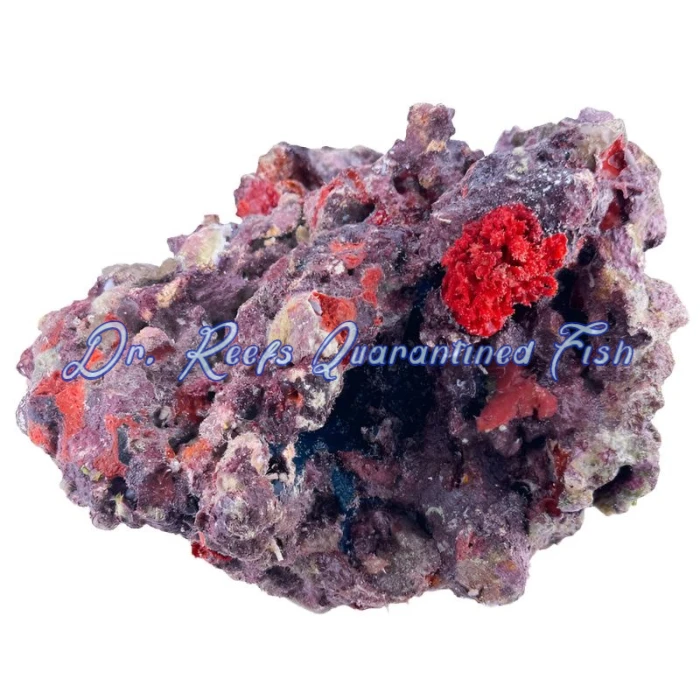
The Coralline version takes everything that makes Reef Saver great and adds something that normally takes months to develop naturally inside your tank. The purple and pink tones that coralline algae leave on rock as it matures are one of the most appealing visual elements of a developed reef tank. Most hobbyists wait six months to a year for that color to appear naturally. The Coralline Reef Saver rock arrives already carrying that look.
No Paint, No Compromise
Here is something that matters enormously. No paint is used to achieve that color. The proprietary process behind this rock uses an organic pigment that is completely reef safe. The porosity of the rock is fully preserved, meaning none of the biological effectiveness is compromised to achieve the visual appeal. You get the look of a mature tank and the full filtration capacity of premium porous rock at the same time.
Completely Pest Free From Day One
Because this rock does not come from the ocean, it arrives completely free of hitchhikers. No nuisance algae. No aiptasia. No parasitic isopods, mantis shrimp, or acropora-eating flatworms. Every pest that reef keepers spend time and money fighting after adding live ocean rock simply does not exist on this product. You get a clean slate with a visual head start and a foundation that is ready to cycle and colonize with beneficial bacteria from day one.
Available Sizes and Practical Details
The Coralline Reef Saver rock is available in 20-pound and 40-pound boxes, making it practical for tanks of nearly any size. The pieces are designed to fit together naturally, which makes building a stable and interesting aquascape much easier than working with random shapes and sizes. This is the right choice for hobbyists who want maximum control over what enters their tank, a pest-free starting point, and rock that already looks the part before a single fish or coral is ever added.
Option Two: MarcoRocks Maricultured Live Rock
Starting at $119.99 with Free Shipping
This product starts its life as the same Reef Saver dry rock described above. Then it is taken to the Florida Keys and placed in the ocean, where it spends years maturing under natural conditions. What comes back is something fundamentally different from any dry rock product.
What Years in the Ocean Actually Produces
After years of ocean exposure, the rock becomes colonized with the kind of biological diversity that no aquaculture facility and no bottle of bacteria can fully replicate. Beneficial bacteria in populations shaped by real reef conditions. Sponges. Desirable algae. Tiny invertebrates and critters. Coralline algae growth that is entirely natural. In some pieces, even coral growth appears. The diversity of life packed into each piece of maricultured rock is the result of years of natural ocean processes, not weeks in a holding tank.
The Practical Advantages in Your Tank
That biodiversity translates directly into real advantages for your system. The nitrogen cycle establishes faster because the bacterial colonies arriving on the rock are already mature and diverse. The ugly algae phase that new tanks go through as they cycle and stabilize is shorter because the biological balance is already partly established before the rock ever hits your water. The microfauna population in your tank gets a genuine head start that seeds your refugium, feeds your fish, and supports your corals from the very first week.
Why Rock Arrangement Matters as Much as Weight
The shape and arrangement of your rock matters as much as the total weight. Water needs to circulate through and around every piece of rock in the tank. A dense, solid wall of rock blocks flow and creates anaerobic pockets where hydrogen sulfide can build up and crash a tank silently. Aim for an open, architectural arrangement with gaps and channels that allow water to move freely through the structure.
MarcoRocks Reef Saver and Maricultured rock both come in shapes specifically designed to stack and fit together in ways that create those open structures naturally. That is not an accident. The design of the rock reflects decades of feedback from reef hobbyists who have learned what works in the long term.
Questions and Answers About Saltwater Live Rock
Q: Does live rock really replace a filter in a saltwater tank?
For many reef setups, quality live rock in adequate quantities is the primary biological filter. The bacterial colonies living throughout its porous interior handle the nitrogen cycle continuously. Most successful reef tanks run primarily on live rock biology rather than on mechanical or chemical filtration alone.
Q: What is coralline algae and why does it matter?
Coralline algae is a calcified, slow-growing algae that coats the surface of mature live rock in purple, pink, and red tones. It is a strong indicator of stable water chemistry and a healthy calcium and alkalinity balance. It also outcompetes nuisance algae for surface space, which is a practical benefit in any reef tank.
Q: Is maricultured rock safer than wild-harvested live rock?
Yes, significantly. Wild-harvested live rock is taken directly from natural reefs, which raises serious environmental and pest concerns. Maricultured rock like the MarcoRocks option starts as dry rock and is grown in the ocean under managed conditions without damaging natural reef structures. It also goes through a multi-step inspection process before shipping.
Q: Can I mix the Coralline Reef Saver Rock and the Maricultured Live Rock in the same tank?
Yes, and it is actually a recommended approach. Using the maricultured rock as a biological seed alongside the pest-free Coralline Reef Saver rock gives you the biodiversity of the maricultured option with the clean and controlled foundation of the dry rock option. MarcoRocks itself recommends using both products together for the best long-term results.
Q: How do I set up my live rock when it arrives?
For the Coralline Reef Saver rock, place it directly in your tank and begin your cycling process. For the maricultured live rock, which ships wet and arrives ready to use, place it in your tank immediately after acclimation. Build your structure with water flow and open channels in mind before adding any fish or corals.
Q: Why buy from Dr. Reef’s Quarantined Fish specifically?
Because Dr. Reef’s applies the same standard of care to their rock that they apply to their livestock. Every product they carry is vetted for quality, handled correctly, and backed by a team that genuinely understands what reef keepers need. Free shipping on both rock options makes the value even clearer.
Build Your Reef on the Right Foundation
The rock you choose today determines the health, stability, and beauty of your reef for years to come. It shapes your biological filtration, your aquascape, your coral placement, and the entire living ecosystem that develops inside your tank over time.
The Cycled MarcoRocks Coralline Reef Saver Rock and the MarcoRocks Maricultured Live Rock at Dr. Reef’s Quarantined Fish represent two of the best options available to reef hobbyists today. Both ship free. Both are backed by decades of MarcoRocks quality. And both are sold by a team that has used this rock in their own tanks and believes in what it delivers.
Visit Dr. Reef’s Quarantined Fish today and choose the rock your reef deserves.