
Ricordea Florida for Sale: Care Guide, Lighting Needs, and Propagation Tips

Ricordea Florida for Sale: Care Guide, Lighting Needs, and Propagation Tips
What if one of the most stunning corals you could ever own was also one of the easiest to keep alive? What if it glowed under your reef lights like something from another world, multiplied on its own over time, and asked almost nothing in return?
That is the Ricordea Florida. And the Blue and Green color form available right now at Dr. Reef’s Quarantined Fish for just $39.99 is one of the most talked-about corals in the reef hobby today.
If you have never kept a Ricordea before, you are about to discover something that experienced reefers never stop collecting. And if you already know what a Ricordea is, you already understand why this article is exciting. Keep reading. This one is worth your time.
What Is Ricordea Florida?
Ricordea florida is a soft coral in the order Corallimorpharia, which means it is closely related to mushroom corals but is its own distinct and very special genus. It is native to the Caribbean Sea, the Florida Keys, and the Gulf of Mexico, which makes it one of the few reef corals that actually originates in American waters.
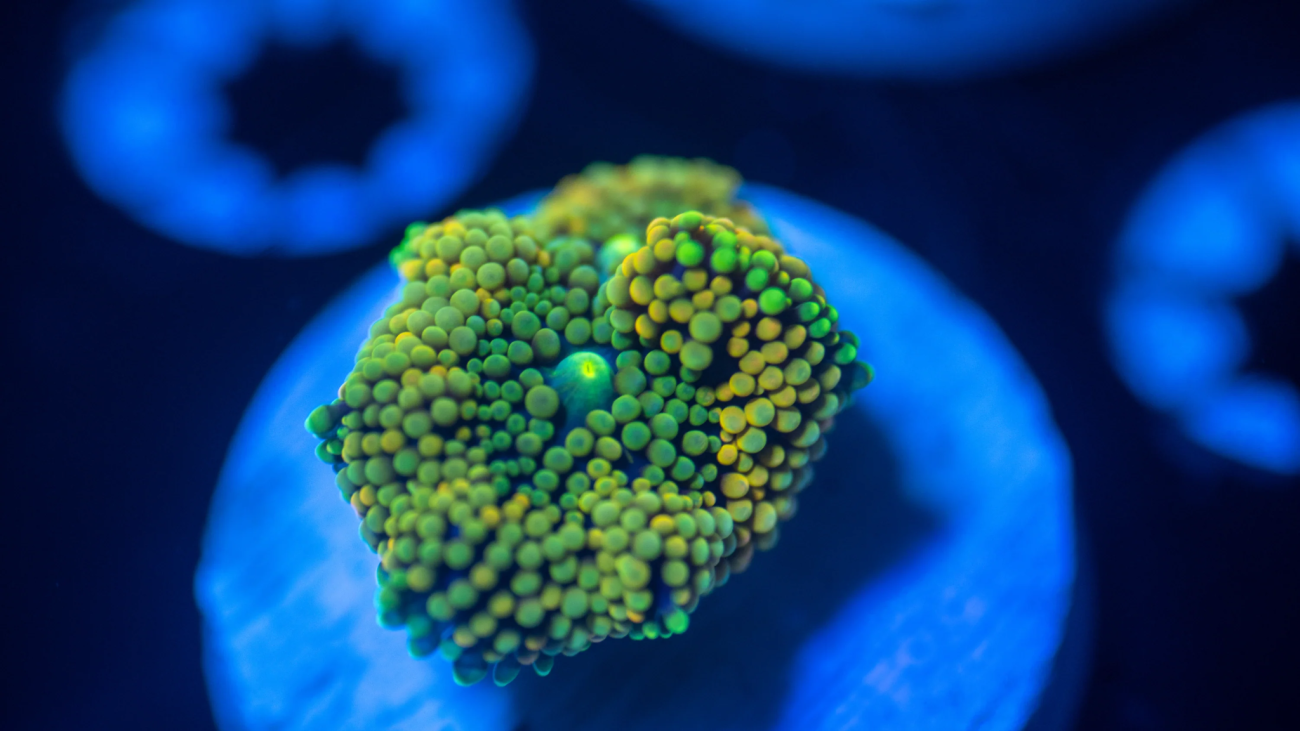
What makes Ricordea florida immediately recognizable is its surface texture. Unlike smooth mushroom corals, the Ricordea is covered in tiny bubble-like bumps called vesicles. These bumps cover the entire disc of the coral, giving it a beaded, jewel-like appearance that is completely unlike anything else in the reef hobby. Under blue lighting, these vesicles catch and scatter light in a way that makes the coral appear to glow from within.
The Blue and Green color form is one of the most prized varieties in the hobby. The vibrant teal and blue tones shift depending on your lighting spectrum, and the green accents create a contrast that is genuinely breathtaking in a well-lit tank. Collectors seek out high-quality Blue and Green Ricordea florida specimens and pay serious money for them at frag swaps and coral auctions. At $39.99 from Dr. Reef’s, you are getting outstanding value for a collector-grade piece.
Why the Ricordea Florida Blue and Green Is So Special
There are thousands of coral varieties available to reef hobbyists. So what makes the Ricordea florida Blue and Green stand apart from the crowd?
- The first reason starts with color. Very few corals in the hobby produce the kind of cool-toned blue and teal coloration that Ricordea florida is capable of. Most reef corals tend toward warm oranges, reds, greens, and purples. The blue Ricordea adds a completely different dimension to a reef display. It creates visual contrast that makes everything around it look better.
- The second reason is texture. The bubble-covered surface of a Ricordea florida catches light differently at every angle. As water moves through your tank, the vesicles shimmer and shift. The coral almost seems to breathe under the water. It is one of the most visually dynamic corals you can own.
- The third reason is accessibility. Despite how spectacular it looks, Ricordea florida is genuinely one of the easiest corals to care for in the entire hobby. It does not need intense lighting. It does not need strong flow. It does not require the same level of precision water chemistry that SPS corals demand. A beginner hobbyist can succeed with this coral if they maintain stable, clean water and provide moderate lighting.
- And the fourth reason is that it reproduces. A single Ricordea florida polyp will divide over time, producing daughter polyps that grow into their own individual corals. Over a year or two, one polyp can become a small colony of glowing blue jewels spread across your rock work. That is a return on investment that most hobbies simply cannot match.
Ricordea Florida Care Requirements
Let us get into the specifics. Here is everything you need to know to keep your Ricordea florida Blue and Green thriving and growing.
Water Parameters
Ricordea florida is a soft coral that prefers stable, clean saltwater conditions. Keep your salinity between 1.025 and 1.026. Temperature should stay between 76 and 80 degrees Fahrenheit. pH should be maintained between 8.1 and 8.3. Ammonia and nitrite must be at zero at all times. Nitrates should ideally stay below 10 parts per million for best color.
Unlike stony corals, Ricordea florida does not require high calcium or alkalinity levels to build a skeleton. It is a soft coral and does not calcify. This means you have more flexibility with your calcium and alkalinity targets compared to an LPS or SPS-heavy reef. However, stable magnesium between 1250 and 1350 parts per million still helps support overall coral health.
Regular water changes of 10 to 15 percent weekly do more for Ricordea florida than almost any other maintenance task. Fresh, clean saltwater keeps colors vivid and encourages healthy growth and division.
Lighting Needs
This is where the Ricordea florida stands out from many other corals. It is a low to moderate light coral. It does not want or need the intense lighting that Acropora, Montipora, or other SPS corals require to thrive.
A PAR range of 50 to 150 is ideal for Ricordea florida. Anything significantly above 200 PAR can cause bleaching, color loss, or stress. In a typical reef tank with powerful LED lighting, place your Ricordea in the lower third of the tank or in a shaded area under a rock overhang where light intensity is naturally reduced.
Here is the exciting part about lighting and Ricordea florida Blue and Green. Under a blue-dominant LED spectrum, the blue and teal vesicles on this coral fluoresce intensely. They seem to glow from within, almost like fiber optic lights embedded in the coral tissue. Running your reef lights on a blue-heavy spectrum during the day brings out colors in this coral that photographs simply cannot capture. You have to see it in person to believe it.
Under white-dominant lighting the colors are still beautiful, but the fluorescent effect is dramatically reduced. Most Ricordea collectors run their reef lights at a 70 to 80 percent blue channel specifically to bring out the best in their specimens.
Water Flow
Ricordea florida prefers very low to low flow. Too much direct flow causes the coral to curl up, retract its vesicles, and look shrunken and unhappy. In very strong flow, Ricordea can actually detach from its substrate and move around the tank, which stresses both the coral and whatever it bumps into.
Gentle, indirect flow that keeps the water moving without blasting the coral directly is the sweet spot. A slow, swirling current that mimics calm lagoon conditions is what Ricordea florida evolved in. Give it that and it will open up fully, display all its beautiful vesicles, and look its absolute best every single day.
If your Ricordea is persistently curled, shrunken, or detaching from the rock, too much flow is almost always the first thing to check.
Feeding
Ricordea florida gets most of its energy from the symbiotic algae living inside its tissue, called zooxanthellae. These photosynthetic organisms convert light into energy that feeds the coral. This means your lighting schedule is actually the most important factor in the coral’s nutritional baseline.
However, like most corals, Ricordea florida benefits tremendously from supplemental feeding. Feeding two to three times per week accelerates growth and enhances the richness of color noticeably over time. Small meaty foods work best. Mysis shrimp, Reef Roids, coral pellets, and amino acid supplements all produce excellent results.
When feeding, reduce your flow significantly so the food settles near the coral. Ricordea florida has a mouth in the center of its disc and will visibly expand around food when it is feeding. Watching a Ricordea florida consume a piece of mysis shrimp is one of the most fascinating and satisfying things a reef keeper can observe.
Placement Tips for Ricordea Florida
Getting the placement right from the start saves you stress and protects your coral. Here are the most important placement principles for your Blue and Green Ricordea florida.
Start Low and Shaded
When you first add your Ricordea to the tank, always start in the lowest, most shaded area available. The bottom third of the tank, ideally under a slight rock overhang, is ideal. Give the coral one to two weeks to fully acclimate and open up before considering a move.
Keep It on Flat or Slightly Tilted Surfaces
Ricordea florida attaches best to flat or gently angled rock surfaces. Steep vertical surfaces can cause the coral to slide off before it fully attaches. Place it on a horizontal surface and let it attach naturally. Once it has bonded to the rock, you can position that rock anywhere you like in the tank.
Give It Personal Space
Ricordea florida is not an aggressive coral, but it can be affected by the sweeper tentacles and chemical secretions of nearby corals. Keep it away from torch corals, hammer corals, acan corals, and other LPS species with known sweeper tentacle aggression. Give it at least three to four inches of clearance on all sides from other coral colonies.
Position It for Visibility
Ricordea florida Blue and Green is a showpiece coral. Do not bury it in the back corner of your tank. Once it is settled and thriving, position it somewhere visible from the front glass where you can appreciate the glowing blue and green colors every time you look at the tank. This coral is meant to be seen.
Propagation Tips: How to Multiply Your Ricordea Florida
One of the most exciting things about Ricordea florida is that it reproduces naturally in a healthy reef tank. Here is how it happens and how to encourage it.
Natural Division
Ricordea florida reproduces asexually through a process called pedal laceration and fission. During fission, the coral stretches, elongates, and then splits into two separate polyps. Each polyp develops into a complete, independent coral over time. This process happens on its own in healthy conditions, usually once or twice a year for a well-fed, healthy specimen.
You do not need to do anything to trigger natural division. Simply maintain excellent water quality, feed regularly, and keep parameters stable. The coral does the rest on its own schedule.
Manual Propagation
Experienced hobbyists can also manually frag Ricordea florida to propagate it faster. This involves using a sharp, sterile blade to cut the coral disc into two or more sections. Each section is then attached to a frag plug using reef-safe glue and placed in a low-flow, low-light area to heal.
Manual fragging is more stressful for the coral than natural division and carries some risk of infection or failure if not done correctly. It is generally recommended to let beginners wait until they have at least a year of reef keeping experience before attempting manual fragging. Natural division is always the safer and more rewarding option for newer hobbyists.
Encouraging Faster Division
Regular feeding is the single most effective way to encourage faster natural division. A Ricordea florida that is well-fed with meaty foods will grow larger and divide more frequently than one that relies solely on light. Stable, pristine water parameters support overall metabolic health, which also accelerates the division cycle.
Some hobbyists report that slight temperature increases within the safe range during warmer months appear to coincide with faster division in their Ricordea colonies. Keeping the tank at the upper end of the safe temperature range during summer can gently encourage more frequent reproduction.
Questions and Answers About Ricordea Florida
Q: Is Ricordea florida good for beginner reef hobbyists?
A: Yes, it is one of the most beginner-friendly corals in the hobby. It tolerates lower light, does not need intense flow, and is far more forgiving of minor water quality fluctuations than LPS or SPS corals. If you can maintain stable, clean water and provide moderate lighting, a Ricordea florida will thrive. It is often the first coral recommended to new reef keepers who want something beautiful and achievable.
Q: Why is my Ricordea florida curled up and not opening?
A: The most common reasons are too much flow, too much light, or poor water quality. Move it to a calmer, more shaded area of the tank first and wait a few days. If it still does not open, test your water and check for ammonia, nitrite, or elevated nitrates. Give it time after any move, as Ricordea can take several days to fully relax in a new location.
Q: How long does it take for Ricordea florida to divide naturally?
A: Under ideal conditions with regular feeding and stable parameters, a healthy Ricordea florida can divide once or twice per year. Some well-fed specimens in pristine water divide even more frequently. Patience is key. When division does happen, you will notice the coral beginning to elongate and stretch before it splits. It is one of the most exciting things to watch in a reef tank.
Q: Can I keep multiple Ricordea florida polyps together?
A: Yes. Multiple Ricordea florida polyps coexist peacefully and will naturally spread across rock work over time. A group of Blue and Green Ricordea florida polyps covering a section of live rock is one of the most stunning displays in the reef hobby. They do not sting or harm each other.
Q: Does the Blue and Green color stay stable over time?
A: In appropriate low to moderate light with a blue-heavy spectrum, the Blue and Green coloration of Ricordea florida is very stable. Placing the coral under excessive white light or very high PAR can cause the colors to fade or shift toward pale brown as the zooxanthellae density changes. Keep the lighting appropriate and the colors will stay vivid and consistent.
Q: Can I keep Ricordea florida with fish?
A: Yes. Ricordea florida is generally compatible with most reef fish. Some fish, particularly angelfish and certain butterflyfish, may nip at soft corals including Ricordea. Reef-safe fish like clownfish, gobies, chromis, and tangs leave Ricordea florida completely alone. Always check fish compatibility before adding new livestock to a tank with corals.
Q: What is the difference between Ricordea florida and Ricordea yuma?
A: Ricordea florida comes from the Caribbean and Florida, while Ricordea yuma originates from the Indo-Pacific. Yuma tends to have larger, more irregular vesicles and comes in a wider range of colors. Florida is generally considered slightly hardier and more tolerant of imperfect conditions. Both are stunning and beloved in the reef hobby, but the Florida species is the one available in the Blue and Green form at Dr. Reef’s.
Q: Is the $39.99 Ricordea florida from Dr. Reef’s a single polyp?
A: Yes, it is sold as a quarantined coral frag, which is standard practice in the hobby. You receive a single healthy polyp attached to a frag plug, ready to place directly in your tank. Over time, that single polyp will divide and grow into a colony that becomes one of the highlights of your reef display.
Why Buy Your Ricordea Florida from Dr. Reef’s Quarantined Fish?
The Ricordea florida Blue and Green at $39.99 from Dr. Reef’s Quarantined Fish is not just a great price for a beautiful coral. It is a smart purchase backed by a team that genuinely cares about the health of every single piece of livestock they ship.
Here is something most coral buyers learn the hard way. Corals that arrive stressed, damaged, or pest-infected are not just a loss on their own. They can introduce Aiptasia anemones, flatworms, nudibranchs, and other destructive hitchhikers into your carefully built reef tank. One bad coral purchase can set back months of progress and cost far more in time, money, and heartbreak than the original price tag.
Dr. Reef’s Quarantined Fish solves this problem before it starts. Every coral that leaves their facility has been inspected, cared for, and verified healthy by a team of experienced reef keepers. This is not just a marketing claim. It is the entire foundation their business is built on. They quarantine their livestock because they know, from personal experience as reef hobbyists themselves, exactly what is at stake when an unhealthy coral enters your tank.
The Blue and Green Ricordea florida you receive from Dr. Reef’s arrives open, healthy, and ready to attach to your rock work within days. It has already been through the stress of the supply chain and recovery period before it ships to you. You are getting a coral that has already proven it is tough enough to thrive.
The customer experience at Dr. Reef’s is equally outstanding. Their team treats every customer, whether it is your first coral or your five hundredth, with genuine warmth and expert guidance. Have a question about where to place your Ricordea? They have an answer based on real reef keeping experience. Worried about compatibility with your existing corals? They will walk you through it.
Payments are accepted via PayPal, Stripe, and Venmo. Overnight UPS shipping goes out Tuesday through Thursday, with deliveries arriving Wednesday through Friday. Every order is backed by a three-day live arrival guarantee. Free shipping kicks in on orders over $500, making it easy and economical to stock your reef with multiple pieces in a single order.
Final Thoughts: A $39.99 Coral That Glows, Grows, and Never Gets Old
The Ricordea florida Blue and Green is one of those corals that experienced reef hobbyists keep coming back to no matter how advanced their tanks get. There is something timeless about the way those blue and green vesicles shimmer under reef lighting. There is something genuinely exciting about watching a single polyp divide and multiply into a glowing colony over time.
At $39.99 from Dr. Reef’s Quarantined Fish, this coral is accessible to every reef keeper at every budget level. It is forgiving enough for beginners to succeed immediately. It is beautiful enough for collectors to be proud of for years. And it is healthy enough, thanks to Dr. Reef’s quarantine process, to hit the ground running the moment it arrives at your door.
Head to drreefsquarantinedfish.com right now, grab your Ricordea florida Blue and Green, and start watching something truly magical grow in your reef tank.