
Rainbow Mantis Shrimp

Rainbow Mantis Shrimp for Sale: Colorful Predator Care Guide
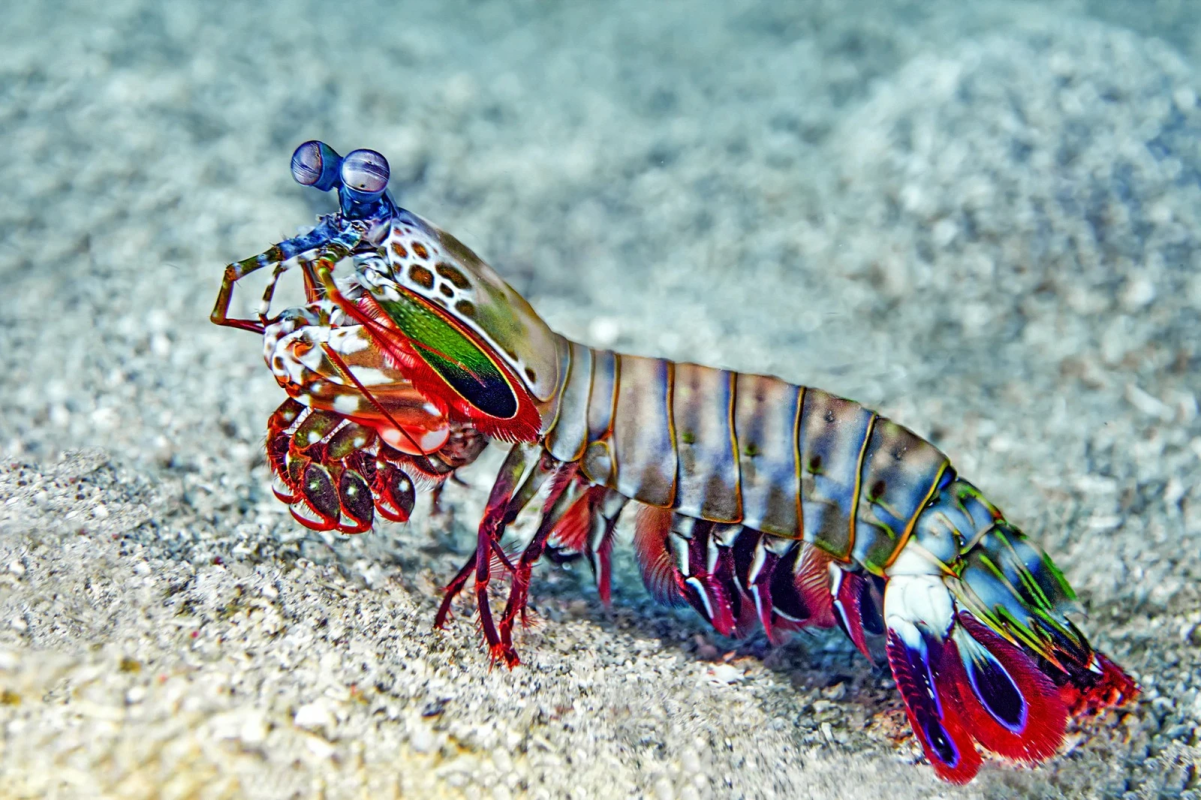
The Rainbow Mantis Shrimp (Lysiosquillina glabriuscula and related species) also known as Peacock Mantis Shrimp occupies a category entirely its own in the marine aquarium hobby. Iridescent coloration that shifts across the spectrum with every movement, a predatory strike measured among the fastest movements of any animal on earth, and a level of behavioral intelligence that consistently surprises even experienced keepers make this one of the most extraordinary invertebrates available to the dedicated aquarist. It demands a specialized setup, a keeper who understands its unique requirements, and above all a healthy, properly sourced specimen from a trusted supplier. Dr. Reef’s Quarantined Fish provides Rainbow Mantis Shrimp that have been quarantined, observed, and confirmed healthy before reaching your system, giving you the strongest possible foundation for success with one of the hobby’s most captivating animals.
Species Overview
The term Rainbow Mantis Shrimp is applied to several stomatopod species displaying particularly vivid multicolored iridescence, with the most commonly encountered in the hobby belonging to the families Lysiosquillidae and Odontodactylidae. Rainbow Mantis Shrimp are stomatopods rather than true shrimp, representing an ancient and remarkably distinct lineage of crustaceans that diverged from other malacostracan ancestors hundreds of millions of years ago.
The coloration that gives the Rainbow Mantis Shrimp its name is produced not simply by pigmentation but by structural coloration in the cuticle, the same optical mechanism responsible for the iridescence of butterfly wings and opal gemstones. The result is a shifting, living display of color that changes with viewing angle and light, ranging across greens, blues, purples, oranges, and reds in a single animal. No photograph fully captures the live experience of watching a Rainbow Mantis Shrimp move through a well-lit aquarium.
Adult Rainbow Mantis Shrimp typically reach 4 to 6 inches in length depending on species, making them somewhat larger than many commonly kept invertebrates but entirely manageable within a properly sized dedicated system.
The Strike: Understanding the Most Powerful Weapon in the Invertebrate World
No care guide for any mantis shrimp species would be complete without an honest discussion of the raptorial appendages and what they are capable of. Mantis shrimp are divided into two functional groups based on their hunting strategy: spearers, which use sharp, barbed appendages to impale soft-bodied prey, and smashers, which use heavily calcified clubs to deliver impact strikes of extraordinary force.
Rainbow Mantis Shrimp, depending on species, may be spearers or smashers, and understanding which type you are keeping matters for both husbandry and safety. Smasher species are capable of delivering strikes with the force of a bullet, accelerating their clubs at speeds exceeding 50 miles per hour through a spring-loaded mechanism that stores and releases energy faster than muscle contraction alone could achieve. Standard aquarium glass is not safe for smasher mantis shrimp. Acrylic tanks or tanks constructed with reinforced extra-thick glass are the only appropriate housing for smashing species.
Spearer species, while no less formidable as predators, pose less structural risk to the tank itself, though their spearing appendages are still capable of delivering painful wounds to a careless hand. Regardless of type, mantis shrimp should never be handled directly, and any maintenance work in a tank housing these animals should be carried out with appropriate tools rather than bare hands.
Tank Requirements
Rainbow Mantis Shrimp are best kept as solitary specimens in a dedicated species tank. They are intensely territorial and will kill any other mantis shrimp introduced to their space, as well as any other crustacean, small fish, or invertebrate they encounter. Attempting to keep them in a community reef or even a mixed invertebrate system will result in the systematic elimination of tankmates.
A minimum tank size of 30 gallons is workable for a single specimen, with 50 gallons or more preferred for larger individuals and species. The tank footprint matters as much as volume. Rainbow Mantis Shrimp are burrowers and cavity dwellers that establish defined home territories, so a tank with a generous base area suits them better than a tall, narrow configuration.
For smasher species, tank construction is critical. Acrylic tanks of appropriate thickness are the safest choice. If using a glass aquarium, minimum half-inch thickness tempered glass should be considered the absolute baseline, and even then the risk of strike damage over time should be taken seriously. Many experienced mantis shrimp keepers strongly prefer acrylic for this reason.
The lid must be extremely secure. Rainbow Mantis Shrimp are capable escape artists and will exploit any gap in tank coverage. A weighted or locking lid is not excessive caution. It is a basic requirement.
Substrate and Habitat Setup
Rainbow Mantis Shrimp are burrowing animals that in the wild construct and inhabit burrows in sandy or rubble substrate, emerging to hunt and retreating to the burrow to rest, molt, and brood eggs. In captivity this behavioral need should be accommodated through a deep sand bed of at least 4 to 6 inches combined with rubble rock and larger substrate pieces that can be incorporated into burrow construction.
Live rock can be included in the setup and provides visual complexity and additional biological filtration, but it should be arranged with the understanding that the mantis shrimp will rearrange it according to its own preferences. Attempting to maintain a fixed aquascape in a mantis shrimp tank is a losing proposition. The animal is the designer, and accommodation of that reality makes for a more interesting and behaviorally rich tank rather than a frustrating battle against a remarkably determined rearrangement.
A cave or section of PVC pipe of appropriate diameter provides an immediate refuge on introduction and reduces stress during the initial acclimation period. Mantis shrimp that have an established refuge available immediately upon introduction settle more quickly and begin feeding sooner than those left to establish territory from scratch in an unfamiliar environment.
Water Quality Parameters
Rainbow Mantis Shrimp require stable, high-quality saltwater maintained within consistent parameters. Target salinity of 1.023 to 1.026 specific gravity, temperature of 72 to 78 degrees Fahrenheit, and ammonia and nitrite permanently at zero. They are more tolerant of moderate nitrate levels than many reef invertebrates, but chronically elevated nitrate still compromises health and molt success over time, and regular water changes remain essential.
Iodine availability matters for successful molting, as it does for all crustaceans. Regular water changes with a quality salt mix replenish trace elements including iodine naturally in most systems. Dedicated supplementation can be considered in systems with very infrequent water changes, but dosing should be approached conservatively given the toxicity of iodine overdose to invertebrates.
Copper in any form is lethal to mantis shrimp and must never be used in their system or in any system they will subsequently inhabit unless thoroughly purged and confirmed copper-free through testing.
Feeding Rainbow Mantis Shrimp
Feeding a Rainbow Mantis Shrimp in captivity is one of the most rewarding aspects of keeping the species, both for the nutritional management it involves and for the extraordinary predatory behavior it allows you to observe at close range. In the wild, mantis shrimp are active hunters taking fish, crustaceans, mollusks, and worms depending on species and hunting strategy.
In captivity, a varied diet of appropriate marine proteins produces the best health outcomes. Frozen and fresh foods including shrimp, squid, scallop, small fish pieces, and clams on the half shell are all suitable and accepted by most individuals. Spearer species often prefer softer prey items such as shrimp and fish, while smasher species will enthusiastically attack hard-shelled prey including snails, hermit crabs, and clams, using their clubs precisely as they would in the wild.
Feeding via tongs at a consistent time each day builds a reliable response and allows close observation of feeding behavior. Most Rainbow Mantis Shrimp become bold and responsive feeders once settled, emerging from their burrow at feeding time and tracking food with the remarkable visual acuity for which the group is scientifically famous. Mantis shrimp possess the most complex visual system of any known animal, with up to 16 types of photoreceptors compared to the three found in human eyes.
Feed adults every two to three days, adjusting portion size to what the animal will consume within a few minutes. Remove uneaten food promptly to prevent water quality deterioration.
Molting
Like all crustaceans, Rainbow Mantis Shrimp molt regularly throughout their lives, shedding the entire exoskeleton as they grow. The molting process is physically demanding and represents a period of genuine vulnerability. In the days approaching a molt the animal often becomes less active and may refuse food. After molting, the new exoskeleton requires 24 to 48 hours to harden, during which the animal retreats to its burrow and should not be disturbed.
The discarded exoskeleton is a perfect replica of the animal and is often mistaken for a dead mantis shrimp. It can be left in the tank briefly as the animal may consume it to reclaim mineral content, or removed after a day or two. Successful, regular molting is one of the clearest indicators of good health and appropriate nutrition in a captive mantis shrimp.
Vision: The Most Sophisticated Eyes in the Animal Kingdom
The visual capabilities of mantis shrimp deserve specific mention because they are genuinely remarkable and directly relevant to how these animals interact with their environment and with their keepers. Mantis shrimp eyes are mounted on independent stalks and can move in three directions simultaneously, giving each eye trinocular vision and the ability to judge distance with a single eye rather than requiring both eyes together as humans do.
The photoreceptor diversity of mantis shrimp vision extends into ultraviolet and infrared wavelengths invisible to human eyes, and includes the ability to perceive circularly polarized light, a capability found nowhere else in the animal kingdom. The implications for how a Rainbow Mantis Shrimp perceives the world around it, including the reef environment, its prey, and its keeper, are profound and contribute to the sense that keeping these animals offers a genuinely unique window into a form of animal intelligence quite unlike anything else in the hobby.
Why Quarantine Matters for Rainbow Mantis Shrimp
Mantis shrimp sourced without proper quarantine protocols arrive stressed from collection and shipping, with suppressed immune function and a heightened stress response that makes the first weeks in a new system the most vulnerable period of their captive life. A stressed mantis shrimp is more likely to refuse food, fail to establish a burrow, attempt to escape, and succumb to bacterial infection or failed molting during this critical window.
At Dr. Reef’s Quarantined Fish, Rainbow Mantis Shrimp are held through a structured quarantine period that addresses exactly these concerns. Each specimen is observed for feeding response, burrow establishment, behavioral activity, and physical condition before being offered for sale. The result is an animal that has already navigated the transition from wild collection to captive conditions under professional care, arriving at your system in a fundamentally more stable state than an unquarantined specimen.
The detailed information Dr. Reef’s Quarantined Fish provides information about each individual specimen, including quarantine duration, feeding history, and behavioral observations, giving buyers the confidence of genuine knowledge about the animal they are purchasing. For a species this specialized and this demanding, that foundation of informed confidence is not merely reassuring. It is practically essential to long-term success.
Is the Rainbow Mantis Shrimp Right for You?
If you can provide a dedicated species tank of appropriate construction, the time to understand the specific needs of stomatopod husbandry, and the commitment to an animal that may live 20 years or more in captivity with proper care, the Rainbow Mantis Shrimp is one of the most extraordinary animals the marine hobby has to offer. Its combination of visual spectacle, behavioral complexity, and genuine scientific fascination makes it unlike anything else you can keep in a home aquarium.
If you are looking for a community animal, a reef-compatible invertebrate, or a lower-maintenance addition to an existing system, this is not the right species. The Rainbow Mantis Shrimp demands and rewards dedication in equal measure.