
Purple Tang for Sale: Why This Vibrant Fish Is a Reef Tank Showstopper

Purple Tang for Sale: Why This Vibrant Fish Is a Reef Tank Showstopper
There are a handful of fish in this hobby that stop people in their tracks the first time they see one in a well-lit reef tank. The Purple Tang is one of them. It has been a bucket-list fish for hobbyists for decades, and for good reason. The color combination alone is hard to believe until you see it under good reef lighting in person.
What Makes the Purple Tang So Special
The Purple Tang (Zebrasoma xanthurum) comes from the Red Sea and the nearby waters of the Arabian Peninsula. It is a member of the Zebrasoma genus, the same group that includes the beloved Yellow Tang, but the color palette here is in a completely different category.
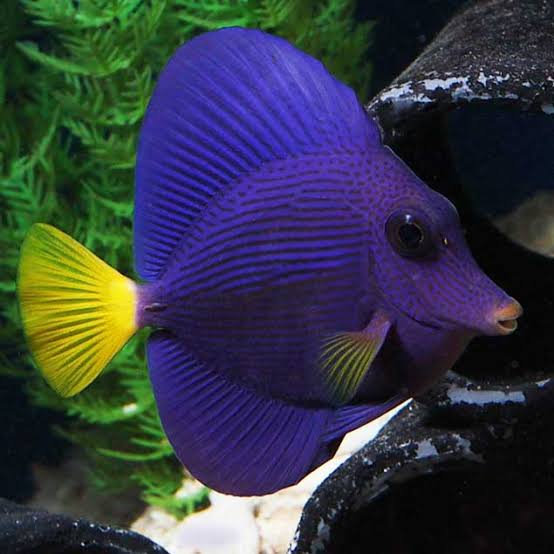
The body is a deep violet that shifts between purple and blue depending on the angle of the light. Across the face, subtle electric blue spotting adds texture to the coloration. The tail is a sharp, vivid yellow that contrasts so strongly against the body that it almost looks painted on. Adults grow to 8 to 10 inches and keep that coloration for life.
Dr. Reef’s carries both the standard wild-caught Purple Tang and the Red Sea variant, which is noted for displaying even deeper violet tones, sharper facial spotting, and a more brilliant yellow tail. Both are available as quarantined specimens through drreefsquarantinedfish.com/shop.
Is It Right for Your Tank?
The Purple Tang carries an intermediate to advanced care label, and that is earned. This is a fish that thrives in established, stable systems with room to move and plenty to graze on. It is not a beginner fish, but for someone who has been in the hobby for a while, it is very manageable.
Minimum tank size is 125 gallons, with 150 gallons recommended on Dr. Reef’s product page. The Red Sea variant requires 175 gallons. The tank needs open water for swimming, good lighting, and live rock that encourages natural algae growth. That grazing behavior is a big part of the Purple Tang’s daily routine, and a tank with no algae growth leaves the fish without something it genuinely needs.
Water parameters:
- Temperature: 72 to 78 degrees Fahrenheit
- Salinity: 1.020 to 1.025
- pH: 8.1 to 8.4
- dKH: 8 to 12
This species is completely reef safe and poses zero risk to corals. In fact, the constant grazing helps keep nuisance algae in check, which makes it genuinely useful in a reef system, not just decorative. For a full list of which fish work well in coral systems, see Dr. Reef’s guide to reef-safe fish for coral tanks.
Feeding
Purple Tangs are herbivores that graze throughout the day. The diet is not complicated. Feed nori on a clip daily and supplement with spirulina-based pellets, algae flakes, and herbivore blends. Rotate the foods rather than sticking to just one type. Diet variety keeps the immune system strong and helps maintain the depth of that violet coloration over time. Stress or nutritional gaps can fade the color noticeably.
Feed two to three times daily in smaller portions rather than one large feeding. Leaving a nori clip in the tank gives the fish something to work on between scheduled feedings, which is how this species naturally prefers to eat anyway. Frozen herbivore preparations are also a good addition to the rotation, a few times per week.
Temperament and Tank Mates
The Purple Tang is semi-aggressive, particularly toward other tangs, especially others in the Zebrasoma genus. In most setups, one Purple Tang per tank is the right call. Housing two Zebrasoma species together in anything under 200 gallons is likely to create tension. Consult Dr. Reef’s compatibility chart before finalizing your stocking plan.
Toward unrelated fish, the Purple Tang is generally fine. It gets along well with gobies, wrasses, anthias, chromis, and cardinalfish, and most peaceful community species. Keep it away from overly aggressive surgeonfish and avoid large predators that might bully it.
Captive Bred vs. Wild Caught
Dr. Reef’s offers a captive-bred Purple Tang, which is worth mentioning because it is a genuinely different product from its wild-caught counterpart. Captive-bred individuals are raised in aquarium conditions from the start, which means they adapt to prepared foods faster, show stronger feeding responses earlier, and tend to carry less stress into the shipping and acclimation process. For a species that can be prone to ich and velvet when stressed, those differences matter.
Why Buy From Dr. Reef’s Quarantined Fish
Purple Tangs are susceptible to marine ich, particularly during the stress window right after collection and shipping. A fish that has already been quarantined, treated as needed, and confirmed eating before it ships is in a meaningfully different position than one that just came off a wholesale holding rack.
At Dr. Reef’s Quarantined Fish, the Purple Tang goes through the full quarantine protocol. That includes observation, parasite treatment where needed, and food conditioning before the order ships. You get a fish that has already made the hard adjustment to captive life. Once it arrives, follow the acclimation guide to give it the best possible start in your display tank.