
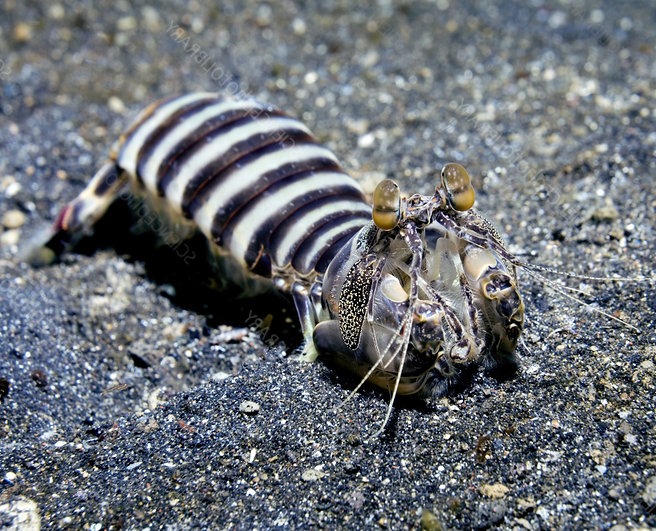

Zebra Mantis
$179.99
Lysiosquillina maculata
| Care Level | Expert |
| Temperament | Extremely aggressive and predatory |
| Color Form | Bold black and white striped pattern |
| Diet | Carnivore |
| Reef Compatible | No |
| Water Conditions | 72–78°F, SG 1.023–1.025, pH 8.1–8.4 |
| Max Size | 8″ |
| Family | Lysiosquillidae |
| Minimum Tank Size | 30 gallons |
Zebra Mantis
Also known as Striped Mantis Shrimp
The Zebra Mantis Shrimp is a striking “smasher” species featuring bold black and white striped patterns. Native to the Indo-Pacific, this mantis shrimp is smaller than the Peacock Mantis but equally fascinating, with powerful raptorial appendages and complex behavior. Due to its aggressive predatory nature, it requires specialized care and a species-only setup.
Key Features
- Scientific Name: Lysiosquillina maculata
- Common Names: Zebra Mantis Shrimp, Striped Mantis Shrimp, Zebra Mantis
- Adult Size: Up to 6–8 inches
- Lifespan: 3–5 years with proper care
- Temperament: Extremely aggressive and predatory – not suitable for community tanks
- Reef Compatibility: NOT reef safe – will destroy corals, invertebrates, and fish
- Minimum Tank Size: 30 gallons minimum; 40+ gallons preferred for adults
- Experience Level: Expert – requires specialized housing and understanding of aggressive mantis shrimp behavior
Habitat & Tank Requirements
- Tank Environment: Requires acrylic aquarium or extremely thick glass (minimum 1/2 inch) to prevent strikes from cracking tank. Provide deep sand bed (3–4 inches) and rubble for burrow construction. Include PVC pipe sections as supplemental hiding spots. MUST be single specimen only. Stable rockwork essential.
- Water Parameters:
- Temperature: 72–78°F (22–26°C)
- Salinity: 1.023–1.025
- pH: 8.1–8.4
- Maintain excellent water quality with frequent water changes
- Equipment Recommendations:
- Robust filtration system – mantis shrimp are messy feeders
- Protein skimmer essential
- Secure, heavy lid – they can and will attempt to escape
- Moderate water flow
- Protect equipment (heaters, powerheads) from strikes
- WARNING: Can damage standard glass aquariums with their powerful strikes
Diet & Feeding
Zebra Mantis Shrimp are aggressive carnivorous predators:
- Staples: Live feeder fish, live or frozen shrimp, live or frozen crabs, mollusks (clams, mussels, snails), frozen krill, raw seafood
- Shell-on Foods: Provide crustaceans and mollusks with shells to encourage natural smashing behavior and help wear down raptorial appendages naturally
- Feeding Frequency: 2–3 times per week; adjust based on size and appetite
- Special Note: Extremely messy eaters that tear apart prey. Remove uneaten food promptly to prevent water quality issues. May cache food in burrow.
Social Structure & Behavior
- Strictly Solitary: MUST be kept alone – no tank mates of any species
- Burrowing Behavior: Spends significant time in burrows but more active than some mantis species
- Hunting Method: “Smasher” type with club-like raptorial appendages used to deliver devastating strikes to prey
- Strike Power: Capable of delivering strikes with acceleration comparable to a .22 caliber bullet, generating cavitation bubbles and extreme force
- Intelligence: Highly intelligent invertebrate capable of recognizing individual humans and learning feeding schedules
- Visual System: Possesses incredibly complex eyes with 12+ color receptors (humans have 3) and can see polarized and ultraviolet light
- Territorial: Extremely aggressive toward any perceived threat or intruder
Notes & Considerations
- Species-only aquarium essential – absolutely no tank mates, including fish, invertebrates, or other mantis shrimp.
- Can cause serious injury to aquarists during maintenance – use extreme caution and never place hands directly in tank.
- Strikes can shatter standard aquarium glass, break heaters, destroy thermometers and powerheads.
- Produces audible clicking, popping, and snapping sounds, especially during feeding.
- May strike at aquarium glass, decorations, or equipment seemingly without provocation.
- Fascinating to observe but requires dedicated setup and significant commitment.
- Not suitable for beginners or typical reef aquarium keeping.
- Generally more secretive than Peacock Mantis Shrimp; may spend more time in burrow.
- Bold striped pattern makes them visually striking when visible.
- Molts regularly; vulnerable immediately after molting.
- Can regenerate damaged or lost raptorial appendages over multiple molts.
- Their burrows can be quite extensive – sand bed depth is critical.
- Subject of ongoing scientific research due to remarkable visual and striking capabilities.
Why Choose a Quarantined Zebra Mantis Shrimp?
Purchasing a quarantined specimen from us means you’re receiving a healthy, well-fed mantis shrimp that has been observed in a controlled environment. Our specimens are feeding well on appropriate foods and have been acclimated to captive conditions, reducing stress and giving you the strongest foundation for successfully maintaining this remarkable but extremely challenging predatory invertebrate.
You must be logged in to post a review.
Related products
Reviews
There are no reviews yet.