
Pintail Fairy Wrasse

Pintail Fairy Wrasse Behavior and Coloration: What Makes This Fish Unique
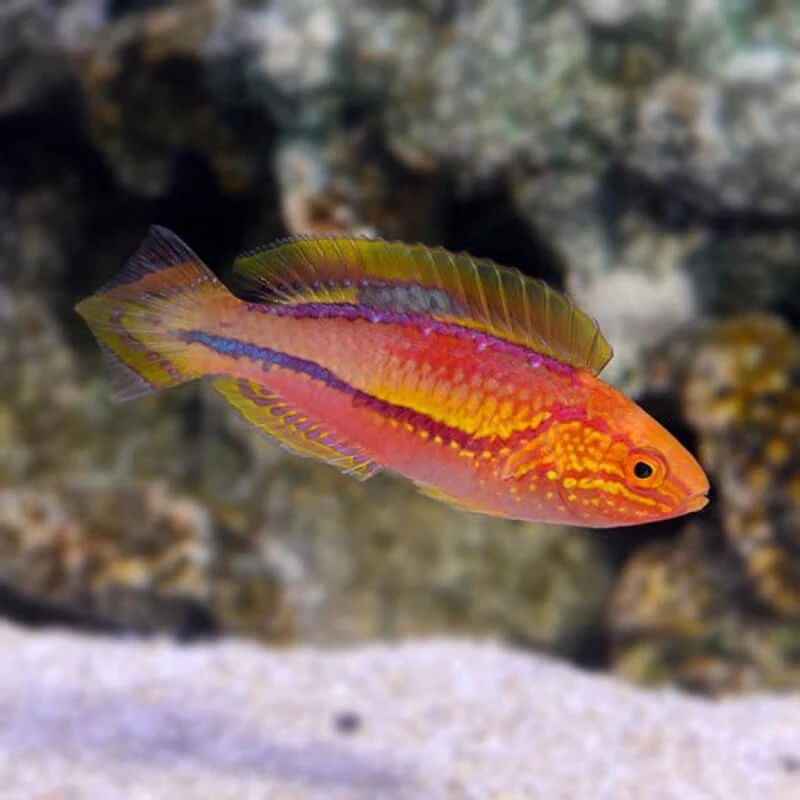
If you are looking for a wrasse that combines exceptional coloration, peaceful temperament, and full reef compatibility, the Pintail Fairy Wrasse (Cirrhilabrus cf. isosceles) is one of the most rewarding choices available in the marine hobby. Prized by reef hobbyists for its extraordinary appearance and active personality, this species brings genuine visual impact to mature reef systems without the aggression or coral risk that many other colorful marine fish carry.
What Is the Pintail Fairy Wrasse?
The Pintail Fairy Wrasse is an Indo-Pacific species found across reef slopes, outer reef drop-offs, and lagoon edges throughout its range. Adults grow to approximately 4 inches and are considered moderately hardy once established in a stable, well-maintained reef system. The name comes from the distinctive elongated pin-like extensions on the caudal fin of mature males, a feature that becomes increasingly dramatic and beautiful as the fish reaches full maturity.
Males are genuinely spectacular. They display vivid red, orange, and yellow body coloration with an iridescent blue and violet sheen that shifts depending on the angle of the light. During courtship or spawning activity, males intensify these colors dramatically and extend their finnage in a full display, producing one of the most striking natural behaviors you can witness in a home reef tank. Females are softer in tone, showing warm red, pink, and white coloration that is attractive in its own right and contributes to a visually appealing group dynamic.
Tank Setup for Pintail Fairy Wrasse
A minimum tank size of 75 gallons is recommended for a single male with one or more females. The tank should provide generous open swimming space in the mid-water zone, combined with a well-structured live rock aquascape that creates natural territory boundaries. This species is an active, free-swimming fish that covers the full horizontal length of the tank throughout the day and appreciates room to move.
A 2 to 3-inch sand bed suits the Pintail Fairy Wrasse well. Like other fairy wrasses, it occasionally rests just below the surface of the sand substrate at night, and a proper sand bed gives it the security to do this naturally.
Keep water temperature between 72 and 78 degrees Fahrenheit, salinity at 1.020 to 1.025, and pH between 8.1 and 8.4. Consistent water quality and good protein skimming are important for maintaining the vivid coloration this species is known for. The Pintail Fairy Wrasse is fully reef safe and will not harm corals, clams, or most invertebrates, making it an excellent addition to established reef systems at any level of experience.
A tightly fitted lid or full screen top is absolutely essential. Like all members of the wrasse family, the Pintail Fairy Wrasse is a capable and surprisingly fast jumper. Losses to open-top tanks are unfortunately very common, particularly in the first few weeks after introduction when the fish is still acclimating to its new environment.
Feeding
The Pintail Fairy Wrasse accepts a wide range of prepared aquarium foods readily and is generally not difficult to feed once settled. Offer frozen mysis shrimp, frozen brine shrimp, frozen copepods, and high-quality marine pellets or flake foods. Feed two to three times daily in small portions for the best health, coloration, and energy levels. Males in peak condition that are receiving excellent nutrition will display their most intense colors regularly, particularly during the morning feeding period when courtship displays are most common.
Compatibility
Only one male should be kept per tank unless the system is 200 gallons or larger, as males are territorial with each other and will fight persistently if kept together in a confined space. Multiple females can be kept together without issue and will coexist peacefully with the male. The Pintail Fairy Wrasse mixes well with most reef community fish including anthias, small gobies, dartfish, clownfish, and peaceful tangs.
Always quarantine new arrivals before adding them to your display tank. At Dr. Reef’s Quarantined Fish, fish are quarantined thoroughly so you can introduce this beautiful species to your reef with complete confidence.