
Lawnmower Blenny

Lawnmower Blenny for Sale: The Best Algae-Eating Fish for Reef Tanks
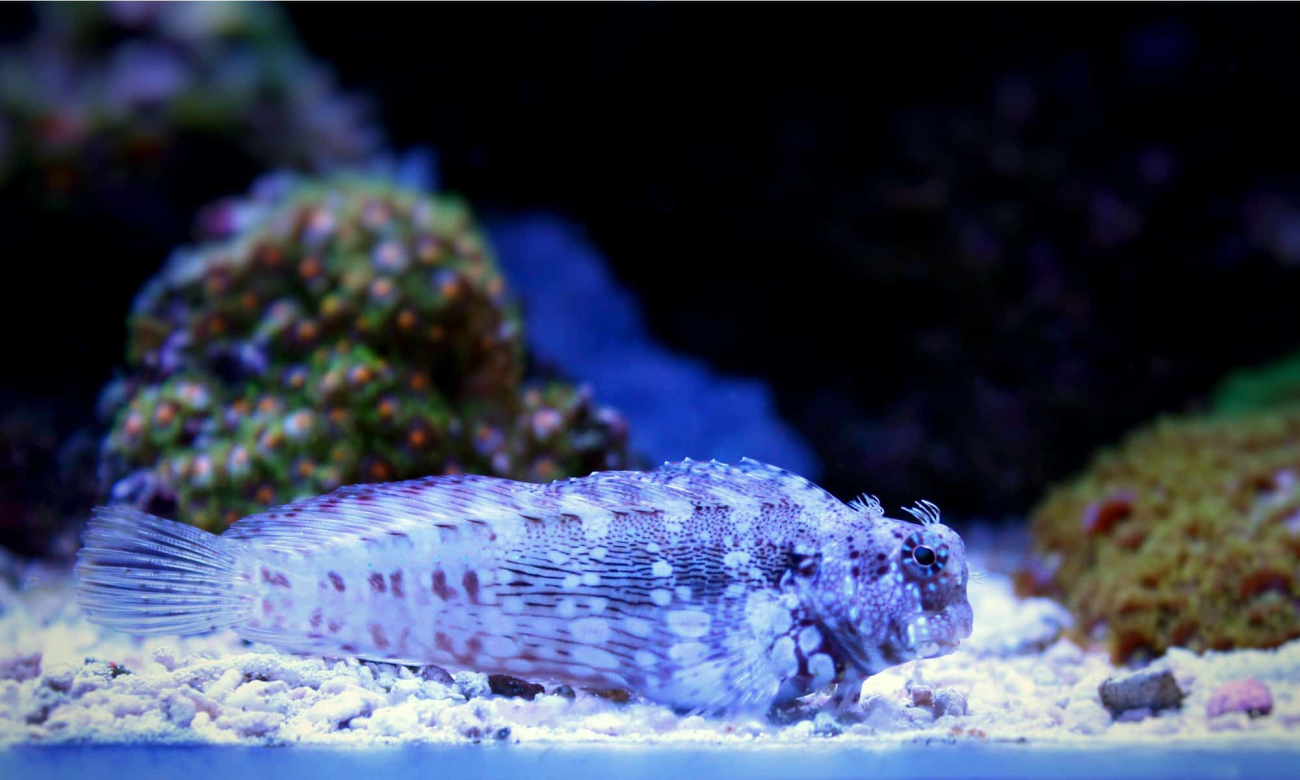
Nuisance algae is one of the most common frustrations in reef keeping, and the Lawnmower Blenny (Salarias fasciatus) is one of the most reliable and cost-effective biological solutions available. Dr. Reef’s Quarantined Fish stocks healthy, well-fed Lawnmower Blennies that are fully transitioned onto captive diets and ready to get to work in your reef the moment they arrive.
Quick Stats:
- Minimum tank size: 30 gallons
- Adult length: 5 inches
- Care level: Easy
- Reef safe: Yes
What Makes the Lawnmower Blenny the Reef Keeper’s Best Friend
The Lawnmower Blenny earns its nickname through relentless, methodical grazing. Armed with a comb-like set of teeth specifically adapted for scraping filamentous algae off live rock, glass, and substrate surfaces, this species spends most of its waking hours browsing the tank like a tiny grazing animal. A single healthy Lawnmower Blenny can make a measurable dent in hair algae and film algae growth within the first week of introduction.
Beyond its practical value, the Lawnmower Blenny brings genuine character to the tank. Its expressive eyes move independently, it perches on rockwork between grazing sessions, and it frequently interacts with the glass. Many reef keepers who originally purchased a Lawnmower Blenny for algae control end up considering it among their favorite livestock purely based on personality.
Reef Safety and Coral Compatibility
The Lawnmower Blenny is considered one of the safest fish choices for mixed reef aquariums. It does not nip at coral polyps under typical conditions, shows no interest in clam mantles, and ignores most sessile invertebrates. Its grazing is directed almost exclusively at algae films and microalgae growing on hard surfaces.
One important nuance: in tanks that run very low on natural algae growth, a hungry Lawnmower Blenny may occasionally sample coral mucus. Preventing this is straightforward. Supplement the diet with algae-based foods such as nori sheets, spirulina flakes, and herbivore pellets to ensure the fish always has access to plant-based nutrition. Dr. Reef’s quarantine protocol includes dietary conditioning on these supplemental foods, so your blenny arrives already familiar with eating from the tank rather than depending on wild algae patches alone.
Compatible with: Most reef fish, clownfish, chromis, cardinalfish, gobies, small wrasses, tangs, and virtually all corals and sessile invertebrates. Avoid housing with aggressive wrasse species or fish large enough to view the blenny as prey. The Lawnmower Blenny is not aggressive toward other species and focuses entirely on grazing.
Tank Requirements and Environment
The Lawnmower Blenny is well-suited to tanks of 30 gallons and above, making it one of the few true reef helpers accessible to smaller aquariums. It benefits from a mature tank with established live rock surfaces and moderate to high lighting that supports algae growth. Tanks under six months old may not produce enough natural algae to sustain the fish without consistent supplemental feeding.
The blenny strongly prefers having multiple perching spots at different levels of the rockscape. It does not claim a single territory aggressively but will return to favored perches repeatedly. A well-aquascaped reef with varied rock structures gives this species the environment it needs to display its full behavioral repertoire.
Feeding tip from Dr. Reef: Clip a piece of dried nori seaweed near the rockwork two to three times per week. This single habit dramatically reduces the risk of a hungry blenny sampling coral tissue and extends the fish’s lifespan by ensuring complete nutrition even when algae levels fluctuate seasonally.
Why Buy Your Lawnmower Blenny from Dr. Reef’s Quarantined Fish
Lawnmower Blennies purchased from unchecked sources can arrive carrying internal parasites or bacterial infections that are not visible on inspection. Because the species grazes continuously on rock surfaces, a sick blenny spreads disease vectors across the entire tank environment quickly. Every Lawnmower Blenny at Dr. Reef’s Quarantined Fish is quarantined for a minimum observation and treatment period, wormed for internal parasites, and confirmed eating prepared foods before shipment.
Dr. Reef’s team monitors each fish individually during quarantine. You are not buying a fish pulled straight from a holding vat on the day of your order. You are buying a conditioned, healthy animal with a verified record of eating, behaving normally, and clearing health screenings.
Add a Lawnmower Blenny to your reef today. Control nuisance algae naturally with a quarantined, diet-conditioned Lawnmower Blenny from Dr. Reef’s. Availability is seasonal, so check current stock and join the waitlist if your size is sold out.
Nuisance algae is one of the most common frustrations in reef keeping, and the Lawnmower Blenny (Salarias fasciatus) is one of the most reliable and cost-effective biological solutions available. Dr. Reef’s Quarantined Fish stocks healthy, well-fed Lawnmower Blennies that are fully transitioned onto captive diets and ready to get to work in your reef the moment they arrive.
Quick Stats:
- Minimum tank size: 30 gallons
- Adult length: 5 inches
- Care level: Easy
- Reef safe: Yes
What Makes the Lawnmower Blenny the Reef Keeper’s Best Friend
The Lawnmower Blenny earns its nickname through relentless, methodical grazing. Armed with a comb-like set of teeth specifically adapted for scraping filamentous algae off live rock, glass, and substrate surfaces, this species spends most of its waking hours browsing the tank like a tiny grazing animal. A single healthy Lawnmower Blenny can make a measurable dent in hair algae and film algae growth within the first week of introduction.
Beyond its practical value, the Lawnmower Blenny brings genuine character to the tank. Its expressive eyes move independently, it perches on rockwork between grazing sessions, and it frequently interacts with the glass. Many reef keepers who originally purchased a Lawnmower Blenny for algae control end up considering it among their favorite livestock purely based on personality.
Reef Safety and Coral Compatibility
The Lawnmower Blenny is considered one of the safest fish choices for mixed reef aquariums. It does not nip at coral polyps under typical conditions, shows no interest in clam mantles, and ignores most sessile invertebrates. Its grazing is directed almost exclusively at algae films and microalgae growing on hard surfaces.
One important nuance: in tanks that run very low on natural algae growth, a hungry Lawnmower Blenny may occasionally sample coral mucus. Preventing this is straightforward. Supplement the diet with algae-based foods such as nori sheets, spirulina flakes, and herbivore pellets to ensure the fish always has access to plant-based nutrition. Dr. Reef’s quarantine protocol includes dietary conditioning on these supplemental foods, so your blenny arrives already familiar with eating from the tank rather than depending on wild algae patches alone.
Compatible with: Most reef fish, clownfish, chromis, cardinalfish, gobies, small wrasses, tangs, and virtually all corals and sessile invertebrates. Avoid housing with aggressive wrasse species or fish large enough to view the blenny as prey. The Lawnmower Blenny is not aggressive toward other species and focuses entirely on grazing.
Tank Requirements and Environment
The Lawnmower Blenny is well-suited to tanks of 30 gallons and above, making it one of the few true reef helpers accessible to smaller aquariums. It benefits from a mature tank with established live rock surfaces and moderate to high lighting that supports algae growth. Tanks under six months old may not produce enough natural algae to sustain the fish without consistent supplemental feeding.
The blenny strongly prefers having multiple perching spots at different levels of the rockscape. It does not claim a single territory aggressively but will return to favored perches repeatedly. A well-aquascaped reef with varied rock structures gives this species the environment it needs to display its full behavioral repertoire.
Feeding tip from Dr. Reef: Clip a piece of dried nori seaweed near the rockwork two to three times per week. This single habit dramatically reduces the risk of a hungry blenny sampling coral tissue and extends the fish’s lifespan by ensuring complete nutrition even when algae levels fluctuate seasonally.
Why Buy Your Lawnmower Blenny from Dr. Reef’s Quarantined Fish
Lawnmower Blennies purchased from unchecked sources can arrive carrying internal parasites or bacterial infections that are not visible on inspection. Because the species grazes continuously on rock surfaces, a sick blenny spreads disease vectors across the entire tank environment quickly. Every Lawnmower Blenny at Dr. Reef’s Quarantined Fish is quarantined for a minimum observation and treatment period, wormed for internal parasites, and confirmed eating prepared foods before shipment.
Dr. Reef’s team monitors each fish individually during quarantine. You are not buying a fish pulled straight from a holding vat on the day of your order. You are buying a conditioned, healthy animal with a verified record of eating, behaving normally, and clearing health screenings.
Add a Lawnmower Blenny to your reef today. Control nuisance algae naturally with a quarantined, diet-conditioned Lawnmower Blenny from Dr. Reef’s. Availability is seasonal, so check current stock and join the waitlist if your size is sold out.