
Fowleri Tang for Sale: Care Guide, Tank Size Requirements, and Compatibility

Fowleri Tang for Sale: Care Guide, Tank Size Requirements, and Compatibility
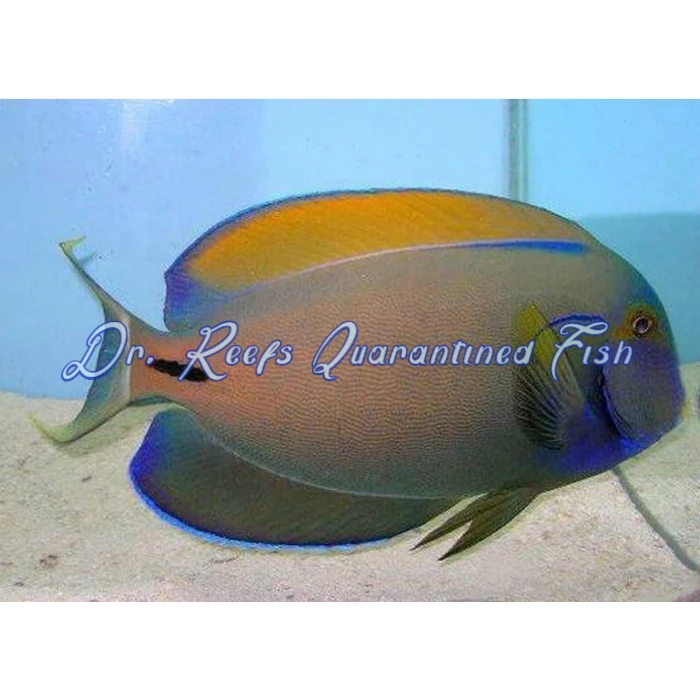
If you want a tang that commands serious attention in a large display tank, the Fowleri Tang is one of the most impressive choices in the entire saltwater hobby. Elegant, fast, and built for open water swimming, this is a fish that needs space, rewards patience, and delivers a level of graceful presence that smaller tangs simply cannot match. At Dr. Reef’s Quarantined Fish, every Fowleri Tang is fully quarantined, parasite-treated, and eating prepared foods before it ships to your door. Here is everything you need to know.
What Is a Fowleri Tang?
The Fowleri Tang, known scientifically as Acanthurus fowleri, is a large, sleek surgeonfish native to the Indo-Pacific Ocean. It is sometimes called the Fowler’s Surgeonfish. With a streamlined silver and brown body, distinctive facial markings, and a deeply forked tail built for speed, the Fowleri Tang has the look of a fish that belongs in open ocean water, which is exactly where it comes from in the wild.
Most aquarium specimens reach 12 to 14 inches at full size, making this one of the larger tang species commonly kept in home aquariums. It is not a nano fish, a beginner fish, or a community tang for a 75-gallon mixed reef. It is a large system centerpiece for dedicated hobbyists who have the space and commitment to meet its needs properly.
What Makes the Fowleri Tang Special?
Most tangs in the hobby are colorful, reef-safe, and relatively compact. The Fowleri Tang is something different. It brings a sense of scale and elegance to a large aquarium that few other fish can replicate. Its streamlined silver body, subtle bronze toning, and deeply forked tail give it the appearance of a fish built purely for performance. When it moves through a large tank at full speed, it looks like a miniature tuna crossed with a surgeonfish, and that combination is genuinely breathtaking in person.
It is also a fish with a calm, non-confrontational personality toward unrelated species, which makes it one of the easier large tangs to incorporate into a community of similarly sized fish. For reef keepers stepping up to a 250-gallon or larger system and looking for a centerpiece fish that is elegant rather than aggressive, the Fowleri Tang belongs at the top of the list.
Care Guide
Fowleri Tangs are hardy fish once established, but they have specific requirements that must be met for long-term success.
Water parameters should stay within standard reef and FOWLR ranges: temperature between 72 and 78 degrees Fahrenheit, salinity at 1.020 to 1.025, and pH between 8.1 and 8.4. Keep nitrates under 30 ppm and aim lower whenever possible. Strong biological filtration, a quality protein skimmer, and consistent water changes form the foundation of any system capable of supporting a large, active tang long-term.
Like all surgeonfish, Fowleri Tangs are prone to ich and marine velvet, particularly during the stress of introduction to a new tank. This is precisely why buying a fully quarantined fish from Dr. Reef’s Quarantined Fish matters so much with this species. Every Fowleri Tang from Dr. Reef has been treated proactively for ich, velvet, and flukes before shipping, removing the most dangerous period of disease vulnerability before the fish ever arrives at your door.
Diet and Feeding
Diet is straightforward but critically important. Fowleri Tangs are primarily herbivores that graze constantly on algae in the wild. In captivity, a varied and consistent plant-based diet is the single most important factor in long-term health, color, and disease resistance.
Offer a daily rotation of:
- Dried nori or seaweed sheets on a clip, available at all times between feedings
- Frozen mysis shrimp for protein
- High-quality herbivore pellets with spirulina or marine algae content
- Frozen algae-based foods like Ocean Nutrition Formula Two
- Fresh or frozen Gracilaria macroalgae, when available
Feed two to three times daily and always keep seaweed on a clip in the tank between formal feedings. A Fowleri Tang that grazes consistently on plant matter maintains dramatically better immune function, more vibrant coloration, and far lower disease susceptibility than one fed an inadequate or protein-heavy diet. Lateral line erosion, color fading, and chronic ich susceptibility are almost always linked to poor diet in this species.
Water Flow and Oxygenation
Fowleri Tangs come from high-flow reef environments and appreciate strong water movement and high dissolved oxygen levels. Run your return pump and powerheads at full capacity and ensure good surface agitation for gas exchange. A well-oxygenated tank keeps this species active, healthy, and displaying its most natural behavior.
Tank Size Requirements
This is the most important section for anyone considering a Fowleri Tang. Do not compromise on tank size with this species. It is not a negotiable variable.
A juvenile Fowleri Tang needs a minimum of 150 gallons to start. A full-grown adult requires 250 gallons or more, with tank length being as important as volume. Fowleri Tangs are built for straight-line speed and need long, unobstructed swimming lanes to express natural behavior and stay physically and mentally healthy. A tank shorter than 6 feet in length creates chronic stress in a fish this size and this active, regardless of the total water volume.
Under-tanked Fowleri Tangs develop stress-related aggression, chronic immune suppression, color fading, and a dramatically shortened lifespan. The fish you see cruising effortlessly through a large display at a public aquarium and the fish you see pacing nervously in an undersized home tank are the same species living completely different lives.
Give this fish the space it genuinely needs, and it will reward you with a decade or more of one of the most graceful and impressive displays in the saltwater hobby.
Ideal Tank Dimensions
For a full-grown adult Fowleri Tang, aim for a tank that is at least 8 feet long, 2 feet wide, and 2 feet deep. This gives the fish a proper straight-line swimming lane, enough width to turn comfortably at speed, and enough depth to layer the aquascape vertically while still leaving open water in the mid and upper zones.
Compatibility
Fowleri Tangs have a genuinely manageable compatibility profile compared to many large tang species, which makes them a practical choice for large community systems.
Compatible Tank Mates
In a system of 250 gallons or larger, Fowleri Tangs coexist peacefully with a wide range of robust fish, including:
- Large Angelfish such as Emperor, Majestic, and French Angels
- Large Wrasses, including Dragon Wrasses, Harlequin Tuskfish, and large Coris species
- Groupers of similar or larger size
- Rabbitfish, which share similar diet requirements and generally ignore each other
- Other large tang species from different genera, such as Zebrasoma and Naso tangs, in very large systems
- Cardinalfish and other mid-water schooling species that stay out of the tang’s swimming lanes
- Lionfish in FOWLR setups
Tang to Tang Compatibility
Fowleri Tangs belong to the genus Acanthurus. Housing two Acanthurus tang species together in anything short of a very large system, 300 gallons or more, frequently results in territorial conflict. If you want to keep a Fowleri Tang alongside other tangs, choose species from different genera, such as a Naso Tang or Yellow Tang, to reduce direct competition.
Introduce all tangs simultaneously whenever possible. Adding a new tang to a tank where a Fowleri is already established and territorial is riskier than building the community together from the start.
Reef Compatibility
The Fowleri Tang is considered reef-safe. It does not nip at corals, bother anemones, or target ornamental invertebrates. It is a viable centerpiece option for large reef systems as well as FOWLR displays, which broadens its appeal significantly compared to more aggressive large fish that are limited to predator-only setups.
Avoid Housing With:
- A very small fish that may be accidentally bullied during fast swimming and feeding activity
- Highly aggressive species like large Triggers or Lionfish in undersized systems where the Fowleri cannot escape conflict
- Other large Acanthurus tangs in systems under 300 gallons
Common Health Issues and Prevention
Marine Ich: The most common health issue in Fowleri Tangs, particularly during introduction to a new system. Dr. Reef’s proactive quarantine treatment eliminates this risk before your fish ships, giving you the safest possible start.
Marine Velvet: A fast-moving and dangerous parasite that can kill tangs within days if untreated. Treated during Dr. Reef’s quarantine protocol before shipping.
Lateral Line Erosion (HLLE): Causes pitting and discoloration along the lateral line and face. Prevented almost entirely by excellent water quality, a plant-rich diet, and avoiding activated carbon in the filtration system.
Color Fading: Almost always caused by insufficient plant matter in the diet or poor water quality. A tang that is fading in color is telling you something specific about its environment or nutrition. Address the diet first and color typically recovers within weeks.
Respiratory Distress: Caused by low dissolved oxygen, high temperatures, or gill parasites. Strong surface agitation, appropriate temperature, and a quarantined fish from Dr. Reef address all three causes simultaneously.
Setting Up Your Tank Before Your Fowleri Tang Arrives
Preparing properly before the fish arrives makes the transition smooth and stress-free for both the fish and the keeper.
- Confirm tank length is at least 6 feet, and volume is appropriate for the size of fish you are receiving
- Verify all water parameters are stable and within range
- Confirm filtration, skimmer, and flow are running at full capacity
- Have nori on a clip ready in the tank before the fish arrives
- Have frozen mysis and herbivore pellets ready for the first formal feeding
- Use drip acclimation over 45 to 60 minutes with subdued lighting throughout
- Keep the room calm and avoid hovering over the tank for the first several hours
- Do not introduce other new fish at the same time
Because Dr. Reef’s Fowleri Tang is already quarantined, treated, and eating, no separate hospital tank protocol is needed on your end.
Frequently Asked Questions
Is the Fowleri Tang good for beginners?
It is best suited for intermediate to advanced hobbyists who already have experience maintaining large saltwater systems. Its care requirements are straightforward, but its tank size needs and disease susceptibility during introduction make it a poor choice for a first saltwater fish.
How long does a Fowleri Tang live?
With excellent care in a properly sized system, Fowleri Tangs can live 10 to 15 years or longer in captivity. They are a genuine long-term commitment.
Can a Fowleri Tang be kept in a reef tank?
Yes. The Fowleri Tang is reef-safe and does not disturb corals or invertebrates, making it a suitable centerpiece for large reef systems alongside its more common use in FOWLR displays.
Why does my Fowleri Tang keep scratching against rocks?
Scratching or flashing behavior is a classic early sign of ich or another external parasite. In a fish that arrived from a quarantined source like Dr. Reef, this is less likely to indicate active disease and more likely to reflect a brief stress response to a new environment. Monitor closely and ensure water parameters are stable. Persistent scratching after the first week warrants a closer look at water quality and potential disease treatment.
What is the difference between a Fowleri Tang and other Acanthurus tangs?
The Fowleri Tang is notably larger than most commonly kept Acanthurus species and has a more streamlined, open-water body shape. It is less colorful than species like the Achilles or Powder Blue Tang, but significantly harder and less demanding in terms of water quality perfection, making it a more practical choice for large display systems.
Does Dr. Reef offer a live arrival guarantee?
Yes. Dr. Reef’s Quarantined Fish stands behind every animal they ship. Visit the website for the most current guarantee and shipping policy details.
Final Thoughts
The Fowleri Tang is a fish for reef keepers who think big. Big tank, big commitment, and a big reward in the form of one of the most graceful and impressive display fish the saltwater hobby has to offer. It is hardy, reef-safe, compatible with a wide range of tank mates, and built to live for over a decade in a system that meets its needs.
At Dr. Reef’s Quarantined Fish, every Fowleri Tang arrives fully quarantined, parasite-free, and eating confidently. That level of preparation is what this species deserves and what every serious reef keeper should demand from their fish source.
Check availability today at Dr. Reef’s Quarantined Fish before stock runs out.