
Dory Fish for Sale: Blue Tang Care Guide, Tank Requirements, and Diet

Dory Fish for Sale: Blue Tang Care Guide, Tank Requirements, and Diet
Buy a quarantined Blue Hippo Tang starting at $109.99 at Dr. Reef’s Quarantined Fish. Full care guide covering tank size, diet, ich prevention, and compatibility. Wild type and captive bred options available. Both rated 5 stars. Overnight UPS shipping with 3-day live arrival guarantee.
You already know this fish. You fell in love with it on a movie screen. That bright royal blue body, those bold black markings, that vivid yellow tail. The fish the whole world knows as Dory is one of the most recognizable and most wanted saltwater fish on the planet. And right now, Dr. Reef’s Quarantined Fish has two versions available, both rated five stars by real customers, both professionally quarantined, and both ready to ship overnight to your home.
Whether you want the classic wild-type Blue Hippo Tang starting at $139.99 or the extraordinary Captive Bred version at just $109.99, this guide will tell you everything you need to know to keep your Dory fish healthy, happy, and thriving for years to come.
What Is the Dory Fish?
Meet Paracanthurus Hepatus
The fish nicknamed Dory is scientifically known as Paracanthurus hepatus, commonly called the Blue Hippo Tang, Blue Tang, Regal Tang, or Pacific Blue Tang. It is a member of the surgeonfish family Acanthuridae, named for the razor-sharp spines near the tail that the fish uses for defense in the wild.
The Look That Made It Famous
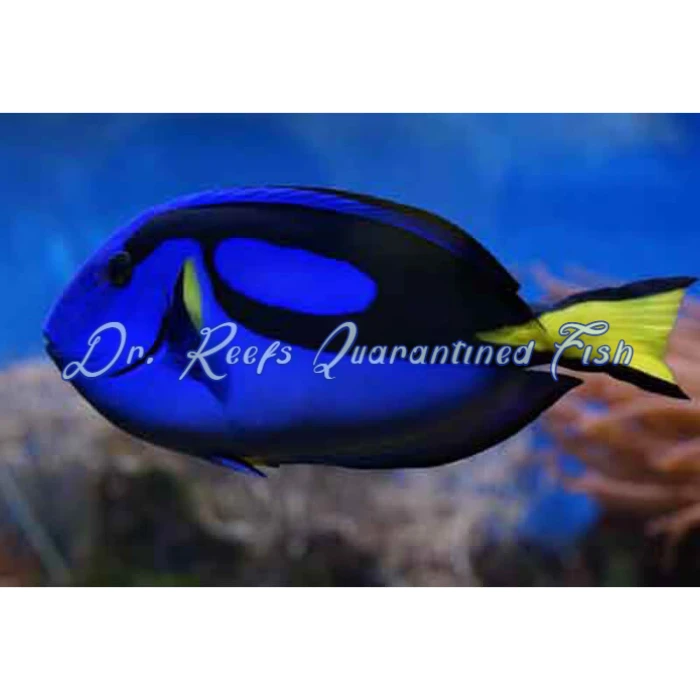
The Blue Hippo Tang has one of the most instantly recognizable color patterns in the ocean. A deep royal blue body is marked with a bold black pattern that sweeps from the eye across the dorsal area and curves down toward the tail. The tail itself is bright yellow, creating a three-color combination that looks almost painted on. Under reef lighting, the blue deepens and almost seems to glow.
Wild Type vs Captive Bred
Dr. Reef’s carries two versions of this iconic fish. The standard Blue Hippo Tang starting at $139.99 comes in multiple size options up to $399.99 for larger specimens. The Captive Bred Blue Hippo Tang at $109.99 is a single size and represents something genuinely special in the reef hobby. Both are rated five stars by Dr. Reef’s customers. Both are fully quarantined before they ship.
Why the Captive Bred Blue Tang at $109.99 Is a Game Changer
What Captive Bred Actually Means
A captive bred fish was born and raised entirely in an aquarium environment. It has never seen the ocean. It has never experienced the stress of wild collection, long international shipping chains, or wholesale holding facilities. From day one, it has lived in a tank just like yours.
Why It Matters for Your Reef
Captive bred fish adapt to aquarium food faster, handle aquarium water chemistry more readily, and are significantly less likely to arrive carrying wild parasites or pathogens. They are already accustomed to eating prepared foods, accepting tank conditions, and living alongside other aquarium fish. The transition from Dr. Reef’s facility to your tank is the smallest leap a captive bred fish ever has to make.
The Price Advantage
Here is something that surprises most hobbyists. The Captive Bred Blue Hippo Tang at Dr. Reef’s is actually less expensive than the standard wild-type version. At $109.99, it is the most affordable and arguably the most desirable version of this fish available anywhere online right now. Rated five stars. Captive bred. Quarantined. That combination at that price is genuinely outstanding.
Blue Tang Tank Requirements
Size Is Everything With This Fish
This is the most important section of this entire article. The Blue Hippo Tang is an active, open-water swimmer that needs serious space to thrive. In the wild, these fish patrol large sections of reef constantly. In a home aquarium, the minimum recommended tank size is 100 gallons for a single adult Blue Tang. Many experienced hobbyists recommend 120 to 180 gallons for the best long-term health and behavior.
Keeping a Blue Tang in a tank that is too small causes chronic stress, increases susceptibility to disease, leads to aggression, and dramatically shortens the fish’s lifespan. If your tank is under 100 gallons, wait until you can upgrade before adding a Blue Tang. This fish deserves the space it needs to live its best life.
Water Parameters for Peak Health
Blue Tangs thrive in clean, stable, well-oxygenated saltwater. Maintain salinity between 1.023 and 1.026. Temperature should stay between 72 and 78 degrees Fahrenheit. pH should be between 8.1 and 8.4. Ammonia and nitrite must always read zero. Nitrates should stay below 10 parts per million. Phosphates should be as low as possible.
Strong water flow and excellent protein skimming are especially important for Blue Tangs. They originate from high-flow reef environments and need well-oxygenated water to stay healthy. A sluggish, low-flow tank is one of the fastest ways to stress a Blue Tang.
Filtration and Water Changes
Blue Tangs are heavy bioload fish. They eat constantly and produce a significant amount of waste. A robust filtration system with an efficient protein skimmer, quality biological filtration, and regular weekly water changes of 10 to 15 percent are essential. Do not skip water changes with this fish. Pristine water quality is the single biggest factor in keeping a Blue Tang disease-free.
Aquascaping for a Blue Tang
Blue Tangs need open swimming space more than they need dense rock work. Design your aquascape to leave the front and middle of the tank open for swimming while providing caves and overhangs at the back and sides where the fish can shelter at night. Blue Tangs wedge themselves into rock crevices to sleep and feel safe, so having some tight spaces available is important for their comfort.
Blue Tang Diet: What Dory Actually Eats
A Herbivore at Heart
Blue Hippo Tangs are primarily herbivores. In the wild they graze on algae growing across reef surfaces almost continuously throughout the day. Their digestive systems are designed for a high-fiber, plant-based diet, and failing to provide adequate plant material is one of the most common care mistakes hobbyists make with this fish.
Dried Seaweed Is Non-Negotiable
The single most important food you can provide for a Blue Tang is dried seaweed, also called nori. Clip a sheet of nori to a veggie clip or rock and leave it in the tank daily. A healthy Blue Tang will graze on it throughout the day exactly the way it would graze on natural algae in the wild. This continuous plant-based feeding supports digestive health, immune function, and vibrant color.
Prepared and Frozen Foods
Beyond nori, Blue Tangs accept and benefit from a wide variety of prepared foods. Offer frozen mysis shrimp, spirulina-enriched brine shrimp, and high-quality marine pellets or flakes with a strong algae or spirulina content. Variety prevents nutritional deficiencies and keeps the fish active and engaged. Feed two to three small portions throughout the day rather than one large feeding for best digestion and water quality.
Foods That Boost Color and Immunity
Supplementing your Blue Tang’s diet with foods containing astaxanthin, beta carotene, and vitamin C visibly enhances the depth and richness of the blue coloration over time. Many premium reef fish foods contain these ingredients. A well-fed Blue Tang with a complete, varied diet glows with a deeper, richer blue than one fed a limited diet. The difference is striking and visible within weeks of improved feeding.
A mature reef tank with live rock covered in natural algae growth gives your Blue Tang a natural grazing surface that supplements its prepared diet continuously. Coralline algae, film algae, and hair algae on the rock work all contribute to the fish’s dietary health. This is another reason why mature, established tanks with good algae growth are better environments for Blue Tangs than brand new systems.
Blue Tang Health: Understanding Ich Sensitivity
The Ich Problem Every Blue Tang Owner Must Know
Blue Hippo Tangs are among the most ich-susceptible fish in the saltwater hobby. Cryptocaryon irritans, the parasite that causes marine ich, attacks Blue Tangs more readily and more severely than almost any other common reef fish. White spots appearing on the body and fins, scratching behavior, and loss of appetite are the classic early warning signs.
Prevention Is Far Better Than Treatment
The best way to protect your Blue Tang from ich is to buy from a seller who quarantines their fish before shipping. This is exactly what Dr. Reef’s Quarantined Fish does. Every Blue Tang that ships from drreefsquarantinedfish.com has been through a professional quarantine process. That single decision, choosing where you buy, does more to protect your fish from ich than almost anything else you can do.
Stress Reduction Is Your Best Defense
Ich outbreaks in home aquariums are almost always triggered by stress. Inadequate tank size, poor water quality, aggressive tank mates, and unstable parameters all suppress the immune system and make a Blue Tang vulnerable. Provide enough space, pristine water, a varied diet, and peaceful tank mates and your Blue Tang’s natural immune defenses stay strong enough to keep ich at bay in most situations.
Tank Mate Considerations
Blue Tangs are generally peaceful with most reef fish but can show aggression toward other tang species, especially those with similar body shapes. Introduce Blue Tangs last when setting up a community reef, give them the largest share of open swimming space, and avoid housing multiple tangs of the same genus in smaller systems. With fish outside the tang family, Blue Tangs are typically easygoing and sociable.
Questions and Answers About the Blue Tang
Q: Is the Blue Tang really the fish from the movies?
A: Yes. Paracanthurus hepatus is the real-life species that inspired the Dory character in the animated films. The movie used the fish’s actual color pattern, body shape, and even some of its real behaviors as the basis for the character. The result is that millions of people around the world now recognize and want this fish, making it one of the most sought-after saltwater species in the hobby.
Q: What is the difference between the wild Blue Tang and the Captive Bred version at Dr. Reef’s?
A: The wild-type Blue Hippo Tang at $139.99 to $399.99 was collected from the ocean and conditioned through Dr. Reef’s quarantine process before shipping. The Captive Bred Blue Hippo Tang at $109.99 was born and raised entirely in an aquarium environment. The captive bred version is already adapted to aquarium food and conditions, tends to be less susceptible to stress-triggered illness, and at $109.99 is actually less expensive than most wild-caught specimens. For most hobbyists, the captive bred version is the smarter choice.
Q: What is the minimum tank size for a Blue Tang?
A: 100 gallons is the minimum recommended for a single adult Blue Tang. Many experienced reef keepers recommend 120 gallons or larger for the best long-term health, natural behavior, and disease resistance. This is not a fish for small tanks. If your current setup is under 100 gallons, plan your upgrade before purchasing.
Q: Why do Blue Tangs get ich so easily?
A: Blue Tangs have thinner skin and a different mucus coat composition compared to many other reef fish, making them more vulnerable to the ich parasite physically. They are also highly stress-sensitive, and stress directly suppresses immune function. Buying a quarantined fish from Dr. Reef’s, providing adequate tank size, maintaining pristine water quality, and feeding a complete nutritious diet are the most effective combined strategies for preventing ich outbreaks.
Q: Can I keep a Blue Tang with a clownfish and anemone?
A: Absolutely. Blue Tangs and clownfish make one of the most iconic and naturally beautiful tank combinations in the reef hobby, inspired directly by the animated films most people associate with both species. They coexist peacefully without territorial conflict. A tank with a Blue Tang, a pair of clownfish, and a Rose Bubble Tip Anemone is a reef display that genuinely takes your breath away.
Q: How long do Blue Tangs live in captivity?
A: In a properly sized, well-maintained reef tank with excellent water quality and a completely varied diet, Blue Hippo Tangs can live 20 years or longer. They are a long-term commitment and a long-term reward. The hobbyists who invest in the right setup from the beginning enjoy this fish for decades.
Q: Does the five-star rating at Dr. Reef’s apply to both versions of the Blue Tang?
A: Yes. Both the standard Blue Hippo Tang and the Captive Bred Blue Hippo Tang carry five-star ratings from verified Dr. Reef’s customers. That rating reflects the quality and health of the fish as they arrive, the quality of the quarantine process, and the overall buying experience.
Why Buy Your Blue Tang From Dr. Reef’s Quarantined Fish?
The Quarantine Difference
Every Blue Tang at Dr. Reef’s Quarantined Fish, wild-type and captive bred alike, goes through a professional quarantine process before it ships. For an ich-susceptible species like the Blue Hippo Tang, this is not just a nice feature. It is the single most important thing you can look for when choosing where to buy. A quarantined Blue Tang arrives healthier, settles in faster, and gives you a dramatically better chance of long-term success compared to one purchased from a seller who ships directly from wholesale holding tanks.
Five Stars From Real Customers
Both versions of the Blue Hippo Tang at Dr. Reef’s carry five-star ratings from real customers who bought and kept these fish. That rating is the result of consistently healthy arrivals, professional packing for overnight shipping, and genuine care from a team that loves reef keeping as much as their customers do.
Overnight UPS Shipping and Live Arrival Guarantee
Dr. Reef’s ships overnight via UPS on Tuesdays, Wednesdays, and Thursdays, with deliveries arriving Wednesdays, Thursdays, and Fridays. Transit time is kept as short as possible, which matters enormously for sensitive fish like Blue Tangs. Every order is backed by a three-day live arrival guarantee. Payments are accepted through PayPal, Stripe, and Venmo. Free shipping kicks in on orders over $500.
Real People Who Love Reef Keeping
The team at Dr. Reef’s keeps reef tanks themselves. When you have a question about tank size, acclimation, diet, or compatibility, you get an answer from someone with real hands-on experience. That level of genuine care and expertise is what keeps hobbyists across America coming back to Dr. Reef’s order after order.
Final Thoughts: Bring Home the Most Famous Fish in the Ocean
The Blue Hippo Tang is not just a beautiful fish. It is the fish that introduced an entire generation of people to the magic of the ocean and the wonder of reef keeping. Owning one in a well-maintained reef tank is one of the most rewarding experiences this hobby can offer.
At Dr. Reef’s Quarantined Fish, you have two outstanding options. The classic wild-type Blue Hippo Tang starting at $139.99 for hobbyists who want a range of size choices. And the five-star rated Captive Bred Blue Hippo Tang at just $109.99 for hobbyists who want the most adaptable, aquarium-ready version of this iconic fish at the best possible price.