
Cowfish

Cowfish for Sale: Unique Boxfish Species Care Guide
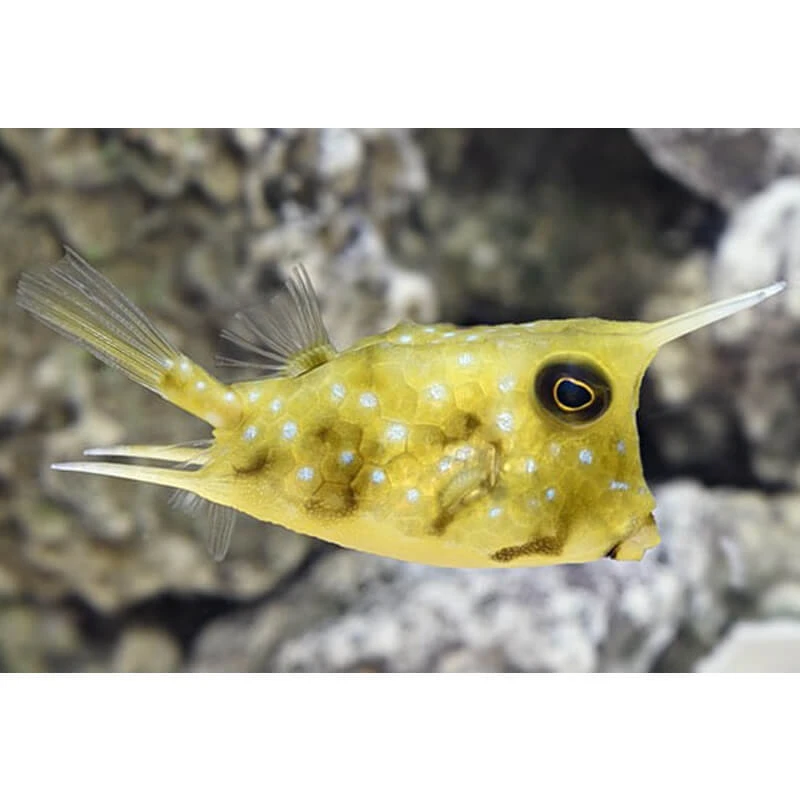
The Cowfish is one of those fish that stops people in their tracks the first time they see it. With its rigid boxy body, two small horns above its eyes, and a face that looks permanently surprised and delighted, the Cowfish is genuinely one of the most charming and unusual animals in the marine hobby. At Dr. Reef’s Quarantined Fish, our Cowfish are quarantined, healthy, and ready to become the most talked-about resident in your home aquarium.
What Is a Cowfish?
Cowfish belong to the family Ostraciidae, the same family as Boxfish and Trunkfish. Their bodies are encased in a hard, bony shell called a carapace that gives them their distinctive boxy shape. Unlike most fish that rely on their entire body to swim, Cowfish move primarily by fluttering their pectoral, dorsal, and anal fins while keeping their body mostly rigid. The result is a slow, hovering swimming style that looks almost like a tiny helicopter gliding through the water.
The horns above their eyes, which inspired the name Cowfish, are one of their most endearing features. Combined with their large, expressive eyes and permanent wide-mouthed expression, Cowfish have a personality-filled appearance that makes them irresistible to anyone who encounters them.
Popular species available in the hobby include the Longhorn Cowfish, which can grow up to 20 inches in the wild and features pronounced horn-like projections, and the Scrawled Cowfish, a smaller and more commonly kept species with beautiful blue and yellow patterning.
Important Things to Know Before You Buy a Cowfish
Cowfish are fascinating but they come with some specific considerations that every buyer should understand before making a purchase. The most important one is their defense mechanism. When severely stressed or injured, Cowfish can release a toxic substance called ostracitoxin into the water. In a closed aquarium environment, this toxin can harm or kill other fish in the tank.
This does not mean Cowfish are dangerous to keep. It simply means they should never be housed with aggressive tank mates that might bully or injure them, and water quality must always be kept at a high standard to prevent chronic stress. A happy, healthy Cowfish that is well cared for in a proper setup will almost never trigger this defense response.
The Dr. Reef Quarantine Advantage for Cowfish
Cowfish are notoriously sensitive during the shipping and acclimation process. The stress of transport is one of the most common reasons newly purchased Cowfish decline in the first days after purchase. A fish that arrives already weakened from a poorly managed transport has a much harder time adjusting to a new tank environment.
At Dr. Reef’s Quarantined Fish, Cowfish receive dedicated care from the moment they arrive at the facility. They go through a full quarantine period where they are given time to recover from any transport stress, treated proactively for common pathogens, and carefully trained onto prepared aquarium foods. The result is a Cowfish that arrives at your home visibly healthy, actively swimming, and already eating. This is the Dr. Reef difference that thousands of happy customers have come to rely on.
Tank Size and Setup
The right tank size for a Cowfish depends on the species. Smaller species like the Scrawled Cowfish can be kept in tanks of 100 gallons or more. Larger species like the Longhorn Cowfish need significantly more space as they grow and should be planned for systems of 150 gallons and above.
Cowfish prefer a calm, peaceful environment with gentle water flow. Avoid strong powerheads that push them around the tank, as they are not strong swimmers due to their rigid body structure. Provide open swimming areas combined with some live rock for exploration and mental stimulation.
Because Cowfish will eat shrimp, snails, and other small invertebrates, they are not considered reef safe. They do best in a fish-only with live rock system alongside other large, peaceful tank mates of similar size and temperament.
Diet and Feeding
Cowfish are omnivores that enjoy a varied diet. Offer them frozen mysis shrimp, brine shrimp, chopped clam, and marine pellets. They also graze on algae and small invertebrates naturally, so supplementing their diet with dried seaweed sheets is a great idea. Feed them two to three times daily in small portions and make sure they are actually consuming their food, as their slow swimming style can put them at a disadvantage around faster tank mates at feeding time.
When you are ready to add the most uniquely charming fish in the ocean to your aquarium collection, visit Dr. Reef’s Quarantined Fish and experience the difference that proper quarantine and expert care can make from day one.