
Cleaner Shrimp for Sale: Benefits for Fish Health and Parasite Control

Cleaner Shrimp for Sale: Benefits for Fish Health and Parasite Control
Imagine having a tiny, elegant animal in your reef tank whose entire job is to keep your fish healthy. It sets up a cleaning station, waves its antennae like a welcoming sign, and fish actually line up to be serviced. The Cleaner Shrimp does exactly this every single day in reef tanks around the world. It is one of the most fascinating, beneficial, and genuinely useful animals available in the saltwater hobby. This complete guide covers everything you need to know about Cleaner Shrimp benefits, care, and where to buy healthy specimens.
What Is a Cleaner Shrimp?
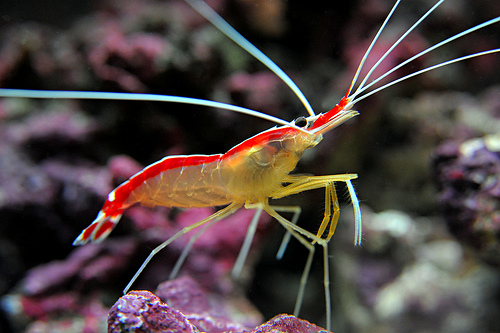
The Scarlet Skunk Cleaner Shrimp, known scientifically as Lysmata amboinensis, is a medium-sized marine shrimp native to the Indo-Pacific Ocean. It reaches about 2 to 3 inches in length and features a vivid red and white striped body with extremely long white antennae that wave constantly, signaling its cleaning services to nearby fish. It is one of the most recognizable and widely kept invertebrates in the reef hobby.
How Does the Cleaning Station Work?
Setting Up Territory
Cleaner Shrimp establish a specific location in the tank, usually on a prominent rock or coral head, that becomes their cleaning station. They return to this same spot consistently and fish learn where to find them.
The Invitation Signal
The shrimp waves its long white antennae in a distinctive rhythmic motion that fish recognize as an invitation. This behavior is instinctive and works across species. Fish that have never encountered a Cleaner Shrimp before still respond to the signal naturally.
What Happens During Cleaning
Fish approach the station, often tilting sideways, opening their mouths, or flaring their gills to give the shrimp access. The Cleaner Shrimp crawls over the fish’s body, picking off parasites, dead skin, mucus, and food debris. It even enters the mouth and gill chambers of larger fish to clean areas that would otherwise be inaccessible.
Which Fish Use the Cleaning Station?
Almost every fish species in a reef tank will visit the Cleaner Shrimp at some point. Tangs, angelfish, groupers, wrasses, clownfish, and even large predators like lionfish have been documented using cleaning stations in captivity. The cleaning relationship crosses species boundaries in a way that never stops being remarkable to watch.
Health Benefits of Cleaner Shrimp for Your Fish
Direct Parasite Removal
Cleaner Shrimp physically remove ectoparasites from fish surfaces. While they are not a substitute for proper quarantine or medical treatment for serious infections, they provide continuous, daily parasite pressure reduction that keeps fish healthier over time.
Early Warning System
An experienced reef keeper watches their Cleaner Shrimp behavior as a health indicator. When fish visit the cleaning station more frequently than usual, it often signals the early stages of a parasite problem or stress response. The shrimp tells you something is happening before the fish shows obvious symptoms.
Wound Cleaning
Cleaner Shrimp remove dead tissue and debris from wounds, which reduces the risk of secondary bacterial infections in fish recovering from injury or disease.
Stress Reduction in Tank Fish
Fish in tanks with active Cleaner Shrimp show reduced stress behaviors over time. The grooming interaction appears to have a calming effect on many species, particularly those prone to stress-related conditions like ich outbreaks.
Cleaner Shrimp Pricing at Dr. Reef’s
At Dr. Reef’s Quarantined Fish, Cleaner Shrimp are priced at $49.99 at Dr.Reef’s Quarantined fish. Every specimen goes through Dr. Reef’s professional quarantine and health screening process before it ships. For an animal that interacts directly with every fish in your tank on a daily basis, that quarantine matters enormously. A Cleaner Shrimp that arrives carrying disease or parasites has access to every fish in your system from day one. Dr. Reef’s eliminates that risk completely.
Tank Requirements for Cleaner Shrimp
Tank Size
Cleaner Shrimp adapt to tanks as small as 20 gallons. They are low-bioload animals that work well in nano reef systems and large display tanks alike.
Standard reef parameters are ideal. Temperature between 72 and 78 degrees Fahrenheit. Salinity at 1.023 to 1.025. Stable calcium and iodine levels support healthy molting, which Cleaner Shrimp do regularly as they grow.
Drip acclimate Cleaner Shrimp slowly over 45 to 60 minutes. Shrimp are more sensitive to salinity swings than fish and proper acclimation dramatically improves post-arrival survival rates.
Molting
Cleaner Shrimp molt regularly, especially in well-fed, high-quality water conditions. A freshly molted shrimp is temporarily soft and vulnerable. Provide rockwork with crevices and caves where the shrimp can hide safely during this period.
Feeding Cleaner Shrimp
Cleaner Shrimp are opportunistic omnivores that supplement their parasite diet with detritus, uneaten food particles, and meaty foods. They scavenge the tank effectively and rarely need dedicated feeding in a well-stocked reef system. Occasionally offering a small piece of frozen mysis shrimp directly to the cleaning station keeps them in excellent condition.
Are Cleaner Shrimp Reef Safe?
Yes completely. Cleaner Shrimp are among the most reef-safe invertebrates available in the hobby. They do not bother corals, clams, or other invertebrates. They interact only with fish and loose organic matter in the tank.
Can You Keep Multiple Cleaner Shrimp?
Yes. Cleaner Shrimp are social animals that coexist peacefully with members of their own species. Keeping two or more in a larger tank creates multiple cleaning stations and improves the overall parasite management capacity of your system. Like Peppermint Shrimp, they are protandric hermaphrodites that breed readily in established reef tanks.
Compatibility Warning
Avoid housing Cleaner Shrimp with fish known to eat shrimp. Certain wrasse species, hawkfish, and large dottybacks will prey on Cleaner Shrimp. Research your specific fish before adding any shrimp to your system.
Quick Q and A
Q: Will a Cleaner Shrimp cure ich in my tank?
A: No. Cleaner Shrimp reduce parasite load and provide daily maintenance but they are not a medical treatment. A fish with active ich requires proper quarantine and medication. Think of Cleaner Shrimp as preventive wellness care rather than disease treatment.
Q: How long does it take for a Cleaner Shrimp to establish a cleaning station?
A: Most Cleaner Shrimp establish a preferred location within one to two weeks of introduction. Some begin signaling and accepting fish visits within days of arrival.
Q: Can I keep a Cleaner Shrimp with a Lionfish?
A: Surprisingly, yes in many cases. Lionfish commonly use Cleaner Shrimp stations and often do not prey on them despite their predatory nature. Individual behavior varies so monitor closely after introduction.
Q: How much does a Cleaner Shrimp cost at Dr. Reef’s?
A: Cleaner Shrimp are priced at $49.99 at Dr.Reef’s Quarantined fish with professional quarantine included on every specimen.
Q: How often do Cleaner Shrimp molt?
A: In healthy, well-fed conditions with stable water parameters, Cleaner Shrimp molt approximately every three to eight weeks. More frequent molting often indicates excellent water quality and nutrition.
Q: Do I need one Cleaner Shrimp per fish or per tank?
A: One Cleaner Shrimp serves an entire tank effectively. Two shrimp in a larger system create redundant cleaning stations and improve overall coverage significantly.
What to Know Before Choosing a Fish
The Cleaner Shrimp is one of the best investments any reef hobbyist can make for the long-term health of their fish. It works every single day without any input from you, removing parasites, cleaning wounds, and reducing stress across every species in your tank. At $49.99 from Dr. Reef’s Quarantined Fish, you are getting a professionally quarantined, health-screened specimen from a seller whose standards match the importance of this animal’s role in your reef. Visit Dr. Reef’s Quarantined Fish today and add the most hardworking invertebrate in the hobby to your tank.