
Achilles Tang for Sale: Expert Care Guide for Advanced Aquarists

Achilles Tang for Sale: Expert Care Guide for Advanced Aquarists
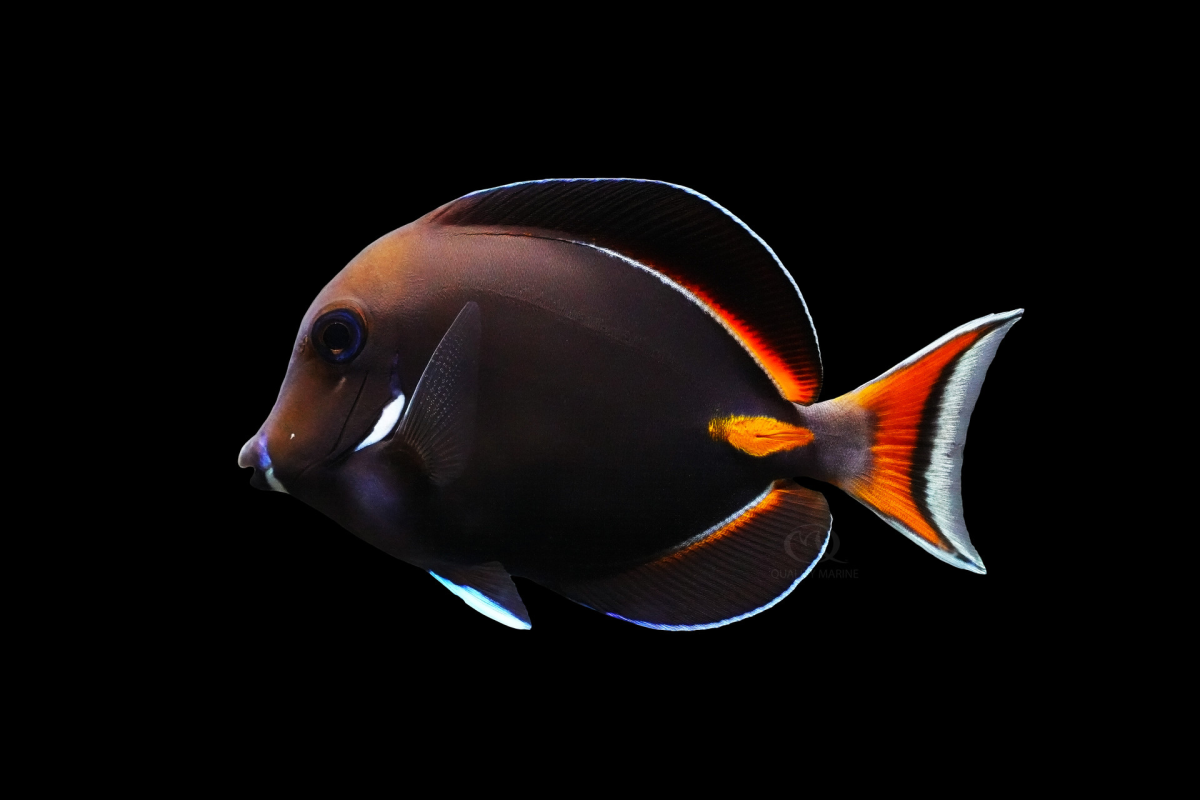
Some fish are pretty. Some fish are absolute showstoppers. The Achilles Tang falls squarely into the second category. The moment this fish glides across a well lit reef tank, every eye in the room follows it. That deep velvety black body. That bold orange teardrop marking near the tail. That sharp white line tracing the gill plate. It is one of the most visually stunning fish in the entire saltwater hobby.
But here is the truth that every honest seller will tell you upfront. The Achilles Tang is not for beginners. It is one of the most demanding tang species to keep successfully over the long term. That is exactly why getting every detail right matters so much. And that is exactly why where you buy it can make all the difference between success and heartbreak.
What Is the Achilles Tang?
The Achilles Tang carries the scientific name Acanthurus achilles. It belongs to the surgeonfish family and is named after the sharp scalpel like spines near its tail, a defensive trait shared by all tang species. It is native to the Pacific Ocean, specifically found around Hawaii, Johnston Atoll, and various islands throughout Micronesia and Polynesia.
In the wild it lives in high energy surge zones, the turbulent shallow water areas where powerful waves constantly crash against reef structures. This natural habitat tells you everything about what this fish needs in captivity to truly thrive.
How Much Does an Achilles Tang Cost at Dr. Reef’s?
The Achilles Tang at Dr. Reef’s Quarantined Fish is priced at $549.99 to $649.99 depending on size. This reflects the true cost of responsibly sourcing, professionally quarantining, and shipping one of the most delicate and sought after tang species in the hobby.
For reef keepers who want the absolute pinnacle of rare tang genetics, Dr. Reef’s also offers the Hybrid Achilles White Cheek Tang at $999.99. This extraordinary fish combines the dramatic markings of the Achilles Tang with the White Cheek Tang, creating a one of a kind specimen that represents the rarest end of the tang hobby. Both options come fully quarantined and eating before they ship.
When you consider what it costs to lose a display tank full of established fish and coral to a disease outbreak caused by an unquarantined animal, the pricing at Dr. Reef’s reflects genuine long term value and risk protection.
Why the Achilles Tang Has Such a Challenging Reputation
The Achilles Tang’s reputation as a difficult fish is completely earned. Three major challenges separate it from beginner friendly tangs like the yellow tang or the kole tang.
First, it is highly stress sensitive. Any disruption during collection, shipping, or acclimation creates a window of real vulnerability. Stressed fish stop eating. Fish that stop eating for extended periods do not recover easily.
Second, it is extremely prone to ich and other external parasites. The Achilles Tang’s immune response to parasitic infection is not as robust as many other tang species. Introduce it to a tank with even trace parasite levels and it will show symptoms before almost any other fish in the system.
Third, it requires exceptional water quality and very strong water movement just to feel comfortable and behave normally. A sluggish tank with elevated nutrients is essentially a shortened lifespan for this fish.
Why Quarantine Is Non-Negotiable for the Achilles Tang
With most fish, quarantine is strongly recommended. With the Achilles Tang, quarantine is not optional under any circumstances.
Wild caught Achilles Tangs arrive stressed from collection and shipping. Stress suppresses immune function. Suppressed immunity combined with any parasite exposure equals an ich outbreak in your display tank. An ich outbreak in a fully stocked reef can wipe out an entire collection of expensive, irreplaceable fish.
Dr. Reef’s Quarantined Fish was built specifically to solve this problem. Every Achilles Tang they offer goes through a full multi-week professional quarantine, complete treatment protocol, and extended observation period. The fish must be actively eating, showing zero disease symptoms, and behaving normally before it ever ships to a customer. You are not buying a wild stressed fish fresh off a transport boat. You are buying a stabilized, eating, disease free fish that has already cleared the most dangerous phase of the transition process.
Minimum Tank Size for the Achilles Tang
Do not attempt to keep an Achilles Tang in anything smaller than 180 gallons. This is a genuine minimum, not a conservative suggestion padded with extra margin.
These fish are powerful, fast swimmers that need horizontal swimming length above everything else. A six foot long tank or longer gives them the space they need to express natural behavior and maintain mental calm. A cramped Achilles Tang is a perpetually stressed one. A stressed one becomes sick. Tank size is one of the single most important variables in long term success with this species.
Water Quality Requirements for the Achilles Tang
Water quality standards for the Achilles Tang are stricter than for most other reef fish.
Target nitrates consistently below 10 ppm. Phosphates below 0.05 ppm. Salinity between 1.025 and 1.026. Temperature held steady between 75 and 78 degrees Fahrenheit with no swings. pH between 8.1 and 8.3.
Oxygen saturation deserves special attention with this species. Because the Achilles Tang evolved in highly oxygenated surge zones, it needs exceptional gas exchange in captivity. A powerful protein skimmer, strong surface agitation, and excellent tank wide circulation all directly contribute to keeping oxygen levels where this fish genuinely needs them to thrive.
Flow Requirements for the Achilles Tang
Strong water movement is not optional for this species. It is a biological necessity rooted in where this fish evolved.
Target 40 to 60 times turnover per hour as a starting minimum. This fish should be visibly swimming against flow, riding current bursts, and behaving like the surge zone athlete it genuinely is. Multiple powerheads or a high quality wavemaker that produces varied, randomized flow patterns outperform any single directional pump setup.
A tank with weak flow produces a lethargic, declining Achilles Tang. Strong, varied flow produces an active, vibrant, healthy one that showcases every bit of its remarkable natural coloration.
How to Feed the Achilles Tang
The Achilles Tang is a dedicated herbivore. In the wild its diet consists almost entirely of turf algae scraped from surge zone reef surfaces throughout the day. Replicating a varied, algae heavy feeding routine in captivity is absolutely essential for long term health.
Nori sheets clipped inside the tank are the most important daily staple. Offer them every day and replace them when consumed. Rotate in frozen foods like spirulina enriched brine shrimp, algae based mysis blends, and high quality herbivore pellets. Feed at minimum twice daily.
A well fed Achilles Tang is a calm, healthy fish with a strong functioning immune system. Hunger leads to aggression, weakened immunity, and dramatically increased susceptibility to ich and secondary infections.
Best Tankmates for the Achilles Tang
Choosing tankmates carefully protects both your Achilles Tang and every other animal in the system.
The Achilles Tang can be aggressive toward other tang species, especially similarly shaped surgeonfish from the Acanthurus genus. If keeping multiple tangs is part of your plan, introduce the Achilles Tang last so it enters an already established social structure rather than immediately trying to dominate all newcomers.
Peaceful community fish work very well alongside the Achilles Tang. Clownfish, anthias, chromis, gobies, dragonets, and most wrasse species make genuinely excellent tankmates. Larger peaceful fish like rabbitfish and certain angelfish species can also be compatible in a sufficiently spacious system.
Is the Achilles Tang Reef Safe?
Yes. The Achilles Tang is completely reef safe in every meaningful sense. It does not bother corals, clams, ornamental shrimp, or most other invertebrates. It is a dedicated herbivore focused entirely on grazing plant matter and swimming. Your coral collection is entirely safe sharing a tank with a healthy, well fed Achilles Tang.
What Makes the Hybrid Achilles White Cheek Tang Special?
For reef keepers who want to go beyond even the Achilles Tang itself, Dr. Reef’s offers the Hybrid Achilles White Cheek Tang at $999.99.
This extraordinary fish combines the deep black body and signature orange teardrop of the Achilles Tang with the distinctive white cheek patterning of the White Cheek Tang. The result is a genuinely one of a kind specimen that exists at the very pinnacle of the tang hobby. These hybrids are exceptionally rare in nature and even rarer in the aquarium trade. Owning one is a statement piece that represents the highest level of reef keeping passion and commitment. Like all fish at Dr. Reef’s, it ships fully quarantined and actively eating.
Common Health Issues With the Achilles Tang
Knowing what to watch for allows you to act before a small problem becomes a serious one.
Ich is the most common issue, presenting as small white spots scattered across the body and fins. Marine velvet moves faster and appears as a fine dusty coating over the skin. Both require prompt treatment, ideally in a separate hospital tank using copper based medication at properly measured therapeutic levels.
HLLE, head and lateral line erosion, can develop gradually in tanks with poor water quality or nutritionally limited diets. It appears as pitting and discoloration along the head and lateral line. Correcting water quality and improving dietary variety usually halts and slowly reverses HLLE over time.
The most effective treatment for all of these conditions is prevention through excellent water quality, a varied and generous diet, and proper professional quarantine before the fish ever enters your display tank.
How to Acclimate an Achilles Tang Properly
Acclimation must be slow and gentle with this species. Use the drip acclimation method over a minimum of 60 to 90 minutes. Keep tank lighting off or very dim during introduction and for at least an hour afterward. Feed the tank heavily right before releasing the Achilles Tang so existing fish are occupied with food and less focused on the newcomer. Give the fish time and space to find its territory without harassment.
Monitor closely for the first two weeks. Even a fully quarantined, healthy Achilles Tang needs settling time in a new environment.
Frequently Asked Questions About the Achilles Tang
Q: Is the Achilles Tang reef safe with corals? A: Yes, completely. It is a dedicated herbivore with zero interest in coral tissue.
Q: Why does the Achilles Tang keep getting ich? A: This species is genetically prone to ich under stress conditions. Professional quarantine before purchase and stable, high quality tank conditions after arrival are the most powerful prevention tools available to reef keepers.
Q: What is the minimum tank size for an Achilles Tang? A: 180 gallons is the responsible minimum. Larger is always better for this species and directly contributes to its long term health and coloration.
Q: What is the price difference between the Achilles Tang and the Hybrid Achilles White Cheek Tang? A: The Achilles Tang at Dr. Reef’s is priced at $549.99 to $649.99. The Hybrid Achilles White Cheek Tang is $999.99 and represents one of the rarest tang specimens available anywhere in the hobby.
Q: Can the Achilles Tang live with other tangs? A: Yes, with careful planning. Introduce it last, provide ample swimming territory, and avoid other Acanthurus tang species unless your system is very large with clearly defined zones.
Q: How long does Dr. Reef’s quarantine process take? A: Dr. Reef’s runs a full quarantine program. Every fish must be eating, disease free, and behaviorally stable before it is cleared to ship to a customer.
Q: Is the Achilles Tang worth the price? A: For an advanced aquarist with the right setup, absolutely yes. There is no other fish in the hobby that combines that level of visual impact, natural swimming behavior, and sheer reef presence.
Your Complete Recap on Brittle StarFish
The Achilles Tang rewards preparation, patience, and smart purchasing decisions at every single step. It is not a fish you take shortcuts with. Tank size, water quality, flow rate, feeding variety, tankmate selection, and the source of the fish itself, every factor shapes whether this extraordinary animal thrives or declines.
Dr. Reef’s Quarantined Fish removes the single biggest risk factor from the entire equation before the fish ever leaves their facility. Whether you choose the Achilles Tang at $549.99 to $649.99 or invest in the truly rare Hybrid Achilles White Cheek Tang at $999.99, you are getting a professionally quarantined, actively eating, stable fish ready to become the most talked about animal in your reef.