
Will a Sixline Wrasse Destroy the Peace in Your Reef Tank?

Will a Sixline Wrasse Destroy the Peace in Your Reef Tank?
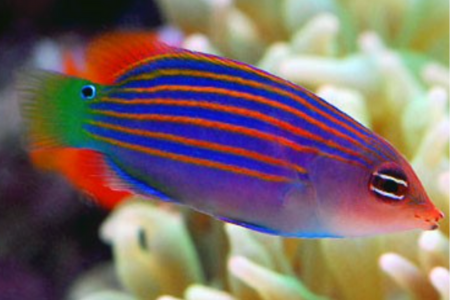
You have probably seen the warnings scattered across reef forums. Someone always chimes in with a story about a Sixline Wrasse that turned their peaceful community tank into a battlefield. So is that reputation deserved, or is this one of those hobby myths that gets repeated so often nobody questions it anymore? The honest answer sits somewhere in the middle, and it depends almost entirely on who else is already living in your tank.
The Fish Behind the Reputation
The Sixline Wrasse earns its keep as one of the most popular small wrasses in the hobby. It is colorful, active, hardy, and genuinely useful for controlling pyramidellid snails and other small pests. None of that is in question. What gets debated is what happens once it settles in and starts treating the tank like its own personal territory.
In the wild, this fish is built for speed and confidence. It darts through rubble and coral branches constantly scanning for food and threats. That same wiring does not switch off just because it is living behind glass instead of on a reef.
Who Actually Gets Bothered
This is where the “destroy the peace” question gets more specific. A Sixline Wrasse is rarely a problem for larger, faster, or more established fish. Tangs, larger wrasses, clownfish, and most mid-sized community fish tend to coexist with it just fine. The real friction shows up with small, similarly shaped bottom dwellers and other wrasses added after the Sixline is already settled in.
Fish like small gobies, dartfish, and firefish are the most common victims of Sixline aggression, since they occupy similar space near the rock and sand and can be seen as direct competition. Adding another small wrasse to a tank that already has an established Sixline is also a common recipe for conflict, since two similarly built fish competing for the same hiding spots rarely ends peacefully.
The Order You Add Fish Matters More Than People Realize
Here is a detail that gets missed constantly. A Sixline Wrasse added early to an empty or lightly stocked tank often becomes territorial simply because it has no competition to keep it in check. It claims the whole tank as its own before anyone else gets a say. The same fish added later, into a tank that already has an established community and pecking order, tends to settle into its place far more peacefully. It simply has less unclaimed territory to fight over.
This single detail probably prevents more Sixline Wrasse conflicts than any other piece of advice in the hobby. Stocking order is not a minor detail. It is often the deciding factor.
Invertebrates Are Usually Safe, With a Few Exceptions
For anyone worried about corals, the good news is straightforward. Sixline Wrasses are considered reef safe and will not bother coral polyps. Where caution is warranted is with small ornamental shrimp and certain snails, since a hungry or bored Sixline Wrasse has been known to pick at smaller invertebrates it can overpower. Larger cleaner shrimp are generally left alone, but tiny shrimp species kept purely for looks are more at risk.
Why a Stressed Sixline Is a Worse Sixline
Temperament issues in this species often trace back to stress rather than pure personality. A Sixline Wrasse that arrives already run down from a rough collection and shipping process tends to act more defensively and territorially once it finally settles into a tank. It is simply racing to secure resources after a difficult start. A healthy, well-fed fish that never had to fight for survival in the first place generally shows a calmer, more confident version of this species’ natural boldness.
This is exactly why sourcing matters. Every Sixline Wrasse from Dr. Reef’s Quarantined Fish goes through a full quarantine protocol before it ships, giving it time to recover from shipping stress and settle into a steady feeding routine before it ever reaches your tank. A fish that starts strong and well fed has far less reason to act out once it arrives.
What It Costs
A quarantined Sixline Wrasse from Dr. Reef runs $59.99 to $68.99. Compared to the cost of a stressed newcomer disrupting an established community, it is a small price for a much smoother introduction.
How to Keep the Peace
Add your Sixline Wrasse after your more delicate small fish, like gobies and firefish, are already established rather than before. Provide plenty of live rock and hiding spots so no single fish feels forced to defend limited territory. Feed consistently so food competition never becomes the spark for aggression. And avoid adding a second small wrasse to a tank where a Sixline is already comfortably settled, unless your system is genuinely large enough to support both.
Check the compatibility chart against your current tankmates before ordering, and follow the acclimation guide for a smooth introduction once your fish arrives.
The Takeaway
A Sixline Wrasse will not automatically destroy the peace in your reef tank, but it absolutely can if it is added at the wrong time, to the wrong mix of tankmates, or while already stressed from a rough start. Get the stocking order right, start with a properly quarantined specimen from Dr. Reef’s Quarantined Fish, and this fish is far more likely to become a colorful, helpful addition than a source of chaos.
For more honest care guides like this one, visit the Dr. Reef blog.