
Clown Trigger for Sale: Care Requirements, Temperament, and Tank Setup

Clown Trigger for Sale: Care Requirements, Temperament, and Tank Setup
Price: $199.99 to $249.99
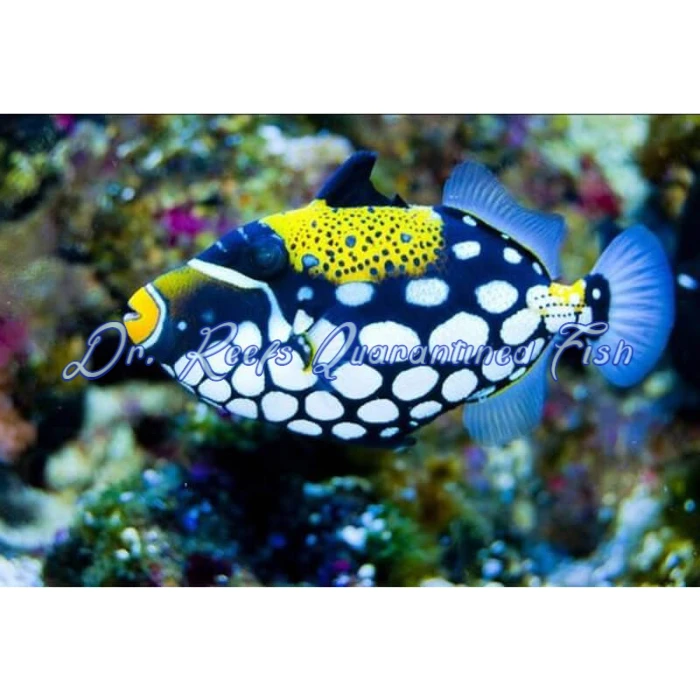
Some fish are pretty. Some fish are interesting. And then there is the Clown Triggerfish, a fish that is both of those things and also completely, unapologetically bold in a way that almost no other aquarium fish can match. With its explosive pattern of white polka dots, vivid yellow mouth, and jet-black body, the Clown Trigger does not blend into a tank. It owns the tank. It knows it owns the tank. And it will make sure every other fish in there knows it, too. At Dr. Reef’s Quarantined Fish, every Clown Triggerfish is fully quarantined, parasite-treated, and eating prepared foods before it ships to your door. Here is everything you need to know before bringing one home.
What Is a Clown Triggerfish?
The Clown Triggerfish, known scientifically as Balistoides conspicillum, is widely considered one of the most visually striking fish in the entire marine aquarium hobby. It belongs to the family Balistidae, a group of fish known for their tough, leathery skin, powerful beak-like teeth, and aggressive personalities.
Found throughout the tropical Indo-Pacific Ocean, from East Africa and the Red Sea to the waters around Japan, Australia, and the Pacific Islands, Clown Triggerfish inhabit coral-rich reef environments at depths ranging from 6 to over 75 meters. In the wild, they are solitary hunters that use their powerful teeth to crush hard-shelled prey, including sea urchins, crustaceans, mollusks, and coral.
In captivity, they grow to around 10 to 12 inches and become one of the most interactive, personality-driven fish you will ever keep. Clown Triggers are famous for recognizing their owners, reacting to activity outside the tank, and developing individual personalities that range from curious and bold to genuinely territorial and assertive.
At $199.99 to $249.99, depending on size, a fully quarantined Clown Triggerfish from Dr. Reef’s Quarantined Fish is one of the most rewarding investments in the saltwater hobby.
Why Buy From Dr. Reef’s Quarantined Fish?
The Clown Triggerfish has a well-earned reputation for being one of the harder fish in the marine hobby once it is established. The problem is getting it established. Newly imported, unquarantined Triggerfish often arrive stressed, parasite-loaded, and either refusing food or eating erratically.
At Dr. Reef’s Quarantined Fish, that problem is solved before the fish ever ships to you. Here is the process every Clown Trigger goes through:
- A full quarantine observation period where the animal is monitored daily for signs of stress, disease, or abnormal behavior
- Proactive treatment for ich, velvet, flukes, and other common parasites using proven medication protocols
- Food conditioning so the fish is confidently eating frozen and prepared foods before it ships
- Health screening confirming clear eyes, intact fins, proper color, and normal swimming behavior
- Only fish that pass every health standard are approved for shipping
The Clown Trigger’s personality and hardiness are two of its greatest strengths, but only if the fish arrives healthy. Dr. Reef’s quarantine process makes sure you get all of that personality and none of the disease stress that comes with unquarantined fish.
This is why thousands of saltwater hobbyists across the country trust Dr. Reef’s Quarantined Fish as their go-to source for specialty marine fish. The results speak for themselves.
Species Overview
Scientific Name: Balistoides conspicillum
Common Names: Clown Triggerfish, Bigspotted Triggerfish, Clown Trigger
Origin: Tropical Indo-Pacific Ocean, Red Sea, and East Africa through to the Pacific Islands and Japan
Adult Size: 10 to 20 inches in the wild, typically 10 to 14 inches in captivity
Lifespan: 8 to 20 years with excellent care. Clown Triggers are genuinely long-lived fish that become multi-decade companions for dedicated keepers.
Temperament: Aggressive, territorial, and highly intelligent. One of the most personality-driven fish in the hobby.
Activity Level: Moderate to high. Clown Triggers are active, curious swimmers that explore every part of their tank regularly.
Reef Safe: No. Clown Triggers are not reef-safe and belong in Fish-Only With Live Rock (FOWLR) setups.
Temperament: What You Really Need to Know
The Clown Triggerfish temperament is one of the most discussed topics in the saltwater hobby, and for good reason. This fish has a personality that demands respect, understanding, and honest preparation before you bring one home.
They Are Aggressive
Clown Triggerfish are among the most aggressive fish commonly kept in home aquariums. They are territorial, assertive, and completely unbothered by the size or species of fish they decide to challenge. A Clown Trigger will go after fish much larger than itself if it feels its territory is being threatened. This aggression is not a defect. It is simply what this fish is.
They Are Intelligent
Clown Triggers are one of the most cognitively engaging fish you can keep. They learn to recognize their owner’s face. They react to movement outside the tank. They learn feeding schedules. They get bored in understimulating environments. Many keepers describe interactions with their Clown Trigger as closer to keeping a puppy than keeping a fish.
They Are Nippy
Clown Triggers use their powerful beak-like teeth constantly in the wild to crush hard prey. In captivity, that instinct translates into a habit of biting anything they find interesting, including heater cords, powerhead cables, thermometer probes, decorations, and occasionally the hands of people who reach into the tank without thinking. Always use caution when working in a tank housing a Clown Trigger.
They Grow Into Their Aggression
Juvenile Clown Triggers are often more manageable than those of adults. Many keepers successfully house juveniles in community tanks that would be impossible once the fish matures. Plan for adult aggression levels when designing your tank, even if you are starting with a juvenile.
The Reward
For the right keeper in the right setup, the Clown Triggerfish is one of the most rewarding fish in the entire hobby. Its personality, its colors, its intelligence, and its sheer presence in a tank are unmatched. The aggression is manageable when you plan around it honestly.
Care Requirements
Tank Size
A juvenile Clown Trigger can start in a 75-gallon tank, but as the fish grows, you will need to upgrade. A full-grown adult needs a minimum of 150 to 200 gallons with plenty of open swimming space. The tank should be long enough to give the fish a proper patrol territory and reduce aggression driven by feeling cramped.
Do not plan to keep a Clown Trigger long-term in an undersized tank. Cramped conditions increase aggression, stress, and the likelihood of destructive behavior toward tank equipment and other fish.
Water Parameters
- Temperature: 72 to 78 degrees Fahrenheit
- Salinity: 1.020 to 1.025 specific gravity
- pH: 8.1 to 8.4
- Ammonia and Nitrite: 0 ppm
- Nitrate: Under 30 ppm, lower is always better
- Dissolved Oxygen: High, good surface agitation recommended
Filtration
Clown Triggers are messy, heavy-feeding fish that produce significant waste. A powerful filtration system is essential. Oversized biological filtration, a quality protein skimmer, and strong mechanical filtration running together are all necessary. Plan your filtration for a system at least 1.5 to 2 times the actual tank volume to handle the bioload comfortably.
Regular water changes of 15 to 20 percent per week help maintain water quality and keep nitrates in check.
Aquascape and Tank Setup
Clown Triggers appreciate a well-structured aquascape with rock formations, caves, and overhangs that they can explore and claim as territory. They will rearrange rockwork and decorations regularly, which is completely normal behavior. Use heavy, stable rocks that cannot be toppled easily.
Leave open swimming lanes in the center and mid-water of the tank. Clown Triggers spend significant time actively swimming and patrolling, and they need unobstructed space to do so comfortably.
Substrate
Sand or bare bottom both work well in a Clown Trigger tank. A shallow sand bed of 1 to 2 inches is a common choice. Avoid deep sand beds as the disturbance from a large, active Trigger can create problematic anaerobic zones.
Tank Cover
A secure lid or cover is strongly recommended. While Clown Triggers are not particularly prone to jumping, their powerful movements during feeding or excitement can create splashing and unexpected behavior. A cover also protects your equipment from a fish that will bite anything it finds interesting.
Equipment Protection
This deserves its own mention. Clown Triggers will bite heater cords, thermometer probes, powerhead cables, and any other equipment within reach. Use equipment guards or covers wherever possible, and consider titanium heaters or external heaters mounted outside the tank to keep them out of reach entirely.
Tank Setup for a Clown Triggerfish
Here is a practical setup outline for a Clown Trigger tank:
For a juvenile starting tank, a 75 to 125-gallon long rectangular tank with a canister filter or sump-based filtration, a quality protein skimmer, moderate rock structure with caves along the back wall, open swimming space in the front and center, and a secure lid creates an excellent foundation. Plan the upgrade path to 150 to 200 gallons before the fish reaches adult size.
For an adult display tank, 150 to 200 gallons or larger with oversized filtration, a large protein skimmer rated above the actual tank volume, substantial rock structures with multiple cave options, open swimming lanes, equipment guards on all cables and heaters, and a lid or cover completes a proper long-term setup.
Feeding Guide
Clown Triggerfish are enthusiastic, aggressive feeders that rarely refuse food once they are settled. This is one of the traits that makes them such satisfying fish to keep.
What to Feed
- Frozen krill (a top staple food that most Clown Triggers love)
- Frozen shrimp with shell on (supports dental health and provides enrichment)
- Frozen squid
- Frozen clams in the half shell
- Frozen mysis shrimp
- Marine pellets designed for carnivorous fish (excellent for nutritional balance)
- Frozen silversides or whole small fish
- Live snails, hermit crabs, or small crabs (exceptional enrichment feeding)
Dental Health
Clown Triggers have powerful, beak-like teeth that continue growing throughout their lives. Feeding hard-shelled prey like shrimp with shells on, snails, and clams helps wear down the teeth naturally and prevents overgrowth. A diet that is too soft over a long period can lead to dental problems that require veterinary intervention.
Feeding Schedule
Feed once or twice daily for juveniles. Adults can be fed once daily or every other day. Clown Triggers are enthusiastic eaters, and it is easy to overfeed them. Watch body condition and adjust feeding frequency to maintain a well-fed but not bloated appearance.
Feeding Behavior
Clown Triggers are one of the most entertaining fish to feed in the hobby. They actively pursue food, show obvious excitement at feeding time, and often interact directly with the keeper during feedings. Many keepers train their Clown Trigger to take food from feeding tongs, which becomes a daily highlight of owning this species.
Dr. Reef Advantage: Every Clown Triggerfish from Dr. Reef’s Quarantined Fish is already eating frozen krill, shrimp, and pellets before it ships. You will not go through the frustrating experience of a new fish refusing food for days or weeks. Your fish will recognize feeding time immediately and respond with the full enthusiastic personality that makes this species so beloved.
Aquarium Compatibility
Understanding Clown Trigger compatibility honestly is essential for avoiding expensive losses and unnecessary stress for your fish.
Compatible Tank Mates
Because of their aggression, Clown Triggers have a limited but workable list of compatible tank mates. In a large enough system, suitable companions include:
- Large Groupers of similar or greater size
- Large Lionfish (with monitoring, as Triggers may bite their fins)
- Large Porcupine Pufferfish
- Large Moray Eels are housed in rockwork
- Large Angelfish, like Emperor or French Angels
- Other large Triggerfish species in very large tanks with careful introduction
Rules for Adding Tank Mates
The general approach is to introduce all fish simultaneously if possible, or introduce the Clown Trigger last into an already established community. Adding new fish to a tank where a Clown Trigger is already established and territorial is always riskier than building the community together.
Any fish that is smaller than the Clown Trigger, slower than the Clown Trigger, or has flowing fins is at serious risk. Clown Triggers will harass, bite, and kill smaller tank mates without hesitation.
Do Not House With:
- Small fish of any species
- Invertebrates, including shrimp, crabs, snails, and starfish
- Fish with long flowing fins like Lionfish tails or Veil Angelfish
- Corals or anemones
Best Option
Many experienced Clown Trigger keepers choose to house them as the single display animal in a large, dedicated FOWLR tank. This removes all compatibility concerns and allows the fish to fully express its personality without constant conflict.
Reef Compatibility
The Clown Triggerfish is not reef-safe under any circumstances. It will eat every invertebrate in your tank, bite and damage corals, rearrange rockwork constantly, and create a bioload completely incompatible with a sensitive reef ecosystem. It belongs exclusively in a FOWLR or predator display setup.
Common Health Issues and Prevention
Marine Ich and Velvet: Common in stressed or newly imported Triggerfish. Dr. Reef’s proactive treatment protocol during quarantine eliminates both of these threats before your fish ships.
Lateral Line Erosion (HLLE): Causes pitting and discoloration along the lateral line and face. Caused by poor water quality, nutritional deficiencies, or activated carbon exposure. Maintaining excellent water quality, a varied and nutritious diet, and avoiding activated carbon in the filtration prevents this condition.
Dental Overgrowth: Caused by a diet that is too soft over a long period. Regular inclusion of hard-shelled prey items naturally manages tooth length.
Internal Parasites: Treated during Dr. Reef’s quarantine process. Signs include abnormal feces, loss of appetite, or unexplained weight loss despite regular feeding.
Fin and Body Damage: Caused by aggressive tank mates, sharp aquascape, or a tank that is too small. A properly sized tank with smooth, stable rockwork and appropriate tank mates prevents physical injuries.
Boredom and Stress: Clown Triggers are intelligent fish that need environmental stimulation. A barren tank with no structure, no variation in diet, and no interaction leads to stressed, aggressive behavior. Enrichment feeding with live prey, varied frozen foods, and regular keeper interaction keeps this fish mentally engaged and behaviorally healthy.
Preparing Your Tank Before Your Clown Trigger Arrives
Getting your setup ready before the fish arrives makes the transition smooth and sets the foundation for long-term success.
- Confirm tank size is appropriate and all rock structures are stable and secure
- Verify all water parameters are stable and within the correct range
- Confirm filtration and skimmer are running at full capacity
- Protect all equipment cables and heaters from potential biting
- Have frozen krill or shrimp thawed and ready for the first feeding attempt after acclimation
- Use drip acclimation over 45 to 60 minutes, keeping lighting subdued throughout
- Keep the room calm and avoid excessive activity near the tank for the first several hours
- Do not add other new fish at the same time; let your Clown Trigger settle in and establish territory first
Because Dr. Reef’s Clown Triggerfish is already quarantined, treated, and eating, you do not need to run a separate hospital tank protocol. The preparation work has already been completed for you.
Frequently Asked Questions
Is a Clown Triggerfish good for beginners?
With honest preparation, yes. Clown Triggers are hardy, enthusiastic eaters that are forgiving of minor water quality fluctuations compared to more delicate species. Their aggression requires planning, but their actual care requirements are straightforward. A quarantined fish from Dr. Reef makes the beginner experience much smoother.
How long does a Clown Trigger live?
With excellent care, Clown Triggers can live 8 to 20 years or longer in captivity. They are a genuine long-term commitment and become deeply bonded display animals over time.
Can a Clown Trigger be kept with other Triggerfish?
In a very large tank of 250 gallons or more, some keepers successfully house a Clown Trigger with other large Trigger species. This always requires careful monitoring and a willingness to separate animals if serious aggression develops.
Will my Clown Trigger bite me?
They can and sometimes will nip at fingers or hands in the tank, particularly during feeding or if they feel their territory is threatened. Always use feeding tongs and exercise caution when performing maintenance. A well-fed, settled Clown Trigger is far less likely to be defensive than a hungry or stressed one.
Why does the price range from $199.99 to $249.99?
The price variation reflects the size of the individual animal. Larger, more established specimens command a higher price because of the additional time and resources invested in their quarantine and conditioning. Both price points represent fully quarantined, healthy, and eating fish.
Does Dr. Reef offer a live arrival guarantee?
Yes. Dr. Reef’s Quarantined Fish stands behind every animal they ship. Visit the website for the most current guarantee and shipping policy details.
Final Thoughts
The Clown Triggerfish is not a fish for everyone, and it does not pretend to be. It is bold, aggressive, intelligent, and absolutely stunning. It demands a proper setup, honest planning, and a keeper who appreciates its personality rather than fighting against it. For the aquarist who understands what they are getting into, the Clown Trigger is one of the most deeply satisfying fish in the entire saltwater hobby.
At $199.99 to $249.99, a fully quarantined, conditioned, and healthy Clown Triggerfish from Dr. Reef’s Quarantined Fish is a long-term investment in a fish that will grow with you, recognize you, and bring something genuinely extraordinary to your aquarium every single day.