
Live Seahorse for Sale: Captive-Bred Care Guide, Feeding Tips, and Tank Setup

Live Seahorse for Sale: Captive-Bred Care Guide, Feeding Tips, and Tank Setup
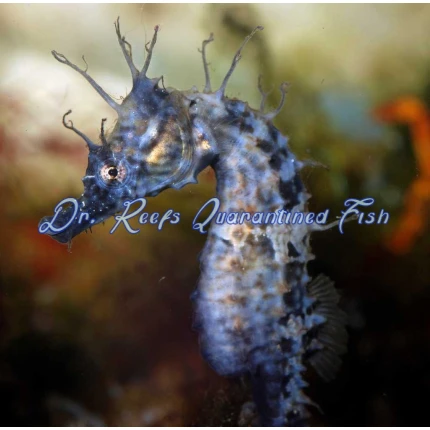
Some animals just stop you in your tracks. A seahorse is one of them. The moment you watch one drift through the water column, tuck its tail around a gorgonian branch, and tilt its head while hunting for food, something clicks inside you. You want one. You need one. And once you have one, nothing else in the hobby compares.
Dr. Reef’s Quarantined Fish carries three captive-bred seahorse species that represent the very best the hobby has to offer. The Lined Seahorse at $119.99 gives first-time seahorse keepers a solid and rewarding starting point. The Saddled Erectus Seahorse at $189.99 delivers a one-of-a-kind patterned animal that turns heads every single time. And the White’s Seahorse at $249.99 brings a rare Australian species into your living room with a size and presence that no other seahorse can match.
Before you choose, you need to understand what makes each one unique, what kind of tank setup each one needs, and how to keep them healthy for years to come. This guide covers all of it.
Captive-Bred Is the Only Starting Point Worth Considering
Before anything else, this point deserves your full attention. The source of your seahorse matters more than almost any other decision you will make in this process.
Wild-caught seahorses face enormous challenges adjusting to aquarium life. They often refuse frozen foods. They carry parasites and disease from the ocean. They arrive stressed from long transport chains. Even with the best intentions and the most carefully prepared tank, many wild-caught seahorses decline within weeks of arriving home.
Captive-bred seahorses are a completely different story. They grow up in tanks. They learn to hunt frozen mysis shrimp from their earliest days. They are comfortable with the sounds, lights, and water flow patterns of an aquarium environment. When a captive-bred seahorse arrives at your home, it is already halfway settled in before you even unbox it.
Every seahorse sold through Dr. Reef’s Quarantined Fish is captive-bred and goes through a full quarantine process before it ships. That quarantine step alone separates Dr. Reef’s from most sellers in the hobby. Each animal is observed, monitored for signs of stress or illness, and cleared as healthy before it ever gets packed for delivery. You are not gambling on an unknown animal. You are buying a confirmed, healthy specimen backed by people who genuinely care about what happens after it reaches you.
Three Species, Three Price Points, One Standard of Excellence
Lined Seahorse (Hippocampus erectus) at $119.99
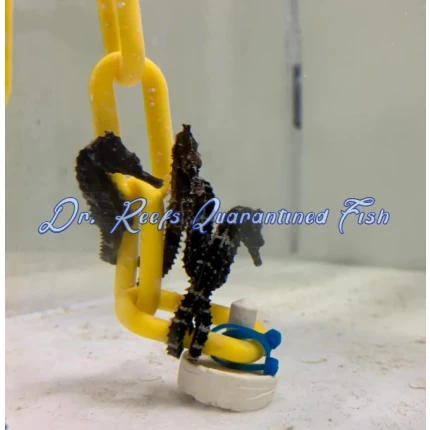
The Lined Seahorse is native to the Western Atlantic, ranging from the U.S. East Coast all the way down through the Gulf of Mexico and into South American waters. It is a mid-sized species that grows anywhere from five to seven inches at full maturity. Its colors shift across a wide range of natural tones including brown, tan, yellow, and orange, with faint vertical lines running along the body that give the species its common name.
This is the best choice for anyone entering the seahorse hobby for the first time. The Lined Seahorse is recognized across the hobby as one of the hardiest and most adaptable seahorse species in captivity. It handles minor water fluctuations better than most seahorses and settles into a feeding routine with relative ease when sourced from a reputable captive-bred facility.
The captive-bred specimens from Dr. Reef’s Quarantined Fish are already trained to accept enriched frozen mysis shrimp before they ship. That means no extended and frustrating transition from live food. Your seahorse arrives ready to eat what you offer it, which is one less challenge to manage during those critical first weeks.
Saddled Erectus Seahorse (Hippocampus erectus color morph) at $189.99
The Saddled Erectus is the same species as the Lined Seahorse at its foundation. Same science name, same care requirements, same temperament, same hardiness. What makes it dramatically different is something that draws every eye in the room the first time they see it.
This animal carries a bold saddle pattern across its body in black and white or brown and white tones that create a pinto horse appearance unlike anything else in the hobby. The pattern is not temporary. It is not something that fades with age, stress, or environmental shifts. The saddle markings on a Saddled Erectus Seahorse remain vivid and distinct for the entire lifespan of the animal. What you see on day one is what you will see years later.
Each specimen is individually unique. No two Saddled Erectus Seahorses share the exact same pattern. The placement of the saddle marks, the width of the bands, the contrast between colors, all of it varies from animal to animal. When you buy a Saddled Erectus Seahorse, you are getting a living original.
At $189.99, this is the choice for the hobbyist who wants all the reliability and ease of the Lined Seahorse combined with a visual impact that makes the tank impossible to walk past without stopping.
White’s Seahorse (Hippocampus whitei) at $249.99
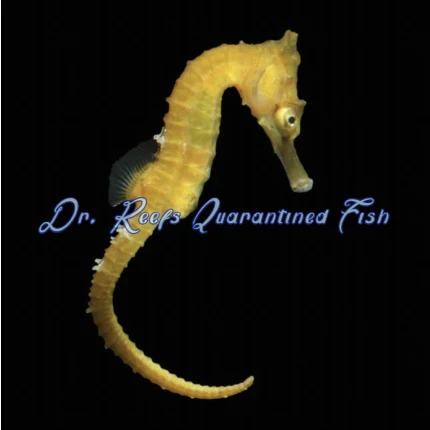
The White’s Seahorse occupies a category all its own. This species is native exclusively to the coastal waters of eastern Australia, found from Queensland down through New South Wales in temperate marine environments. It was named after John White, the surgeon general who accompanied the First Fleet to Australia in 1788, which already tells you something about how historically significant and regionally distinctive this animal is.
Growing to around six inches in length, the White’s Seahorse is a stocky, robust animal with variable coloration that spans yellow, orange, brown, purple, spotted, and banded patterns. It is simply one of the most visually diverse seahorse species available in the hobby. No two animals look quite the same, and the range of color expressions this species produces is remarkable.
Beyond appearance, the White’s Seahorse is recognized as one of the harder seahorse options available to home aquarists. Its size and physical robustness give it a level of resilience that smaller tropical species cannot always match. It can tolerate a slightly wider range of water flow than the Lined or Saddled species, which gives experienced hobbyists a little more flexibility in how they design the tank.
This is the premium choice. It is a rare species, a visually stunning animal, and a long-term companion for the dedicated reef keeper who wants something truly exceptional. At $249.99, the White’s Seahorse is worth every dollar.
Building the Right Tank Before Your Seahorse Arrives
Setting up the correct environment before your seahorse comes home is not optional. It is the foundation of everything. A seahorse placed into the wrong setup will struggle regardless of how healthy it was when it shipped. Get the tank right first, then order your animal.
Tank Dimensions
Height matters more than width for seahorses. These animals swim vertically, moving up and down through the water column throughout the day. A minimum height of 18 inches is necessary for natural movement and behavior. A 30-gallon tall tank works for a pair of Lined or Saddled Erectus Seahorses. For White’s Seahorse, starting at 40 gallons gives the larger animal the space it needs to live comfortably.
Floor space still matters for hitching post placement and overall movement, so a tank that is both tall and reasonably wide is always a better option than one that is narrow.
Water Flow
This is the mistake that trips up more new seahorse keepers than almost anything else. Too much water movement is genuinely harmful to seahorses. They are not built for current. They use their tails to hold on and stay anchored, and a powerful flow forces them to spend energy fighting to stay in place rather than feeding and resting.
Keep flow gentle and indirect. Avoid pointing powerheads or wavemakers at open water where your seahorses spend most of their time. Turn off all pumps during feeding sessions so your seahorses can hunt without working against the water. That single feeding habit improves nutrition and reduces daily stress more than almost any other change you can make.
Hitching Posts
Every seahorse needs something to hold onto. This is not optional equipment. Without hitching posts, a seahorse cannot rest properly, cannot feel secure, and will spend its entire day drifting and exhausting itself against whatever flow exists in the tank.
Provide multiple hitching options at varying heights throughout the tank. Gorgonian branches, macroalgae such as Caulerpa, smooth artificial coral structures, and PVC pipe sections all work well. The variety of heights gives your seahorse options to choose from based on its mood, hunger level, and comfort. A tank packed with hitching posts at every level is a seahorse tank done right.
Stability is the word that defines seahorse water care. These animals do not respond well to sudden shifts in temperature, salinity, or pH. Slow, consistent water changes performed weekly are far better than infrequent large changes that swing parameters in either direction.
Target a temperature between 72 and 78 degrees Fahrenheit. Keep pH between 8.1 and 8.4 and salinity between 1.020 and 1.025. Run a quality protein skimmer and maintain calcium, alkalinity, and magnesium levels to support healthy shell and skeletal development. Weekly water changes of 10 to 25 percent keep nutrients low and parameters stable.
Never use copper-based treatments in a seahorse tank for any reason. Copper is toxic to seahorses at any concentration. If medication is ever needed, use only treatments confirmed safe for seahorses and pipefish.
Feeding Your Captive-Bred Seahorse
All three species at Dr. Reef’s Quarantined Fish arrive already trained on enriched frozen mysis shrimp. That is a significant advantage over any wild-caught animal and it removes the most difficult part of early seahorse feeding entirely.
Feed two to three times per day using enriched frozen mysis shrimp as the main diet. Enriching frozen mysis with a vitamin supplement or HUFA before feeding adds nutritional depth that a plain frozen diet cannot provide on its own. This supplementation supports immune function and long-term health in ways that show up over months and years of keeping.
Target feed every single meal. Use a turkey baster or feeding pipette to place food directly in front of each seahorse individually. This method lets you watch each animal eat, confirm it is getting a full meal, and remove any uneaten food before it breaks down in the water. Decaying food in a seahorse tank raises ammonia and nitrates quickly, which creates the kind of water quality decline that threatens these animals faster than almost any other problem.
If a seahorse skips a feeding, take note. Skipping one meal occasionally is not a crisis. Skipping multiple meals in a row is a signal that something in the tank or with the animal needs your attention. Catching that early gives you the best chance to identify and correct the issue before it becomes serious.
Compatibility and Tank Companions
All three species are completely non-aggressive and will never cause problems with other fish or invertebrates. The concern is always the other direction. Fast-moving fish, aggressive eaters, and territorial animals create stress and food competition that a seahorse simply cannot handle.
The safest and most successful setup is a dedicated seahorse tank with only seahorses and perhaps a few peaceful pipefish. If you want to add other animals, limit yourself to very slow and non-aggressive options like small gobies, firefish, or cardinalfish in larger tank setups. Clean-up crew members like cleaner shrimp and snails generally coexist without problems.
Keep anemones, large LPS corals with aggressive tentacles, and any coral that stings away from a seahorse tank entirely. Soft corals and gorgonians are safe and actually serve double duty as both decoration and hitching posts.
All three species form bonded pairs and thrive with a companion of the same species. Pair bonded seahorses greet each other every morning with a brief dance, change colors together, and actively interact throughout the day in ways that make the tank endlessly engaging to watch.
Questions and Answers
Q: What makes the Saddled Erectus different from the standard Lined Seahorse? A: The care requirements are identical since both are Hippocampus erectus. The difference is purely visual. The Saddled Erectus carries a bold black and white or brown and white saddle pattern that remains permanently stable throughout its entire life. Every specimen has a unique pattern, making each one a true original.
Q: Is the White’s Seahorse harder to care for than the Lined Seahorse? A: Not significantly. The White’s Seahorse is actually considered one of the hardier seahorse species in captivity. Its larger size and greater physical robustness give it a level of resilience that works in your favor. It does have a heartier appetite, so consistent feeding is essential.
Q: How long will a captive-bred seahorse live with proper care? A: A well-maintained seahorse in a stable tank with regular feeding and clean water can live three to five years. Some hobbyists in particularly well-managed systems report animals living even longer.
Q: Why does feeding need to happen two to three times a day? A: Seahorses have no stomach. They pass food through their digestive system very quickly, which means they need frequent meals to meet their nutritional needs. A seahorse fed once a day will gradually decline in health even if each individual meal looks sufficient.
Q: Can I keep more than one species together? A: It is possible with careful planning in larger tanks, but keeping a single species together is always the cleaner and safer approach. Different species can have different temperature preferences and feeding rhythms that create subtle daily competition.
Q: Why buy from Dr. Reef’s Quarantined Fish specifically? A: Because the quarantine process changes everything. Every animal that ships from Dr. Reef’s has been observed, assessed, and cleared before it reaches your door. You are buying confirmed health, not hoping for it. That difference protects your tank, protects your investment, and gives you a far better experience from day one.
Your Next Step
Three species. Three price points. One quarantine standard that sets Dr. Reef’s apart from every other source in the hobby.
The Lined Seahorse at $119.99 is the ideal first seahorse. The Saddled Erectus Seahorse at $189.99 is the conversation-starting showpiece with a permanent pattern that never fades. The White’s Seahorse at $249.99 is the premium Australian species for the hobbyist who wants the largest, rarest, and most visually striking option available.
All three are captive-bred. All three are quarantined. All three ship healthy and ready to thrive in the tank you build for them.
Visit Dr. Reef’s Quarantined Fish today and choose the seahorse your tank has been waiting for.