
Fighting Conch for Sale: Sand-Cleaning Benefits, Care Guide, and Compatibility

Fighting Conch for Sale: Sand-Cleaning Benefits, Care Guide, and Compatibility
Have you ever looked at your sand bed and noticed it turning brown, slimy, or covered in algae? That is one of the most common problems reef tank owners face. The good news is that nature already has the perfect solution. It is called the Fighting Conch, and it is available right now for just $19.99 at Dr. Reef’s Quarantined Fish.
This one small invertebrate can completely change the health of your sand bed, your water quality, and your overall reef experience. Keep reading to find out exactly why.
What Is the Fighting Conch?
The Fighting Conch is a saltwater snail that belongs to the Strombus family. The most well-known species in the aquarium hobby is Strombus alatus, also called the Florida Fighting Conch. Several related species share the same common name and offer the same great benefits in a reef tank setting.
Do not let the name worry you. Despite being called a Fighting Conch, this animal is peaceful and calm in the aquarium. The name comes from the behavior of male conchs in the wild, where they use a hard claw-like structure on their body to push rivals away from territory or mates. In your tank, the Fighting Conch is a quiet and hardworking resident that keeps to itself and focuses entirely on cleaning.
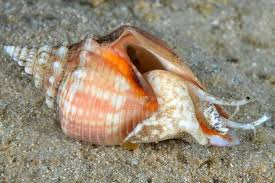
It grows up to four inches in length and has a beautifully spiraled shell that adds visual interest to your aquarium. As it matures, it develops a flared lip on the outer edge of its shell, a sign that it has reached adulthood. This is one of the most recognizable and rewarding invertebrates in the entire reef hobby.
Sand-Cleaning Benefits of the Fighting Conch
This is where the Fighting Conch truly earns its place in your tank. The sand bed is one of the most important and most neglected parts of a saltwater aquarium. Over time, film algae, diatoms, cyanobacteria, hair algae, leftover fish food, and organic waste all accumulate in the substrate. If left unchecked, this buildup drives up nutrients in your water, fuels algae outbreaks, and stresses every living thing in your system.
The Fighting Conch solves this problem by working directly inside the sand bed every single day.
It plows through the upper layers of the substrate, eating everything in its path. Film algae, diatoms, hair algae, cyanobacteria, detritus, and uneaten food all become its meals. As it moves through the sand, it stirs and aerates the substrate, which promotes the growth of healthy bacterial colonies living deeper in the sand. Those bacteria are a critical part of your tank’s natural filtration system. A stirred, oxygenated sand bed supports more beneficial bacteria, which means better biological filtration and cleaner water across the entire system.
One of the biggest advantages of the Fighting Conch over other sand-cleaning options is how gentle it is. Sand-sifting gobies are famous for creating underwater sandstorms that cloud your tank and bury your corals. The Fighting Conch works slowly and methodically without disturbing the water column. Your visibility stays clear and your corals stay right where you placed them.
The Fighting Conch also has an advantage over sand-sifting starfish. Starfish tend to dig too deep and wipe out the microscopic life that lives in your substrate. The Fighting Conch stays in the upper layers, cleaning the surface without destroying the deeper ecosystem. That is a level of precision that no other commonly available sand cleaner can match.
In short, the Fighting Conch does more for your sand bed than almost any other member of the cleanup crew, and it does it without causing any problems along the way.
Fighting Conch Care Guide
One of the best things about the Fighting Conch is how easy it is to care for. You do not need advanced equipment or complicated supplements. You just need the right setup and stable water conditions.
Tank Size
A minimum tank size of 20 gallons is recommended for one Fighting Conch. Since this animal lives entirely on the sand bed, floor space is more important than tank height. A longer, wider tank gives it more room to roam and more sand to clean. One Fighting Conch per 30 gallons is a good general rule for stocking.
Sand Bed Depth
This is the single most important factor in Fighting Conch care. Your sand bed needs to be several inches deep. The Fighting Conch burrows into the substrate to feed and rest, and without enough depth it cannot do either properly. A shallow sand bed will leave your conch hungry, stressed, and unable to thrive. If your current sand bed is thin, consider adding more sand before introducing a Fighting Conch to your system.
Water Parameters
Keep salinity between 1.023 and 1.026 specific gravity. Maintain a pH between 8.1 and 8.4. Calcium, alkalinity, and magnesium levels all need to stay in proper balance because the Fighting Conch builds its shell using calcium and needs a consistent supply to stay healthy and grow. Stable water parameters are the foundation of good Fighting Conch care.
Feeding
In a mature, well-established reef tank, the Fighting Conch will find most of its food naturally inside the sand bed. It grazes on algae, bacteria, detritus, and organic waste that accumulate in the substrate over time.
In newer tanks or smaller systems, the sand bed may not provide enough food on its own. In those cases, supplement its diet with dried seaweed, spirulina, sinking pellets, or frozen brine shrimp. A reliable sign that your Fighting Conch is hungry is when it begins crawling up the glass or climbing onto the rockwork. That behavior means it has exhausted the food supply in the sand and is searching for more. A simple supplemental feeding will take care of that right away.
Fighting Conch Compatibility
The Fighting Conch is one of the most compatible invertebrates you can add to a saltwater aquarium. It is fully reef safe and will not harm your corals, bother your fish, or attack other invertebrates. It stays low, works the sand bed, and ignores everything else in the tank.
The only thing to watch for is its size and weight. A fully grown Fighting Conch is a large, heavy animal that can accidentally tip over unsecured coral frags or knock into small rocks as it moves through the substrate. Before adding one to your tank, make sure all of your rockwork is stable and your coral frags are properly mounted. That one simple precaution will prevent any accidental damage.
When it comes to keeping more than one Fighting Conch together, it is possible in larger tanks. Males can show territorial behavior toward each other if they cross paths in a small space. In tanks 60 gallons and larger with a wide sand bed, multiple conchs can usually coexist without issues. In smaller tanks, one Fighting Conch is the safer and simpler choice.
Why Buy From Dr. Reef’s Quarantined Fish?
Buying livestock online always carries some risk. Pests, parasites, and disease can travel with any new animal and introduce serious problems into a tank you have worked hard to build. That risk is real, and it is the reason so many reef keepers are cautious about where they buy their animals.
Dr. Reef’s Quarantined Fish was built specifically to eliminate that risk.
Every Fighting Conch sold through Dr. Reef’s Quarantined Fish goes through a thorough quarantine and observation period before it is made available for sale. Each animal is monitored for signs of illness, stress, or pests and cleared before it ever ships to a customer. You are not buying an animal straight out of a holding tank that just came off a transport truck. You are buying an animal that has been watched, assessed, and confirmed healthy by a team that genuinely cares about the outcome.
That quarantine process is not just a selling point. It is the foundation of everything Dr. Reef’s Quarantined Fish does. Their commitment to healthy livestock protects your tank, protects your investment, and gives you the confidence to add new animals without second-guessing every decision.
The team at Dr. Reef’s Quarantined Fish are reef hobbyists themselves. They understand exactly what is at stake when a new animal enters your system. They answer questions, offer honest advice, and stand behind every animal they sell. That kind of knowledgeable and friendly customer service is hard to find in this hobby, and it makes a real difference.
At just $19.99, a Fighting Conch from Dr. Reef’s Quarantined Fish delivers real, measurable value to your reef tank. A cleaner sand bed. Better water quality. A healthier system overall. And the peace of mind that only comes from buying quarantined, healthy livestock from a source you can trust.
Add a Fighting Conch to Your Tank Today
Your sand bed works better with a Fighting Conch in it. Your water quality improves. Your algae problems shrink. And your cleanup crew gets one of its hardest-working and most reliable members.
Visit Dr. Reef’s Quarantined Fish today and pick up your Fighting Conch for $19.99. Your reef tank will thank you for it.