
Ribbon Eel for Sale: Why They Are Difficult to Keep

Ribbon Eel for Sale: Why They Are Difficult to Keep
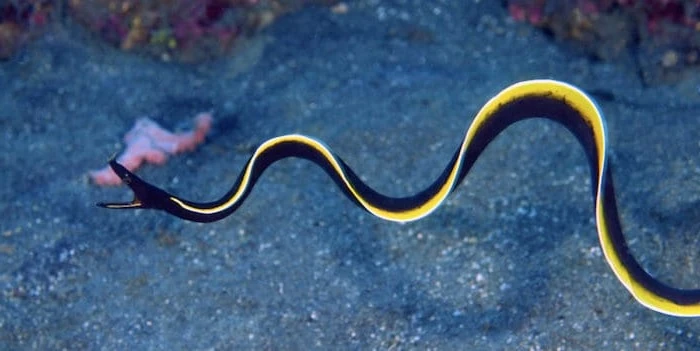
The Black Ribbon Eel, scientific name Rhinomuraena quaesita, also known as the Black Ghost Ribbon Eel and Bernis’ Moray, is one of the most visually stunning and genuinely challenging fish available in the saltwater hobby. It grows to 36 to 48 inches, requires a minimum tank of 75 gallons, is rated expert care level only, and is reef compatible with caution. Dr. Reef’s Quarantined Fish offers the Black Ribbon Eel at $199.99, listed under Saltwater Fish and Eels at drreefsquarantinedfish.com. Dr. Reef’s quarantine protocol for this species includes a minimum 6 to 8 week observation period extended specifically for feeding assessment, the single most critical factor in long term survival for this species.
What Is the Black Ribbon Eel?
The Black Ribbon Eel is a member of the Muraenidae family, the true moray eels. Its jet-black body paired with a brilliant yellow to golden-yellow dorsal fin running the entire length of the body creates a ribbon-like silhouette unlike anything else in the marine hobby. The bright yellow nostrils form distinctive horn-like projections above the face that make it instantly recognizable even to people who have never seen one before.
It is native to the Indo-Pacific region, ranging from East Africa to French Polynesia. In the wild it lives on sandy bottoms near coral reefs, lagoons, and rubble areas at depths between 3 and 200 feet, almost always residing in a burrow with only its head protruding above the substrate. It rarely leaves its burrow voluntarily and almost never ventures fully into open water.
Dr. Reef’s lists this species under Saltwater Fish and Eels at drreefsquarantinedfish.com.
How Much Does the Black Ribbon Eel Cost at Dr. Reef’s?
The Black Ribbon Eel at Dr. Reef’s Quarantined Fish is $199.99. This price reflects a specimen that has gone through one of the most demanding quarantine protocols in Dr. Reef’s entire catalog. The standard quarantine period for most fish at Dr. Reef’s is thorough. For the Black Ribbon Eel it is extended to a minimum of 6 to 8 weeks specifically because feeding assessment takes priority over everything else with this species. A specimen that has not established reliable feeding behavior in quarantine does not ship. That standard alone separates a Dr. Reef’s Black Ribbon Eel from one pulled from a standard fish store holding tank.
Dr. Reef’s ships overnight via UPS Tuesday through Thursday with delivery Wednesday through Friday. Free shipping on orders over $500. Payment via PayPal, Stripe, and Venmo. Dr. Reef’s is a proud sponsor of both Reef2Reef and ReefCentral.
Why Is the Ribbon Eel So Difficult to Keep?
This is the most important question any potential buyer needs to answer before purchasing and the honest answer comes directly from the Dr. Reef’s product page.
- The first challenge with the Black Ribbon Eel is its mortality rate which is one of the highest of any commonly available marine fish. The primary cause of death in captivity is starvation. Many specimens simply refuse to eat in a new tank environment. This is not a transitional phase that resolves quickly. Some individuals refuse food for weeks. Others never successfully transition to a captive diet regardless of what is offered. Poor feeding response is listed as the primary cause of mortality for this species, full stop.
- The second challenge is stress sensitivity. The Black Ribbon Eel is described as extremely shy and reclusive. It is highly stressed by aggressive tankmates, excessive water movement, bright lighting, and frequent disturbances near the tank. A stressed ribbon eel stops eating even faster than an unstressed one.
- The third challenge is its exceptional ability to escape. Every gap, every equipment opening, every unsecured lid joint is a potential exit point. A ribbon eel that escapes its tank does not survive. Securing the tank completely before the eel arrives is mandatory, not optional.
What Does the Black Ribbon Eel Look Like? Color Phases Explained
The Black Ribbon Eel goes through three distinct color phases across its lifespan, confirmed on the Dr. Reef’s product page.
- The black phase is the juvenile and male stage. The body is jet-black with a bright yellow to golden-yellow dorsal fin running the entire body length. Bright yellow nostrils form the distinctive horn projections. This is the phase in which almost all specimens available in the aquarium trade are found.
- The blue phase occurs when the animal transitions to female. The body shifts to electric blue with the yellow dorsal fin remaining. This transition is extremely rare to observe in aquariums.
- The yellow phase represents the mature female stage where the entire body becomes yellow. This phase is almost never seen in captivity.
- Rapid color dulling in any phase indicates stress or starvation and is one of the earliest visible warning signs that something is wrong. Maintaining excellent water quality and consistent feeding directly maintains the vibrant yellow dorsal fin color.
What Tank Setup Does the Black Ribbon Eel Need?
The minimum confirmed tank size on the Dr. Reef’s product page is 75 gallons, with 100 gallons or more strongly recommended.
The most critical tank requirement beyond size is a deep sand bed. A minimum of 4 to 6 inches of fine sand is essential for natural burrowing behavior. The Black Ribbon Eel must be able to create and maintain a burrow. Without one it cannot feel secure and it will not eat.
PVC pipes or caves with half inch to 1 inch diameter openings provide supplemental hiding structures that help the eel settle faster. Minimal rockwork is preferred to maximize available sand area. Subdued to moderate lighting and low to moderate water flow match the natural conditions of the lagoon and rubble environments this species comes from.
The lid must be completely sealed. Every gap must be closed before the eel arrives. Every equipment hole, every feeding port, every filter return opening. No exceptions.
Confirmed Water Parameters for the Black Ribbon Eel
Per the Dr. Reef’s product page. Temperature 74 to 80 degrees Fahrenheit. Salinity 1.023 to 1.025. pH 8.1 to 8.4. Alkalinity 8 to 12 dKH. Ammonia and nitrite at 0 ppm. Nitrate below 10 ppm. Excellent water quality is essential for this species. Elevated nitrates combined with the stress sensitivity of the ribbon eel create a rapid downward health spiral that is very difficult to reverse.
How to Feed the Black Ribbon Eel
Feeding is the central challenge and the make or break factor for this species. Dr. Reef’s product page is direct about what to expect.
Live grass shrimp and live ghost shrimp are the most readily accepted foods. Live feeder fish may also be used sparingly. Fresh or frozen shrimp and fish may eventually be accepted but require patience. Silversides and krill are options once the eel is established and feeding reliably.
Many specimens refuse to eat at all in captivity. Weaning onto frozen foods requires persistent, patient effort over extended periods. The recommended technique is target feeding directly at the burrow entrance using a feeding stick to offer food close to the eel’s head.
Never approach the burrow aggressively. Small, calm, deliberate feeding attempts two to three times per week give the best chance of establishing a feeding response.
Feed two to three times weekly once a reliable feeding pattern is established. Do not overfeed. Uneaten food in a burrow environment creates significant water quality problems.
Is the Black Ribbon Eel Reef Safe?
Reef compatible with caution per the confirmed Dr. Reef’s product page. The Black Ribbon Eel is generally safe with corals and sessile invertebrates. It may consume very small fish under 2 inches and ornamental shrimp. Larger peaceful fish are safe. Aggressive fish that harass the eel are not appropriate tankmates regardless of their size.
What Tankmates Work With the Black Ribbon Eel?
The Dr. Reef’s product page lists compatible tankmates as peaceful tangs, angelfish, butterflyfish, wrasses, peaceful triggers, and peaceful community fish of 4 inches or larger.
Avoid very small fish under 3 inches which may be eaten. Avoid aggressive species that may harass the eel. Avoid ornamental shrimp which are at risk of being consumed. Avoid other aggressive eels. Avoid large predators. Avoid fin-nippers. The Black Ribbon Eel must live in a peaceful, low-stress environment above all else.
Why Dr. Reef’s Extended Quarantine Protocol Matters for This Species
Most fish stores and online retailers do not quarantine ribbon eels at all. They arrive, go into a holding tank, and ship out when someone orders them. Whether or not they are eating is not verified. Whether or not they are stressed is not assessed. This is the primary reason ribbon eels have the reputation they do in the hobby.
Dr. Reef’s runs a quarantine period for the Black Ribbon Eel with the express purpose of feeding establishment verification before the fish ships. Preventative parasite treatment, stress reduction protocols, and dietary conditioning attempts with various foods are all part of the protocol. A specimen that has not established reliable feeding does not ship. For a species where starvation is the number one cause of death, that commitment before the animal ever reaches your tank is the most meaningful safety net available in the online marine livestock market.
Is the Black Ribbon Eel Right for You?
The Dr. Reef’s product page rates this species expert only and that rating is accurate and not inflated. This is a fish for experienced marine keepers who understand the specific commitments required, have a properly sealed tank with deep sand bed already in place, are prepared for a potentially extended and uncertain feeding establishment period, and genuinely value the extraordinary visual impact and fascinating behavior this species delivers when successfully kept.
It is not a fish for community reef tanks, beginner keepers, or anyone who cannot dedicate focused attention to feeding attempts over weeks or months.
Frequently Asked Questions About the Black Ribbon Eel
Q: Why is the ribbon eel so hard to keep?
A: The primary reason confirmed on the Dr. Reef’s product page is feeding refusal. Many specimens refuse to eat in captivity. Poor feeding response is the number one cause of mortality. Combined with extreme stress sensitivity and exceptional escape ability, this species requires expert level commitment before purchase.
Q: What is the minimum tank size for a Black Ribbon Eel?
A: 75 gallons confirmed minimum per Dr. Reef’s product page. 100 gallons or more is strongly recommended.
Q: What are the confirmed water parameters?
A: Temperature 74 to 80 degrees Fahrenheit, salinity 1.023 to 1.025, pH 8.1 to 8.4, alkalinity 8 to 12 dKH, nitrate below 10 ppm.
Q: How big does the Black Ribbon Eel get?
A: Adult size is 36 to 48 inches confirmed on the Dr. Reef’s product page. In home aquariums, 30 to 40 inches is most common.
Q: Is the Black Ribbon Eel reef safe?
A: Reef compatible with caution. It is generally safe with corals and larger fish but may eat small fish under 2 inches and ornamental shrimp.
Q: What do the different color phases mean?
A: Black phase is juvenile and male. Blue phase is the female transition, extremely rare in captivity. The yellow phase is mature female, almost never seen in home aquariums.
Q: Why is the quarantine at Dr. Reef’s different for this species?
A: The quarantine protocol for the Black Ribbon Eel is extended to a minimum of 6 to 8 weeks specifically for feeding assessment and establishment. A specimen that has not established reliable feeding behavior does not ship. This is confirmed directly on Dr. Reef’s product page.
Q: How long does the Black Ribbon Eel live?
A: 5 to 10 years with proper care, though long term maintenance is confirmed to be challenging even for expert keepers.
The Bottom Line on the Black Ribbon Eel
The Black Ribbon Eel is one of the most extraordinary looking fish in the entire marine hobby and one of the most honestly difficult to keep successfully. The feeding challenge is real. The escape risk is real. The stress sensitivity is real. None of these facts are reasons to avoid this fish if you are genuinely prepared for them. They are reasons to go in with both eyes open and to source from a seller who takes the preparation seriously.
At $199.99 from Dr. Reef’s Quarantined Fish, backed by a minimum 6 to 8 week extended quarantine focused specifically on feeding establishment, overnight UPS delivery, and a trusted reputation on Reef2Reef and ReefCentral, you are getting the most responsibly sourced Black Ribbon Eel available from any online retailer in the hobby.