
Cerith Snails for Sale: Complete Reef Tank Cleaning Guide

Cerith Snails for Sale: Complete Reef Tank Cleaning Guide
Not all reef tank heroes are large, colorful, or dramatic. Some of the most valuable members of a reef cleaning crew are small, unassuming, and spend most of their time doing work nobody else wants to do. The Cerith Snail is exactly that kind of hero. It disappears into the sand, works through the night, surfaces to clean the glass, and keeps the areas of your tank that most hobbyists never think about in genuinely excellent condition. This complete guide covers everything you need to know about Cerith Snails and why they deserve a place in almost every reef system.
What Is a Cerith Snail?
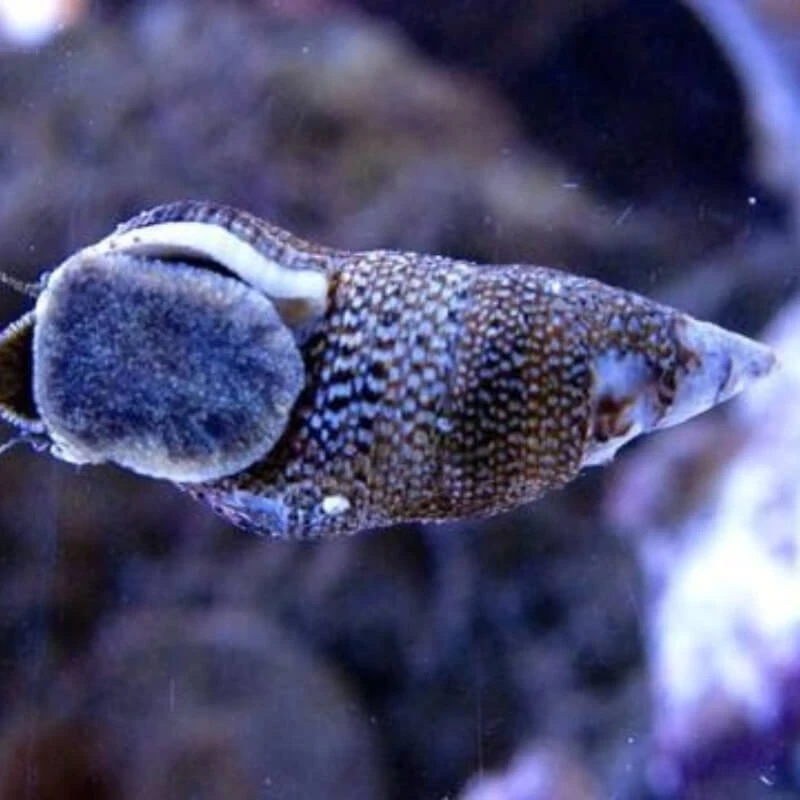
Cerith Snails belong to the family Cerithiidae and encompass several species commonly sold in the reef hobby, most notably Cerithium muscarum and related species from the Caribbean and Atlantic coastal waters. They feature a distinctive elongated, spiral shell that tapers to a point, giving them a narrow, tower-like profile. Shell coloring ranges from light tan to dark brown with subtle patterning. They stay small, typically reaching half an inch to one inch in length, which makes them one of the more compact clean-up crew members available.
What Do Cerith Snails Eat?
Sand Bed Detritus
This is the Cerith Snail’s primary specialty and greatest strength. Cerith Snails burrow into the sand bed and consume decomposing organic matter, leftover food particles, fish waste, and bacterial films that accumulate below the surface. This work prevents the sand bed from becoming a nutrient trap that slowly degrades water quality from the bottom up.
Film Algae on Glass
Cerith Snails regularly emerge from the sand to graze film algae from glass surfaces. They are not as fast or aggressive as Trochus Snails on glass but they contribute consistently to glass cleanliness as part of a comprehensive cleaning crew.
Diatoms
Cerith Snails graze diatom films from both sand surface and glass, making them particularly valuable in new tanks experiencing the common brown diatom bloom phase that affects most reef systems during their first weeks and months.
Cyanobacteria
This is an area where Cerith Snails provide unique value. They consume cyanobacteria, the red or blue-green bacterial mat that periodically plagues reef tanks. Most snail species avoid cyanobacteria entirely. Cerith Snails actively graze it, providing natural control that supplements other cyano management strategies.
Various microscopic algae species that grow in the sand bed and on substrate surfaces get consumed by active Cerith Snails working through the substrate throughout the day and night.
Why Cerith Snails Are Nocturnal
Cerith Snails are most active at night. During daylight hours they often bury themselves in the sand or rest in shaded areas of the rock. After the lights go out, they emerge and begin active grazing across glass, sand, and rock surfaces. This nocturnal schedule means hobbyists often underestimate how much work Cerith Snails are doing because most of it happens when nobody is watching.
The Sand Bed Maintenance Role
Why Sand Bed Health Matters
The sand bed is one of the most important and most neglected parts of a reef system. Organic waste that accumulates in the substrate breaks down and releases nutrients into the water column, driving algae growth and reducing water quality throughout the tank. A neglected sand bed becomes a nutrient factory that undermines every other water quality effort you make.
How Cerith Snails Help
Cerith Snails physically disturb and aerate the top layer of the sand bed through their constant burrowing activity. This prevents anaerobic dead zones from forming in the upper substrate layers, which is especially important in shallow sand beds of one to two inches depth. Their feeding removes organic material before it fully breaks down into dissolved nutrients.
Working With Other Clean-Up Crew Members
Cerith Snails occupy a niche that complements rather than competes with other cleaning crew species. Trochus Snails focus on rock and glass surface algae. Nassarius snails are superior large detritus scavengers that emerge dramatically for meaty food. Hermit crabs handle larger debris. Bumblebee Snails target deeper burrowing worms and small invertebrates. Cerith Snails fill the sand surface and glass film niche that most other species handle only partially. A complete cleaning crew includes representatives of several complementary species working across different zones of the tank simultaneously.
Cerith Snail Pricing at Dr. Reef’s
At Dr. Reef’s Quarantined Fish, Cerith Snails are priced at $14.99 to $69.99 at Dr.Reef’s Quarantined fish depending on quantity selected. The quantity pricing makes Cerith Snails one of the most cost-effective clean-up crew investments available in the hobby. Stocking them at effective population levels is genuinely affordable, especially when ordered alongside other clean-up crew members from Dr. Reef’s to consolidate shipping.
Every Cerith Snail from Dr. Reef’s goes through professional quarantine before shipping. This matters significantly for snails because unquarantined invertebrates can carry pest anemones, predatory flatworms, mantis shrimp, and other unwanted hitchhikers that arrive hidden inside or on the shell. Dr. Reef’s quarantine process screens for these problems before anything ships to your tank.
How Many Cerith Snails Do You Need?
General Stocking Recommendation
One Cerith Snail per one to two gallons of display volume is a widely used guideline for establishing an effective population. A 55-gallon reef system with a sand bed benefits from 30 to 55 Cerith Snails working as the primary sand surface and glass film maintenance crew.
Adjust for Sand Bed Depth and Size
Larger, deeper sand beds need more Cerith Snails to maintain adequate coverage. Bare bottom tanks see less benefit from Cerith Snails specifically since their primary role is sand bed maintenance. For bare bottom systems, prioritize Trochus and Turbo Snails instead.
Tank Requirements
Tank Size
Cerith Snails work in tanks from 10 gallons and up. Their tiny size and extremely low bioload make them perfect for nano reef systems where larger snail species would be too disruptive.
Sand Substrate
A sand bed of at least one inch depth gives Cerith Snails the substrate they need to burrow and feed effectively. They work in both fine and medium grain sand but perform best in fine aragonite sand commonly used in reef systems.
Water Parameters
Standard reef parameters are ideal. Temperature between 72 and 78 degrees Fahrenheit. Salinity at 1.023 to 1.025. Stable water chemistry without sudden parameter swings keeps snail populations healthy and active over the long term.
Breeding Cerith Snails
Cerith Snails spawn in reef tanks with stable parameters. They release ribbon-like egg masses that attach to glass surfaces in spiral patterns. Many hobbyists notice these egg masses before ever noticing the snails themselves. The larvae are planktonic and rarely survive to settle in most home aquarium systems, but occasional juveniles do appear in well-established systems with abundant microalgae food sources.
Are Cerith Snails Reef Safe?
Completely. Cerith Snails do not bother corals, fish, or other invertebrates. They are passive grazers and scavengers that interact only with algae and organic matter in the tank environment.
Quick Q and A
Q: Why do I never see my Cerith Snails even though I bought many of them?
A: Cerith Snails are nocturnal and spend daylight hours buried in the sand or resting in shaded areas. Turn on a dim light after the tank lights have been off for an hour and you will likely see your entire population actively working across the glass and sand.
Q: How much do Cerith Snails cost at Dr. Reef’s?
A: Cerith Snails are priced at $14.99 to $69.99 at Dr.Reef’s Quarantined fish depending on quantity, with professional quarantine included on every order.
Q: Can Cerith Snails replace Nassarius Snails for sand bed cleaning?
A: They complement each other rather than replace each other. Nassarius snails are superior large detritus scavengers that respond powerfully to meaty food smells. Cerith Snails handle constant fine detritus, film algae, diatoms, and cyanobacteria grazing that Nassarius Snails do not address. Both together create a more complete sand bed maintenance system.
Q: Will Cerith Snails eat my cyanobacteria outbreak?
A: Yes. Cerith Snails are among the few clean-up crew species that actively graze cyanobacteria. A large, active Cerith population combined with improved water flow and nutrient export provides meaningful natural control of mild to moderate cyano outbreaks.
Q: Are Cerith Snails good for nano reef tanks?
A: They are one of the best clean-up crew choices specifically for nano reef systems. Their tiny size, low bioload, and broad diet make them ideal for small tanks where larger snail species would be too disruptive or produce too much waste.
Q: How long do Cerith Snails live in a reef tank?
A: With stable water parameters and adequate food supply, Cerith Snails can live two to three years in captivity. Their small size and passive nature means they face fewer threats from tankmates than larger invertebrates.
Key Takeaways on Snail Care
The Cerith Snail does not ask for attention or admiration. It works through the night, cleans the sand, grazes the glass, consumes diatoms and cyanobacteria, and keeps the parts of your tank that nobody else reaches in genuinely excellent condition. At $14.99 to $69.99 from Dr. Reef’s Quarantined Fish, stocking a proper Cerith Snail population is one of the most affordable and highest-return investments available in the reef hobby. Every snail arrives professionally quarantined and ready to get to work. Visit Dr. Reef’s Quarantined Fish today and give your reef the complete cleaning crew it deserves.