
Purple Tilefish for Sale: Tank Setup, Feeding and Survival Tips

Purple Tilefish for Sale: Tank Setup, Feeding and Survival Tips
Some fish are pretty. Some fish are interesting. And then there is the Purple Tilefish.
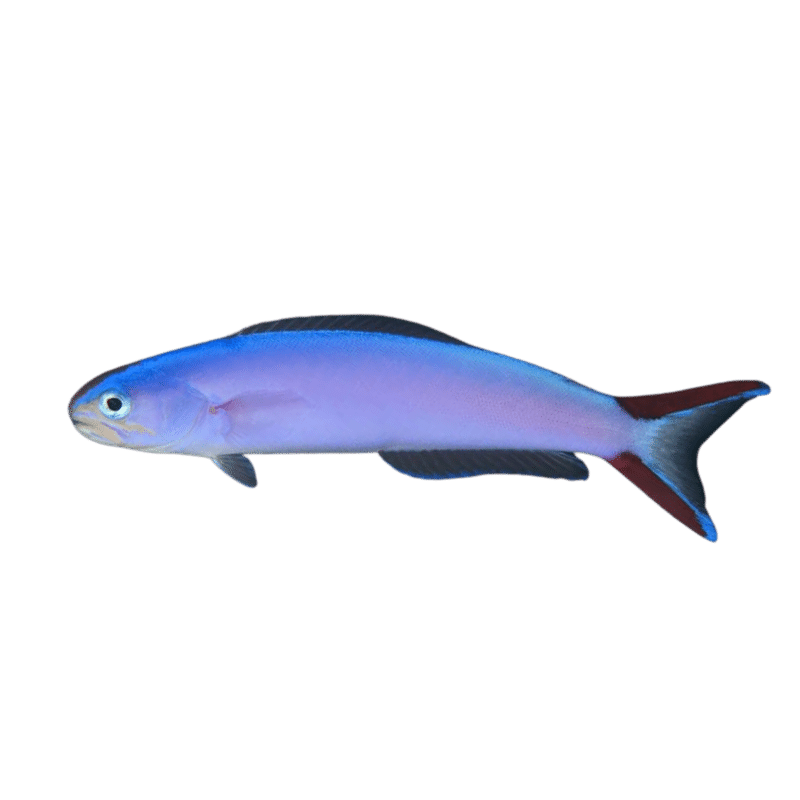
This fish is both at the same time. Deep violet purple body. Electric blue trim along the fins. A personality that is shy at first but completely captivating once it settles in. If you have never seen one swimming in a well-set-up reef tank, you are missing one of the most stunning fish in the saltwater hobby.
But here is the honest truth. The Purple Tilefish has a reputation for being difficult to keep. Not because it is fragile. But because most people set up their tank wrong before the fish even arrives.
Get the setup right and this fish thrives. Get it wrong and you will be searching for answers fast.
What Is the Purple Tilefish?
The Purple Tilefish, known scientifically as Hoplolatilus purpureus, is a deepwater fish found across the Indo-Pacific. In the wild it lives near sandy rubble zones at depth, often close to burrows it digs and defends as its own.
The coloring is what stops people in their tracks. The body is a rich, deep purple that almost glows under reef lighting. The blue edging along the dorsal and tail fins adds a contrast that photographs do not do justice. You have to see it in person to really appreciate it.
It is a peaceful fish that minds its own business. It does not bother corals. It does not bother other fish unless they invade its personal space near its burrow. That makes it a genuinely reef safe addition for the right tank.
Tank Setup: This Part Is Not Optional
The Purple Tilefish is a jumper. That is the number one thing every owner needs to understand before purchasing.
This fish is fast, nervous, and will launch itself out of an open tank the moment it feels threatened. A tight fitting lid or a very fine mesh cover is not optional. It is required. No exceptions.
Beyond that, here is what the tank needs to look like for this fish to feel safe and start eating.
Resting Place
A deep sand bed of at least three to four inches gives the fish somewhere to dig and build a burrow. Without it, the fish stays stressed and hides constantly. With it, you will watch fascinating natural behavior every single day.
Rock structure around the sand bed gives the fish cover and confidence. It does not need a cave to hide in but it needs to feel like escape routes exist in every direction.
Tank size should be 75 gallons minimum. These fish need horizontal swimming space and enough room to establish a territory without feeling crowded.
Water flow should be moderate. Heavy flow near the sand bed stresses this fish out and disrupts the burrow it works hard to maintain.
Feeding the Purple Tilefish
This is where a lot of keepers run into trouble early on.
The Purple Tilefish can be a stubborn eater when it first arrives. A stressed fish in a new tank will often refuse food for several days. That is normal. Do not panic and do not give up.
The key is starting with frozen mysis shrimp and small meaty foods targeted near the bottom of the tank. This fish feeds close to the sand, not at the surface. Target feeding with a turkey baster or feeding stick gets food directly into its zone without other fish stealing it first.
Once the fish is eating consistently, you can expand to other frozen foods. Two small feedings per day works better than one large one. Variety keeps it healthy long term.
Price and Why Quarantine Changes Everything
The Purple Tilefish is available at Dr. Reef’s Quarantined Fish for $249.99 at drreefsquarantinedfish.com.
That price includes something most online fish stores will never offer. A complete quarantine process before the fish ships to your door. External parasite treatment. Internal parasite treatment. Daily feeding checks. Full health clearance.
A fish that is sensitive to stress needs to arrive in the best possible condition. That is exactly what the quarantine process at Dr. Reef guarantees.
Quick Questions New Buyers Ask
- Do I still need a quarantine tank for this fish?
Not for a Purple Tilefish from Dr. Reef. The full quarantine is already done. A short observation period of a few days in a separate tank is always a good idea just to watch the fish settle in before it enters your display.
- Is the Purple Tilefish reef safe?
Yes. It does not nip at corals or bother invertebrates. It spends most of its time near the sand bed digging and maintaining its burrow. Keep it with calm peaceful tankmates and it will thrive without bothering anything else in the tank.
- How do I acclimate the Purple Tilefish when it arrives?
Dr. Reef includes a simple acclimation guide with every order. Float the bag in your tank for 20 to 30 minutes, then gently move the fish into your display with the lights off. Have the sand bed ready and the lid secured before the fish goes in.
Ready to Add One to Your Tank?
The Purple Tilefish rewards patient keepers who do the setup right. Tight lid. Deep sand bed. Target feeding. A little patience in the first week.
Do all of that and you get one of the most breathtaking fish the saltwater hobby has to offer swimming in your living room every single day.
Visit https://drreefsquarantinedfish.com/ to order your Purple Tilefish today.