
Clown Triggerfish

How Big Do Clown Triggerfish Get? Growth, Tank Size, and Care
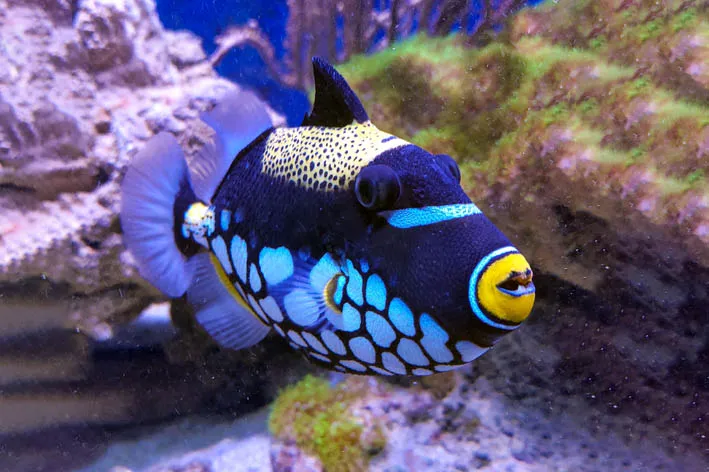
The Clown Triggerfish is one of those fish that stops people in their tracks. Bold white polka dots on a jet-black body, a vivid yellow mouth, tribal-looking patterns, it looks almost painted. But before you fall in love and pull out your credit card, there’s one very important thing to understand: this fish gets big, and it gets bold. Here’s everything you need to know before bringing one home.
How Big Do Clown Triggerfish Actually Get?
In the wild, the Clown Triggerfish (Balistoides conspicillum) can reach up to 20 inches (50 cm) in length. In a home aquarium, most specimens top out somewhere between 10 and 15 inches, with a well-fed, healthy adult in a large system occasionally pushing toward that wild maximum.
What makes this important is the growth trajectory. Juveniles are sold anywhere from half an inch to a few inches long, and they look almost impossibly cute at that size. But they grow steadily, and as they get bigger, their personality changes too. Around the 8-inch mark is when most hobbyists notice the shift from a somewhat shy, hide-prone fish to a bold, fearless, territory-owning presence that basically runs the tank. Plan for the adult size from day one, not the size they are when you buy them.
Their lifespan in captivity can stretch from 10 to 20 years with proper care, which means this is a long-term commitment. You’re not just buying a fish, you’re acquiring a tank centerpiece that will grow with you for years.
What Tank Size Do You Need?
This is where a lot of first-time Clown Trigger owners get caught off guard. Juveniles can be started in a smaller system, but as a general rule, 120 gallons is considered the practical minimum for a young adult, and serious keepers recommend 300 gallons for a fully grown specimen.
The reason isn’t just body length, it’s behavior. Clown Triggers are relentless explorers. They patrol their tank constantly, rearrange rockwork to suit their preferences, and claim space as their own. A cramped environment ramps up stress and aggression significantly. A larger footprint doesn’t just make the fish happier; it makes the whole tank more manageable.
When aquascaping for a Clown Trigger, use heavily secured live rock. These fish are strong enough to grab and move rock formations, and an unsecured stack can collapse on other fish or damage equipment. Leave large crevices and cave-like spaces for the trigger to sleep in. They lock themselves into rockwork at night using their dorsal spine and genuinely need that space to feel secure.
Good filtration is non-negotiable. Clown Triggers produce a significant bioload and are messy eaters, so a robust skimmer and high-quality filtration system will go a long way toward keeping water parameters stable.
Target water parameters:
- Temperature: 72°F – 78°F
- pH: 8.1 – 8.4
- Salinity: 1.020 – 1.025
Are Clown Triggers Reef Safe?
No, and this is non-negotiable. Despite coming from coral reef environments in the Indo-Pacific, Clown Triggerfish are absolutely not reef safe. They will rearrange corals, knock them off rocks, and munch on any invertebrate they can get their teeth around. Shrimp, crabs, snails, and clams are all on the menu. Their teeth are strong enough to crack open hard-shelled prey, and they’ve even been known to scratch tank glass as adults.
Feeding a Clown Triggerfish
Clown Triggers are carnivores and enthusiastic eaters. In the wild, they prey on sea urchins, crustaceans, and mollusks. In captivity, feed them a varied diet of meaty foods like mysis shrimp, krill, silversides, clams, and squid.
Feed once or twice a day and remove any uneaten food promptly. Overfeeding is a common cause of water quality problems with these fish, and elevated nitrates will affect their health over time. Some hobbyists soak food in a garlic supplement occasionally to help boost immunity and deter external parasites.
One thing Clown Triggers are known for is trainability. With patience, many will learn to take food directly from your hand. Just be aware that those teeth are sharp, and an enthusiastic trigger doesn’t always aim carefully. Watch your fingers.
Quarantine Matters More Than You Think
At Dr. Reef’s Quarantined Fish, every fish goes through a proper quarantine process before shipping, and for a fish like the Clown Trigger, that matters. Triggerfish are generally hardy once established, but newly imported wild-caught fish often carry parasites or pathogens that aren’t visible on arrival. Introducing an unquarantined fish directly into a display tank puts every other fish at risk.
Buying a pre-quarantined Clown Trigger means you’re starting with a fish that has already been observed, stabilized, and confirmed healthy, which gives both the fish and your existing setup the best possible chance. You can check the current availability of Clown Triggerfish and other triggerfish species at Dr. Reef’s triggerfish page.
Key Takeaways
The Clown Triggerfish is one of the most visually striking and personality-rich fish in the saltwater hobby. But it comes with real demands: a big tank, careful tank mate selection, no corals or invertebrates, and a long-term commitment. Get all that right, and you’ll have a fish that genuinely interacts with you, patrols its tank with authority, and turns heads every single time someone sees your aquarium. Just go in prepared, and give it the space it deserves.