
Aiptasia Eating Filefish

Aiptasia Eating Filefish: Natural Pest Control for Reef Tanks
If you have ever dealt with an Aiptasia outbreak in your reef tank, you already know how fast these pest anemones can spiral out of control. They sting nearby corals, reproduce rapidly from even the smallest fragment left behind, and resist most manual removal attempts. Chemical treatments work inconsistently, and many are risky to use in established reef systems. One of the most effective, natural, and hobbyist-approved solutions is the Aiptasia Eating Filefish (Acreichthys tomentosus), a species that has earned a loyal following among reef hobbyists for doing exactly what its name promises.
What Is the Aiptasia Eating Filefish?
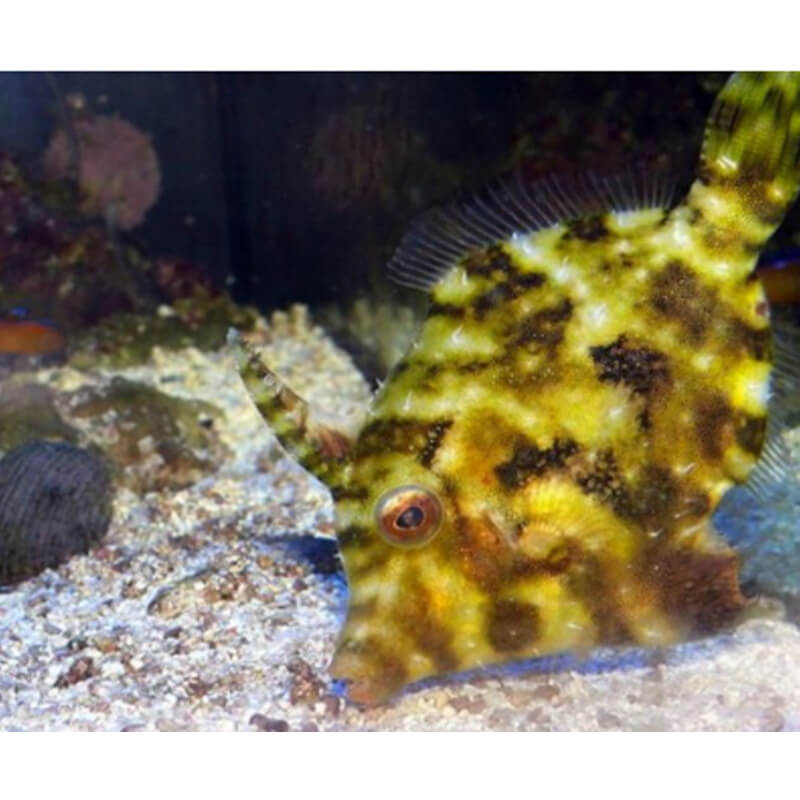
Also known as the Matted Filefish or Bristle-tail Filefish, this species is native to the shallow coral reefs, seagrass beds, and rubble zones of the Indo-Pacific. Adults grow to around 4 inches in length and have a flattened, laterally compressed body covered in irregular skin flaps and mottled brown, green, and tan coloration that helps them blend naturally with live rock and reef rubble. It is not the flashiest fish in the hobby, but what it lacks in color it more than makes up for in practical value.
In the wild, Aiptasia Eating Filefish graze on a wide variety of small invertebrates including hydroids, small anemones, and encrusting organisms. This makes them a natural biological fit for reef tanks dealing with Aiptasia infestations. A single well-conditioned filefish can make a visible difference in a moderate Aiptasia problem within just a few weeks of introduction.
Tank Setup for Aiptasia Eating Filefish
A minimum tank size of 30 gallons is suitable for a single specimen, though larger tanks of 50 gallons or more give this fish more territory to patrol and more Aiptasia colonies to work through. The aquascape should include plenty of live rock with open surfaces for grazing, combined with caves and overhangs that this species uses for shelter and resting. Moderate water flow suits it well.
Keep water temperature between 72 and 78 degrees Fahrenheit, salinity at 1.023 to 1.025, and pH between 8.1 and 8.4. A quality protein skimmer and regular water changes help maintain the water quality this species needs for long-term health. The Aiptasia Eating Filefish is not particularly sensitive compared to other reef species, but stable parameters always produce better results than fluctuating ones.
Will It Actually Eat Aiptasia?
This is the most common question hobbyists ask, and the honest answer is that not every individual is guaranteed to target Aiptasia consistently. Fish that were actively feeding on Aiptasia before purchase tend to be far more reliable than those that were not. Captive-bred specimens and fish sourced from reputable suppliers who condition their livestock before sale are your best bet for consistent pest control behavior.
For severe infestations, keeping a compatible pair often produces faster results than relying on a single fish. Two individuals working through the tank simultaneously can clear colonies much more efficiently, though you should monitor for any territorial behavior between specimens in smaller systems.
It is also worth noting that the Aiptasia Eating Filefish does not always eliminate every last Aiptasia in the tank. Tiny recruits and newly settled individuals may escape notice initially. However, the fish tends to keep populations in check effectively, preventing any single colony from growing large enough to threaten nearby corals.
Supplemental Feeding and Reef Safety
Even with an active Aiptasia population to graze on, supplemental feeding is important. Offering frozen mysis shrimp, frozen brine shrimp, and prepared omnivore foods regularly reduces any temptation to nip at corals when Aiptasia becomes scarce. The Aiptasia Eating Filefish is generally considered reef safe with caution. Most keepers report no coral damage whatsoever, but individual behavior can vary, and it is wise to monitor closely in tanks with delicate SPS or small-polyp stony corals.
Compatibility and Behavior
The Aiptasia Eating Filefish is a peaceful species that coexists well with most reef community fish including clownfish, gobies, cardinalfish, small wrasses, and anthias. Avoid housing with aggressive species that may outcompete it for food or harass it persistently. It can be mildly territorial with members of its own species in smaller tanks, so if keeping a pair, introduce them simultaneously and provide enough space for both to establish comfortable territories.
This species does best in calm to moderately active community reef tanks where it can patrol live rock surfaces freely without constant competition or stress.
Always quarantine new arrivals for at least two weeks before introducing them to your display tank. At Dr. Reef’s Quarantined Fish, every fish goes through a thorough quarantine process so you can add this natural pest control solution to your reef with full confidence in its health.