
Dwarf Lionfish

Dwarf Lionfish for Sale: Small Venomous Predator Care Guide
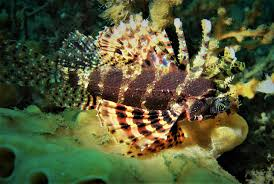
The Dwarf Lionfish delivers all the dramatic, alien beauty of its larger cousins in a compact package that fits comfortably into medium-sized home aquariums. With its elaborate finnage, bold coloration, and patient, stalking hunting style, the Dwarf Lionfish is one of the most captivating predator fish available to marine hobbyists. At Dr. Reef’s Quarantined Fish, every Dwarf Lionfish is quarantined, eating prepared foods, and ready to become the most dramatic fish in your tank.
What Is a Dwarf Lionfish?
The term Dwarf Lionfish covers several smaller species within the Scorpaenidae family, with the Fuzzy Dwarf Lionfish and the Zebra Dwarf Lionfish being the most commonly kept and widely available in the hobby.
The Fuzzy Dwarf Lionfish, known scientifically as Dendrochirus brachypterus, typically reaches four to six inches in length and displays a chunky, robust body covered in elaborate skin filaments that give it its fuzzy appearance. Its coloration ranges from red and brown to yellow and white, with intricate banded patterns across its pectoral fins that it fans out dramatically when threatened or displayed to rivals.
The Zebra Dwarf Lionfish, Dendrochirus zebra, is slightly more slender and displays bold red and white zebra-like banding across its body and spectacular, fan-like pectoral fins that it spreads wide when hunting or feeling threatened. Both species share the venomous dorsal spines common to all Lionfish, and both demand the same respectful and careful handling during tank maintenance.
Handling Safety and Venom Awareness
Dwarf Lionfish possess venomous dorsal, pelvic, and anal spines that can deliver a painful sting if touched. The venom is not life-threatening to healthy adults in most cases, but it causes intense localized pain, swelling, and in some individuals, more serious systemic reactions. Caution and awareness during all tank maintenance procedures are non-negotiable when keeping any Lionfish species.
Use long aquarium gloves, a thick net, or a plastic container to guide the fish away from your hands during water changes and aquascape adjustments. Never reach into the tank blindly when a Dwarf Lionfish is present. Knowing where the fish is before your hand enters the water is a simple habit that prevents the vast majority of accidental stings.
The Dr. Reef Quarantine Process for Dwarf Lionfish
One of the most important aspects of Dwarf Lionfish care is transitioning the fish from live prey to prepared frozen foods. Wild-caught Lionfish are conditioned to hunt and eat live prey, and many refuse prepared foods initially, which leads to starvation in captivity if not addressed properly. Vendors who skip this training step send out fish that look healthy but are unable to eat in a home aquarium setting.
Dr. Reef’s Quarantined Fish addresses this directly during the quarantine period. Every Dwarf Lionfish is worked through a systematic food training process that transitions it from live prey to prepared frozen foods like silversides, frozen shrimp, and other meaty offerings presented on a feeding stick. Fish are confirmed eating prepared foods reliably before they ship, which is one of the most significant advantages of purchasing from Dr. Reef.
Tank Setup and Compatibility
Dwarf Lionfish do well in tanks of 30 gallons or larger. They are slow-moving, ambush predators that spend most of their time perched on rockwork waiting for prey to come within striking distance. They need caves and ledges to rest under and feel secure, and they prefer moderate flow rather than strong, turbulent currents.
They will eat any fish or shrimp small enough to fit in their mouths, so choose tank mates carefully. Large Hawkfish, Porcupine Puffers, Groupers, and other robust fish of appropriate size can often coexist peacefully with Dwarf Lionfish in properly sized systems.